
मनोबुद्ध्यहङ्कारचित्तानि नाहं
न च श्रोत्रजिह्वे न च घ्राणनेत्रे ।
न च व्योम भूमिर्न तेजो न वायु-
श्चिदानन्दरूपः शिवोऽहं शिवोऽहम् ॥ १ ॥
न च प्राणसंज्ञो न वै पञ्चवायु-
र्न वा सप्तधातुर्न वा पञ्चकोशः ।
न वाक्पाणिपादं न चोपस्थपायू
चिदानन्दरूपः शिवोऽहं शिवोऽहम् ॥ २ ॥
न मे द्वेषरागौ न मे लोभमोहौ
मदो नैव मे नैव मात्सर्यभावः ।
न धर्मो न चार्थो न कामो न मोक्ष-
श्चिदानन्दरूपः शिवोऽहं शिवोऽहम् ॥ ३ ॥
न पुण्यं न पापं न सौख्यं न दुःखं
न मन्त्रो न तीर्थं न वेदा न यज्ञाः ।
अहं भोजनं नैव भोज्यं न भोक्ता
चिदानन्दरूपः शिवोऽहं शिवोऽहम् ॥ ४ ॥
न मृत्युर्न शङ्का न मे जातिभेदः
पिता नैव मे नैव माता न जन्म ।
न बन्धुर्न मित्रं गुरुर्नैव शिष्य-
श्चिदानन्दरूपः शिवोऽहं शिवोऽहम् ॥ ५ ॥
अहं निर्विकल्पो निराकाररूपो
विभुत्वाच्च सर्वत्र सर्वेन्द्रियाणाम् ।
न चासङ्गतं नैव मुक्तिर्न मेय-
श्चिदानन्दरूपः शिवोऽहं शिवोऽहम् ॥ ६ ॥
manobuddhyahaṅkāracittāni nāhaṃ
na ca śrotrajihve na ca ghrāṇanetre
na ca vyoma bhūmirna tejo na vāyu-
ścidānandarūpaḥ śivo'haṃ śivo'ham ‖ 1 ‖
na ca prāṇasaṃjño na vai pañcavāyu-
rna vā saptadhāturna vā pañcakośaḥ
na vākpāṇipādaṃ na copasthapāyū
cidānandarūpaḥ śivo'haṃ śivo'ham ‖ 2 ‖
na me dveṣarāgau na me lobhamohau
mado naiva me naiva mātsaryabhāvaḥ
na dharmo na cārtho na kāmo na mokṣa-
ścidānandarūpaḥ śivo'haṃ śivo'ham ‖ 3 ‖
na puṇyaṃ na pāpaṃ na saukhyaṃ na duḥkhaṃ
na mantro na tīrthaṃ na vedā na yajñāḥ
ahaṃ bhojanaṃ naiva bhojyaṃ na bhoktā
cidānandarūpaḥ śivo'haṃ śivo'ham ‖ 4 ‖
na mṛtyurna śaṅkā na me jātibhedaḥ
pitā naiva me naiva mātā na janma
na bandhurna mitraṃ gururnaiva śiṣya-
ścidānandarūpaḥ śivo'haṃ śivo'ham ‖ 5 ‖
ahaṃ nirvikalpo nirākārarūpo
vibhutvācca sarvatra sarvendriyāṇām
na cāsaṅgataṃ naiva muktirna meya-
ścidānandarūpaḥ śivo'haṃ śivo'ham ‖ 6 ‖
Meaning
1. I am not the mind, the intellect, the ego or the memory; not the ears, the tongue, the nose or the eyes; not space, earth, fire or air. I am Shiva, whose form is consciousness and bliss. I am Shiva.
2. I am not what is called prana, nor the five vital airs; not the seven elements of the body, nor the five sheaths; not speech, hands or feet, nor the organs of generation and excretion. I am Shiva, consciousness and bliss. I am Shiva.
3. I have no hatred or attachment, no greed or delusion, no pride and no envy. I have no dharma, no artha, no kama and no moksha to seek. I am Shiva, consciousness and bliss. I am Shiva.
4. I have no merit and no sin, no pleasure and no pain; no mantra, no tirtha, no Vedas and no sacrifices. I am not the food, nor the act of eating, nor the eater. I am Shiva, consciousness and bliss. I am Shiva.
5. I have no death and no fear, no distinction of birth; no father, no mother, no birth at all; no kinsman, no friend, no guru and no disciple. I am Shiva, consciousness and bliss. I am Shiva.
6. I am free of all variation, formless; being all-pervading, I am everywhere, beyond all the senses. I am not attached, there is no liberation for me, and I am not something to be measured. I am Shiva, consciousness and bliss. I am Shiva.
About this bhajan
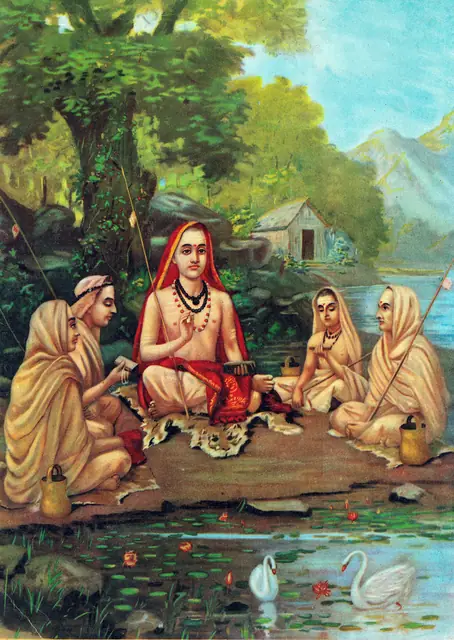
Sampradaya tells that when the boy Shankara reached the banks of the Narmada and Govinda Bhagavatpada asked him "Who are you?", he answered in these six verses. Each one strips away a layer the seeker might mistake for himself, the senses, the vital airs, the passions, even the goals of life and the rites of worship, and each ends on the same affirmation: chidananda-rupah shivo'ham. Monks of the Dashanami orders recite it in meditation, and on Mahashivratri night it is sung slowly in many ashrams. In the sixth verse the printed editions read "na cāsaṅgataṃ naiva muktirna meyaḥ"; many singers today use another reading, "sadā me samatvaṃ na muktirna bandhaḥ".
Adi Shankaracharya, Nirvana Shatakam, vv. 1–6: Brihat Stotra Ratnakara (1953), sa.wikisource "निर्वाणषट्कम् (बृहत्स्तोत्ररत्नाकरान्तर्गतम्)", compared with sa.wikisource "निर्वाणषट्कम्"