
अच्युतं केशवं रामनारायणं
कृष्णदामोदरं वासुदेवं हरिम् ।
श्रीधरं माधवं गोपिकावल्लभं
जानकीनायकं रामचन्द्रं भजे ॥ १ ॥
अच्युतं केशवं सत्यभामाधवं
माधवं श्रीधरं राधिकाराधितम् ।
इन्दिरामन्दिरं चेतसा सुन्दरं
देवकीनन्दनं नन्दजं सन्दधे ॥ २ ॥
विष्णवे जिष्णवे शङ्खिने चक्रिणे
रुक्मिणीरागिणे जानकीजानये ।
वल्लवीवल्लभायार्चितायात्मने
कंसविध्वंसिने वंशिने ते नमः ॥ ३ ॥
कृष्ण गोविन्द हे राम नारायण
श्रीपते वासुदेवाजित श्रीनिधे ।
अच्युतानन्त हे माधवाधोक्षज
द्वारकानायक द्रौपदीरक्षक ॥ ४ ॥
राक्षसक्षोभितः सीतया शोभितो
दण्डकारण्यभूपुण्यताकारणम् ।
लक्ष्मणेनान्वितो वानरैः सेवितो-
ऽगस्त्यसम्पूजितो राघवः पातु माम् ॥ ५ ॥
धेनुकारिष्टहानिष्टकृद्द्वेषिणां
केशिहा कंसहृद्वंशिकावादकः ।
पूतनाकोपकः सूरजाखेलनो
बालगोपालकः पातु मां सर्वदा ॥ ६ ॥
विद्युदुद्योतवत्प्रस्फुरद्वाससं
प्रावृडम्भोदवत्प्रोल्लसद्विग्रहम् ।
वन्यया मालया शोभितोरःस्थलं
लोहिताङ्घ्रिद्वयं वारिजाक्षं भजे ॥ ७ ॥
कुञ्चितैः कुन्तलैर्भ्राजमानाननं
रत्नमौलिं लसत्कुण्डलं गण्डयोः ।
हारकेयूरकं कङ्कणप्रोज्ज्वलं
किङ्किणीमञ्जुलं श्यामलं तं भजे ॥ ८ ॥
अच्युतस्याष्टकं यः पठेदिष्टदं
प्रेमतः प्रत्यहं पूरुषः सस्पृहम् ।
वृत्ततः सुन्दरं वेद्यविश्वम्भरं
तस्य वश्यो हरिर्जायते सत्वरम् ॥ ९ ॥
acyutaṃ keśavaṃ rāmanārāyaṇaṃ
kṛṣṇadāmodaraṃ vāsudevaṃ harim
śrīdharaṃ mādhavaṃ gopikāvallabhaṃ
jānakīnāyakaṃ rāmacandraṃ bhaje ‖ 1 ‖
acyutaṃ keśavaṃ satyabhāmādhavaṃ
mādhavaṃ śrīdharaṃ rādhikārādhitam
indirāmandiraṃ cetasā sundaraṃ
devakīnandanaṃ nandajaṃ sandadhe ‖ 2 ‖
viṣṇave jiṣṇave śaṅkhine cakriṇe
rukmiṇīrāgiṇe jānakījānaye
vallavīvallabhāyārcitāyātmane
kaṃsavidhvaṃsine vaṃśine te namaḥ ‖ 3 ‖
kṛṣṇa govinda he rāma nārāyaṇa
śrīpate vāsudevājita śrīnidhe
acyutānanta he mādhavādhokṣaja
dvārakānāyaka draupadīrakṣaka ‖ 4 ‖
rākṣasakṣobhitaḥ sītayā śobhito
daṇḍakāraṇyabhūpuṇyatākāraṇam
lakṣmaṇenānvito vānaraiḥ sevito-
'gastyasampūjito rāghavaḥ pātu mām ‖ 5 ‖
dhenukāriṣṭahāniṣṭakṛddveṣiṇāṃ
keśihā kaṃsahṛdvaṃśikāvādakaḥ
pūtanākopakaḥ sūrajākhelano
bālagopālakaḥ pātu māṃ sarvadā ‖ 6 ‖
vidyududyotavatprasphuradvāsasaṃ
prāvṛḍambhodavatprollasadvigraham
vanyayā mālayā śobhitoraḥsthalaṃ
lohitāṅghridvayaṃ vārijākṣaṃ bhaje ‖ 7 ‖
kuñcitaiḥ kuntalairbhrājamānānanaṃ
ratnamauliṃ lasatkuṇḍalaṃ gaṇḍayoḥ
hārakeyūrakaṃ kaṅkaṇaprojjvalaṃ
kiṅkiṇīmañjulaṃ śyāmalaṃ taṃ bhaje ‖ 8 ‖
acyutasyāṣṭakaṃ yaḥ paṭhediṣṭadaṃ
premataḥ pratyahaṃ pūruṣaḥ saspṛham
vṛttataḥ sundaraṃ vedyaviśvambharaṃ
tasya vaśyo harirjāyate satvaram ‖ 9 ‖
Meaning
1. I worship Achyuta, Keshava, Rama, Narayana, Krishna, Damodara, Vasudeva, Hari, Shridhara, Madhava, the beloved of the gopis, the Lord of Janaki, Ramachandra.
2. I hold in my heart Achyuta, Keshava, the Lord of Satyabhama, Madhava, Shridhara, worshipped by Radhika, the abode of Lakshmi, beautiful to the mind, the joy of Devaki, the son of Nanda.
3. Salutations to you, Vishnu, the victorious, bearer of the conch and the discus, beloved of Rukmini, husband of Janaki, beloved of the cowherd women, the worshipped Self, destroyer of Kamsa, player of the flute.
4. O Krishna, Govinda, Rama, Narayana, Lord of Shri, Vasudeva, unconquered, treasure of Shri; O Achyuta, Ananta, Madhava, Adhokshaja, Lord of Dvaraka, protector of Draupadi.
5. May Raghava protect me: he who shook the rakshasas, who shone with Sita at his side, who made the land of the Dandaka forest holy, with Lakshmana beside him, served by the vanaras, worshipped by Agastya.
6. May the child cowherd protect me always: the slayer of Dhenuka and Arishta, who brings harm to those who hate the good, slayer of Keshi and of Kamsa, player of the flute, whose wrath fell on Putana, who played on the banks of the Yamuna, daughter of the Sun.
7. I worship the lotus-eyed Lord whose garment flashes like lightning, whose body glows like a rain cloud of the monsoon, whose chest is adorned with a garland of forest flowers, whose two feet are rosy red.
8. I worship that dark one whose face shines framed by curling locks, with a jewelled crown and earrings glittering on his cheeks, radiant with necklace, armlets and bracelets, lovely with tinkling bells.
9. The man who reads every day with love and longing this Achyutashtaka, which grants what is wished for, beautiful in its metre, on the Lord who is to be known and who sustains the universe, soon has Hari for his own.
About this bhajan
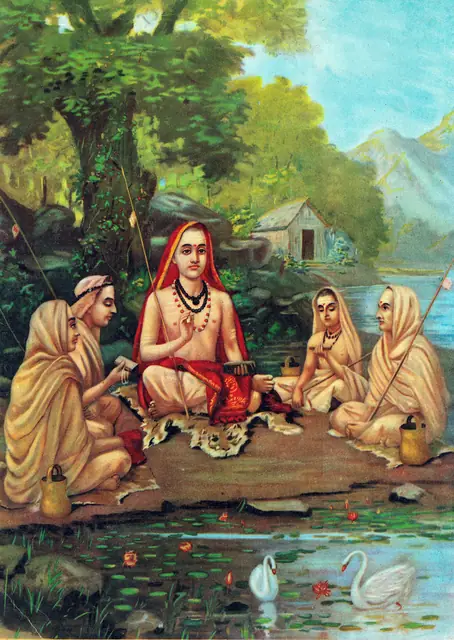
A string of names, almost nothing else, and that is its strength. Shankaracharya runs Rama and Krishna together in a single breath, Janaki's Lord beside the beloved of the gopis, so that the singer stops keeping them apart. The metre is sragvini, four groups of long-short-long in every line, and the names fall into it like beads on a mala. In Carnatic concerts the first verse is often sung as a closing bhajan, and many families recite the fourth verse alone as a nama-japa. The text follows the 1910 Srirangam edition; some prints read "nandanaṃ sandadhe" in verse 2 and "kartṛviśvambharaṃ" in verse 9.
Adi Shankaracharya, Achyutashtakam, vv. 1–9: Works of Sri Sankaracharya (Vani Vilas Press, Srirangam, 1910), sa.wikisource "अच्युताष्टकम् (मूलसहितम्)"