
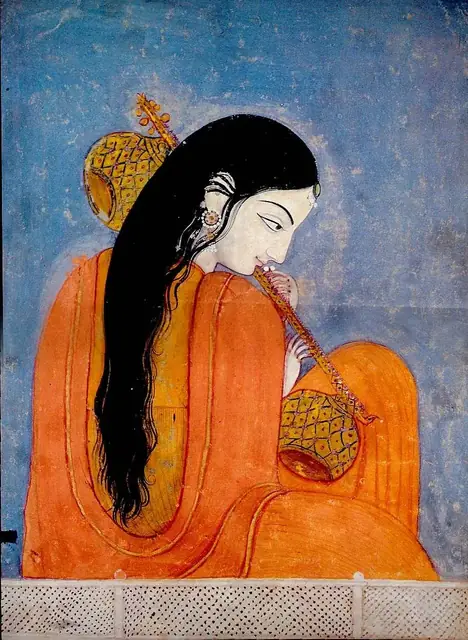
पायो जी म्हें तो राम रतन धन पायो।
वस्तु अमोलक दी म्हारे सतगुरु, किरपा कर अपनायो॥
जनम-जनम की पूँजी पाई, जग में सभी खोवायो।
खरच न खूटै चोर न लूटै, दिन-दिन बढ़त सवायो॥
सत की नाँव खेवटिया सतगुरु, भवसागर तर आयो।
मीरा के प्रभु गिरिधर नागर, हरख-हरख जस गायो॥
Payo ji mhen to Ram ratan dhan payo,
vastu amolak di mhare satguru, kirpa kar apnayo.
Janam-janam ki punji pai, jag mein sabhi khovayo,
kharach na khutai chor na lutai, din-din badhat savayo.
Sat ki nanv khevatiya satguru, bhavsagar tar ayo,
Mira ke prabhu Giridhar Nagar, harakh-harakh jas gayo.
Meaning
I have found it! I have found the jewel-wealth of Rama’s name. My true guru gave me this priceless thing; in his kindness he made me his own.
I have found the savings of many births and lost everything else in the world. It does not run out when spent, no thief can rob it, and day by day it grows by a quarter more.
The boat is truth and the true guru is the boatman; I have crossed the ocean of worldly life. Mira’s Lord is Giridhar Nagar; with joy upon joy I sing his glory.
About this bhajan
Meera’s song of having found what cannot be lost. The language is a merchant’s: capital saved over many births, wealth that grows by a quarter every day and that no thief can carry off. She credits the gift to her satguru, and Guru Purnima gatherings often sing it for that reason; tradition links Meera with Sant Raidas as her guru. Ram here is the name of the Lord she elsewhere calls Giridhar, as the closing line shows.
Meera padavali; text as on Kavita Kosh