
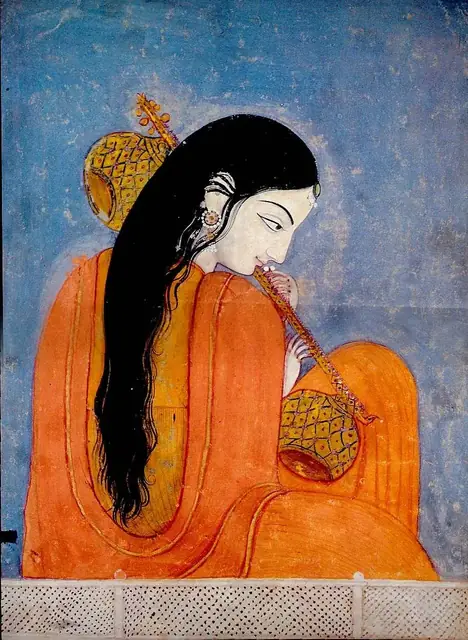
हे री मैं तो प्रेम-दिवानी मेरो दरद न जाणै कोय।
घायल की गति घायल जाणै जो कोई घायल होय॥
जौहरि की गति जौहरी जाणै की जिन जौहर होय॥
सूली ऊपर सेज हमारी सोवण किस बिध होय।
गगन मंडल पर सेज पिया की किस बिध मिलणा होय॥
दरद की मारी बन-बन डोलूँ बैद मिल्या नहिं कोय।
मीरा की प्रभु पीर मिटेगी जद बैद साँवरिया होय॥
He ri main to prem-diwani mero darad na janai koy,
ghayal ki gati ghayal janai jo koi ghayal hoy,
jauhari ki gati jauhari janai ki jin jauhar hoy.
Suli upar sej hamari sovan kis bidh hoy,
gagan mandal par sej piya ki kis bidh milna hoy.
Darad ki mari ban-ban dolun baid milya nahin koy,
Mira ki prabhu pir mitegi jad baid sanvariya hoy.
Meaning
O friend, I am mad with love; no one knows my pain. Only the wounded know the state of the wounded, those who have been wounded themselves. Only the jeweller knows the worth of a jewel, or one who owns a jewel.
My bed is on the stake; how can I sleep? My Beloved’s bed is in the vault of the sky; how can we meet?
Struck by pain I wander from forest to forest and find no healer. Mira’s pain, O Lord, will end only when the dark one, Sanvariya, becomes the healer.
About this bhajan
Meera’s most quoted line of viraha. A soul in love with God, she says, is like a wounded person among the unhurt: no one around can understand. The images are severe, a bed on the stake, a lover whose bed is in the sky, and the cure she names is the only one possible, Krishna himself as the vaidya. Popular versions open “Main to prem diwani”; the Kavita Kosh text begins with the address “He ri”.
Meera padavali; text as on Kavita Kosh