
Wealth and politics were real motives, as historians have shown, but the chroniclers who served the conquerors described temple destruction in religious terms, and Aurangzeb’s order of April 1669 was a general order against temples and their schools, not a search for treasure.
The proof
- Maasir-i-Alamgiri: in April 1669 Aurangzeb ordered governors to demolish the schools and temples of the infidels; in September 1669 the temple of Vishwanath at Kashi was reported demolished; in January 1670 the Keshava Rai temple at Mathura.
- The Quwwat-ul-Islam mosque in Delhi records on its gate that it was built from the materials of 27 temples.
- Eaton himself lists about 80 temple desecrations he considers well attested, from 1192 onward.
01The claim
The modern argument runs that temples were political objects. A royal temple stood for a king’s power, so a conqueror who broke it was breaking his enemy’s sovereignty, and a rich temple was simply where the gold was. On this view faith had little or nothing to do with it, and anyone who speaks of religious motive is reading modern politics backward.
02What is right in it
Part of this is true and should be granted. Mahmud of Ghazni took enormous wealth from Somnath, Mathura and Kangra. Temples were often hit when a kingdom was conquered and often left alone in lands that were already loyal. Eaton also shows that Hindu kings sometimes carried off the temple images of rivals as trophies. A historian who ignores money and power is not telling the whole story either.
03What the chroniclers wrote
The chroniclers who wrote for the conquerors did not describe these acts as accounting. Al-Utbi’s Tarikh-i-Yamini presents Mahmud’s campaigns as war against idolaters. The Quwwat-ul-Islam mosque, whose name means the might of Islam, records the 27 temples in its fabric. Saqi Mustaid Khan’s Maasir-i-Alamgiri, the official history of Aurangzeb’s reign, reports the 1669 order against the temples and schools of the infidels throughout the empire, then the fall of Vishwanath at Kashi and of the Keshava Rai temple at Mathura, whose images were taken to Agra and buried under the steps of a mosque. These are the conquerors’ own words.
04Holding the whole picture
The honest conclusion is that motives were mixed: plunder, politics and faith, in different measure at different times. Erasing the religious motive, when the chroniclers themselves proclaimed it, is not history. Neither is blaming anyone alive today for what a sultan or emperor did centuries ago. Name the act, the year and the source. At Kashi today the Gyanvapi mosque stands on the plinth of the old Vishwanath temple, and Ahilyabai Holkar’s temple of 1780 stands beside it. That is the record, plainly read.
05What to read
Read the Maasir-i-Alamgiri in Jadunath Sarkar’s translation (1947), Eaton’s essay and Thapar’s Somanatha for the political reading, and Sita Ram Goel’s two volumes Hindu Temples: What Happened to Them (1990–91) for a long list drawn from the chronicles. Then compare them, source by source. Where the political reading and the chronicles agree, you are on firm ground; where they part, go back to the chronicler’s own words, read in a careful translation, before you decide.
Read on
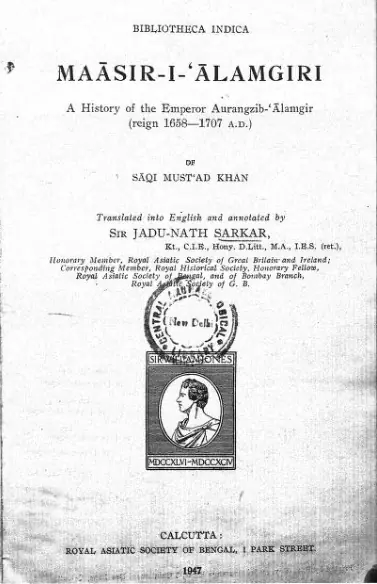
Maasir-i-Alamgiri
The official history of Aurangzeb’s fifty-year reign, year by year.
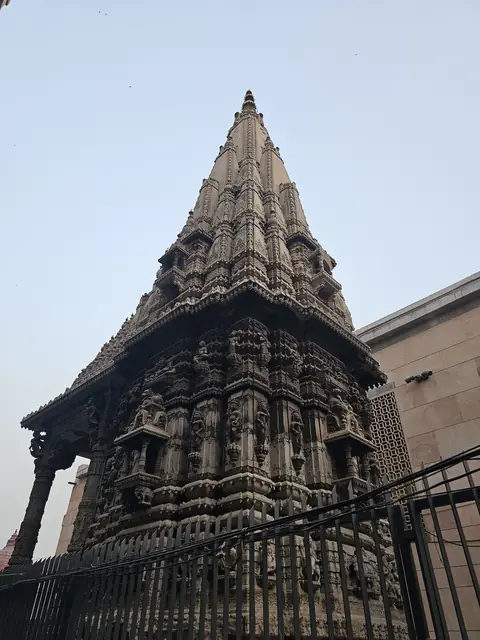
Kashi Vishwanath
The Jyotirlinga of Kashi, the city Shiva never leaves, where death on the ghats is said to bring moksha. The temple was destroyed in 1194 and 1669 and stands today beside the mosque built on its old plinth.
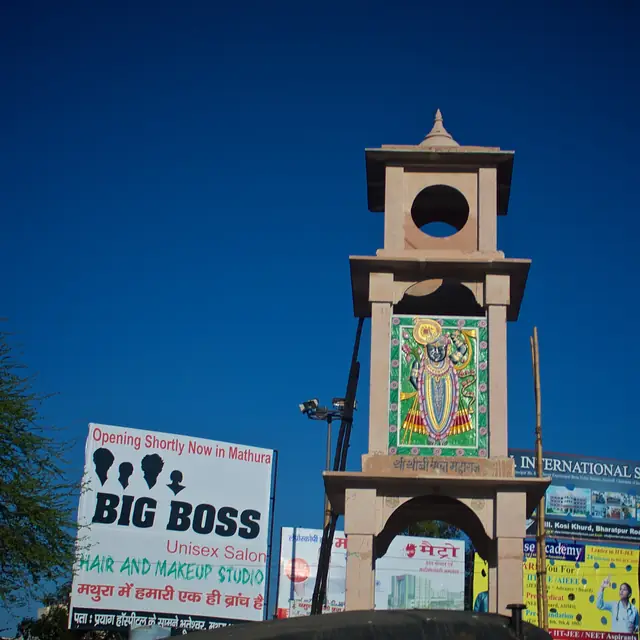
Shri Krishna Janmabhoomi, Mathura
The prison-cell of Kamsa where Shri Krishna was born at midnight. The Katra Keshavdev mound carried great temples that were destroyed in 1018 and 1670; the Shahi Idgah stands on part of it, and a new temple complex stands beside.
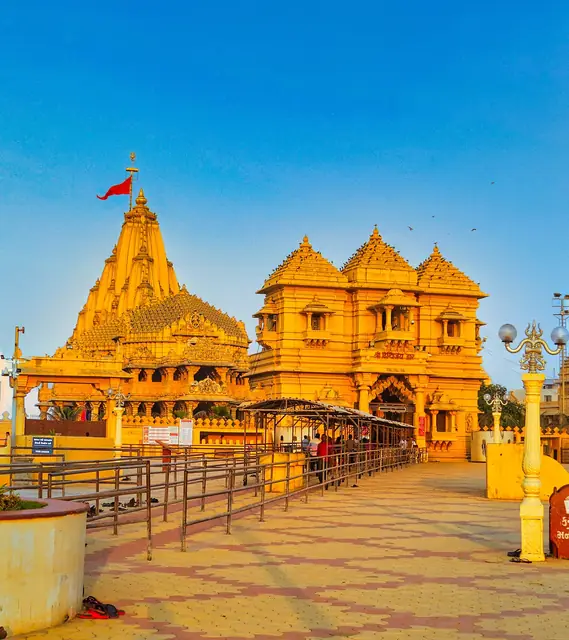
Somnath Jyotirlinga
The first Jyotirlinga, on the shore at Prabhas where the Sarasvati meets the sea. Raided, razed and rebuilt again and again for nine hundred years, it was raised once more by free India in 1951.
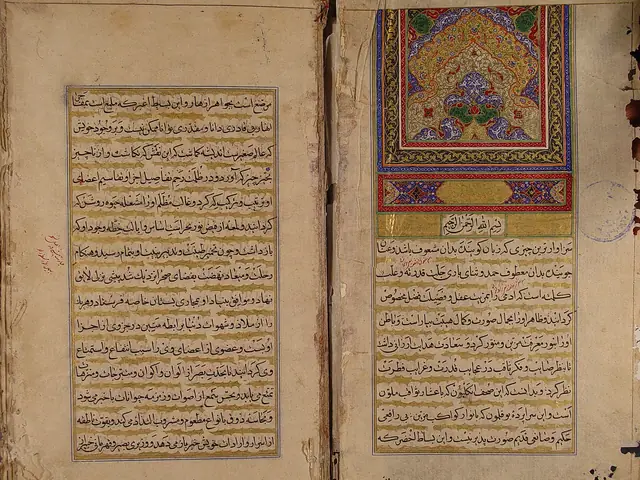
Tarikh-i-Yamini of al-Utbi
A court history of Sabuktigin and his son Mahmud of Ghazni, written while Mahmud was still raiding Bharat.
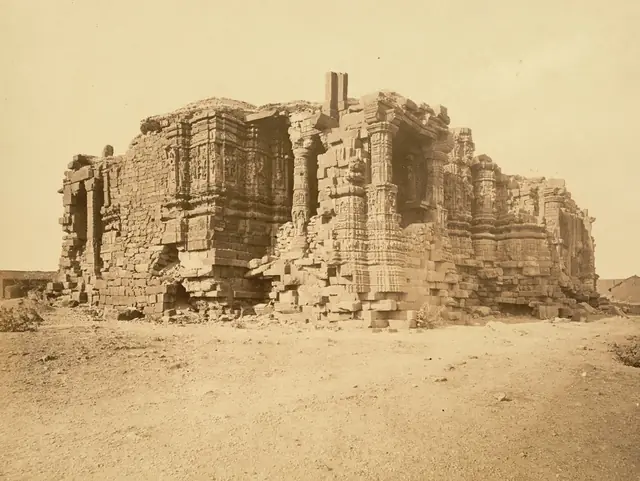
Mahmud’s attack on Somnath
Mahmud marched across the Thar to the first of the twelve jyotirlingas. The defenders fought on the walls for days; the temple was looted and the linga broken. Somnath was rebuilt, again and again.