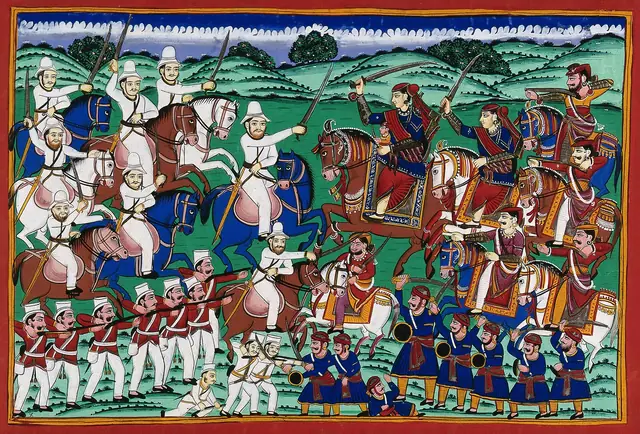
Bharat recorded its past in tens of thousands of dated inscriptions, in court and temple chronicles and in histories such as the Rajatarangini, and its sciences of grammar, mathematics, astronomy and medicine were studied by the very scholars who belittled them.
The proof
- Macaulay’s Minute (1835): "a single shelf of a good European library was worth the whole native literature of India and Arabia."
- Mill divided India’s past into Hindu, Muslim and British periods, a frame textbooks used for a century.
- The Aihole inscription (634–35 CE) dates itself by both the Kali era and the Shaka era.
01The claim
The idea is that before the British, India was a land of unchanging villages and priestly fancy, with no sense of chronology and no knowledge worth keeping, and that Europe gave it history, science and reason. It is still repeated, in softer words, whenever Indian history is said to begin with the first European who wrote it down. It shaped what Indians were taught about themselves: that their own past had to be dug up and explained to them by outsiders.
02Mill and Macaulay
James Mill wrote his three volumes in London and said in the preface that not having seen India or learned its languages made him a more impartial judge. He described Hindu civilisation as rude and stagnant, and his book became a set text for the East India Company’s young officers at Haileybury. Eighteen years later Macaulay, arguing that Company funds should go to English education instead of Sanskrit and Arabic, admitted he had no knowledge of either language and still declared one shelf of a European library worth all of India’s literature. Policy followed his Minute.
03What the record shows
Kings dated their grants by regnal year, by Shaka, Vikrama or Kali era, and named their ancestors line by line, so that whole dynasties have been rebuilt from copper plates alone. Kalhana in 1148 used old chronicles, temple records and inscriptions to write the history of Kashmir and warned against bias. The Ahoms kept Buranjis for six hundred years. Meanwhile Indian mathematics had given the world its numerals, and Panini’s grammar was read by European linguists as a model. The British did real work in deciphering Brahmi and cataloguing monuments, but they read a history that was already written.
04What to read
Read Kalhana himself, in M. A. Stein’s translation (1900), and D. C. Sircar’s Indian Epigraphy (1965) to see how much history the inscriptions hold. The eleven volumes of The History and Culture of the Indian People, edited by R. C. Majumdar for the Bharatiya Vidya Bhavan (1951–77), were written to give Indians a full history from Indian sources. And read Macaulay’s Minute in full; it is short, and it explains a great deal.
Read on
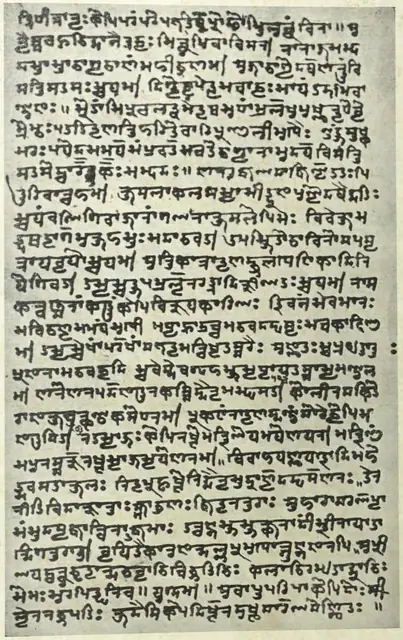
Rajatarangini of Kalhana
A Sanskrit chronicle in eight books (tarangas), nearly 8,000 verses, of the kings of Kashmir from the earliest times to Kalhana’s own day.
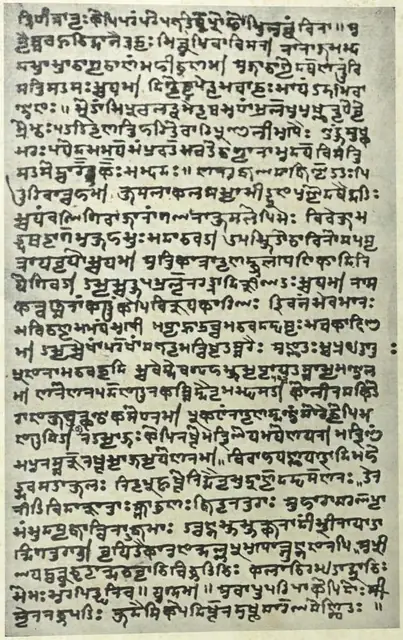
Kalhana
Kalhana, son of Champaka, minister to King Harsha of Kashmir, wrote the Rajatarangini (‘River of Kings’) in 1148–1150 CE: about 7,800 verses in eight tarangas tracing the kings of Kashmir from the earliest times to his own day.
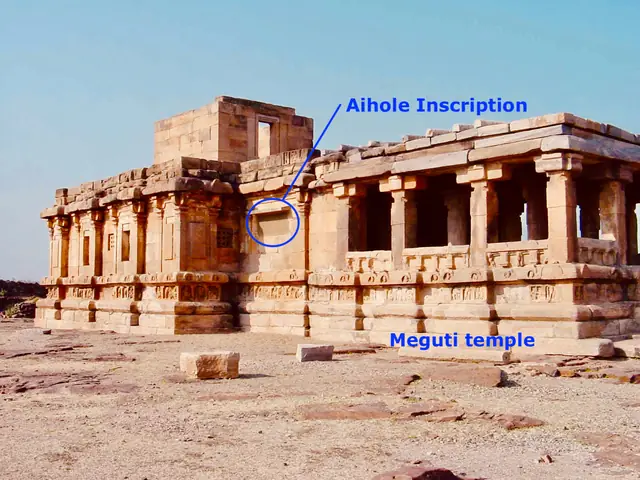
Aihole inscription of Ravikirti
A Sanskrit prashasti of the Chalukya king Pulakeshin II by the Jain poet Ravikirti, who built the temple.
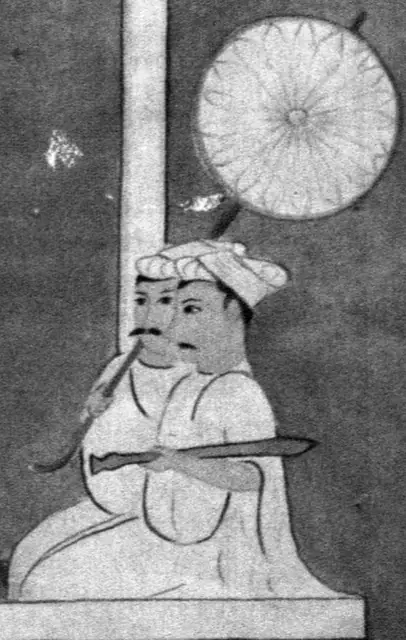
Ahom Buranjis
The court chronicles of the Ahom kingdom, kept year by year for six centuries from the arrival of Sukaphaa in 1228.
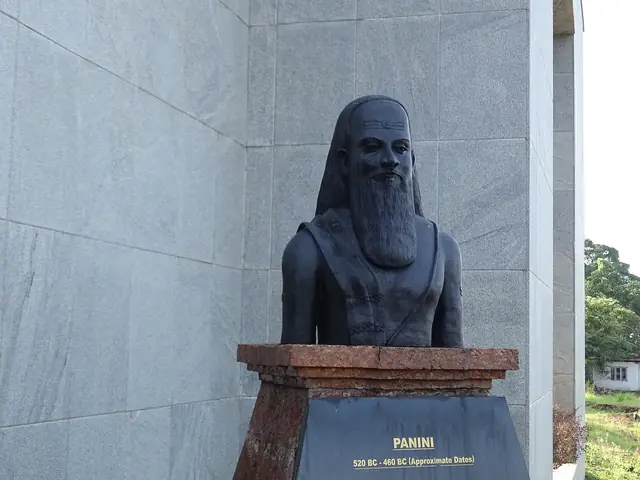
Panini
Panini of Shalatura, in the north-west near the Sindhu, described all of Sanskrit in about 3,959 sutras. His Ashtadhyayi is still the rulebook of the language and is studied by linguists and computer scientists for its method.