01A tower for a victory
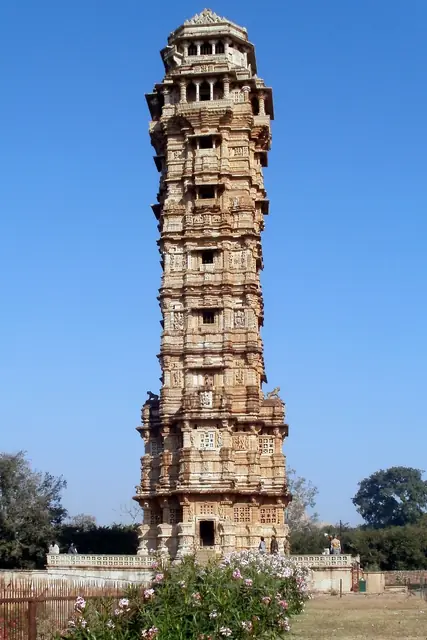
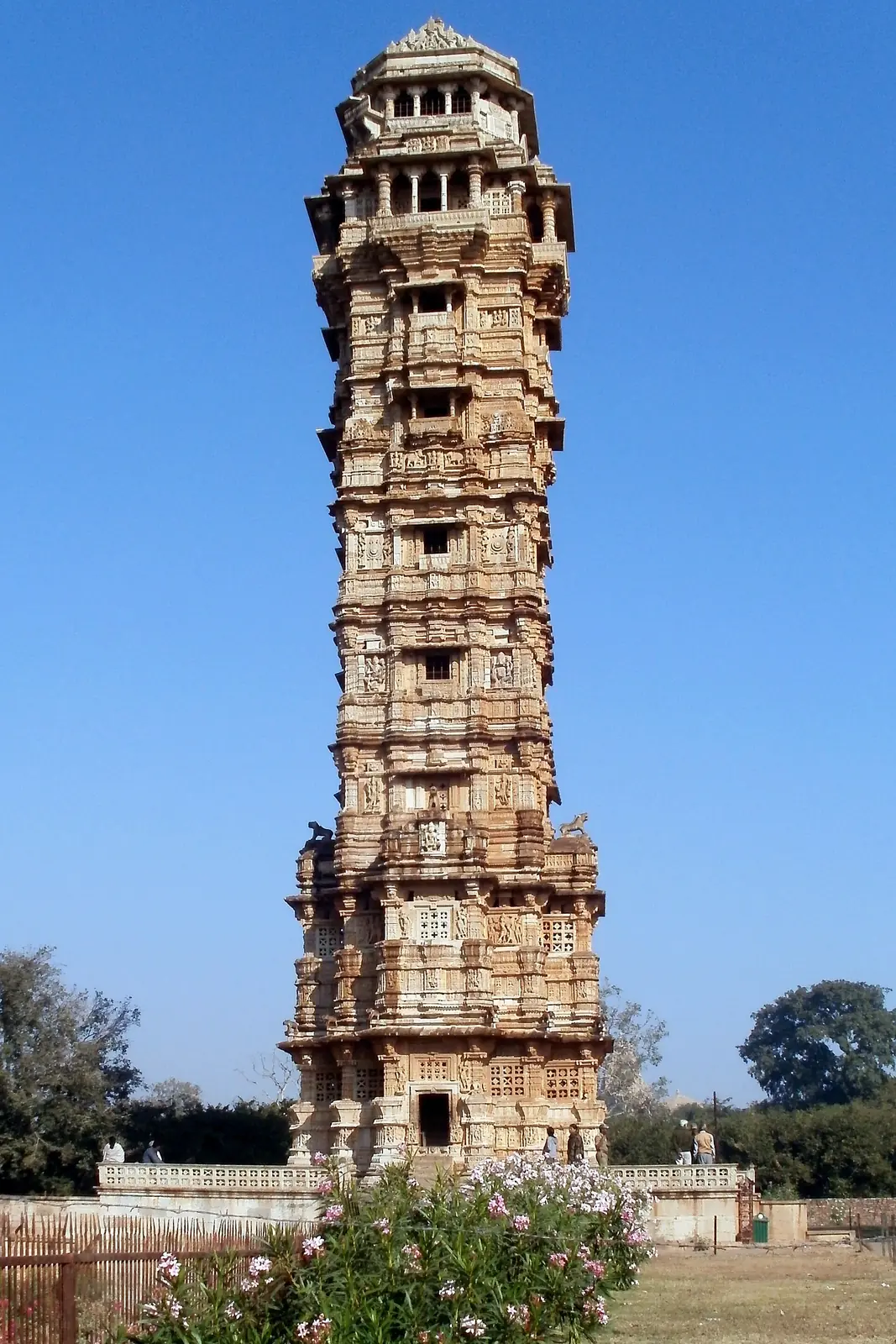
Rana Kumbha defeated Mahmud Khalji of Malwa at Sarangpur in 1437 and, the Mewar tradition says, brought him captive to Chittor before letting him go. To mark it he raised this tower near the Samiddheshvara temple. The work was led by the sutradhara Jaita with his sons Napa and Puja, whose names are cut in the stone, and it was finished in 1448. It stands about 37 metres high on a raised base, nine storeys of yellow sandstone and marble, with a dome on top. A narrow stair winds up through the centre, opening onto balconies on each storey.
02A carved book of the gods
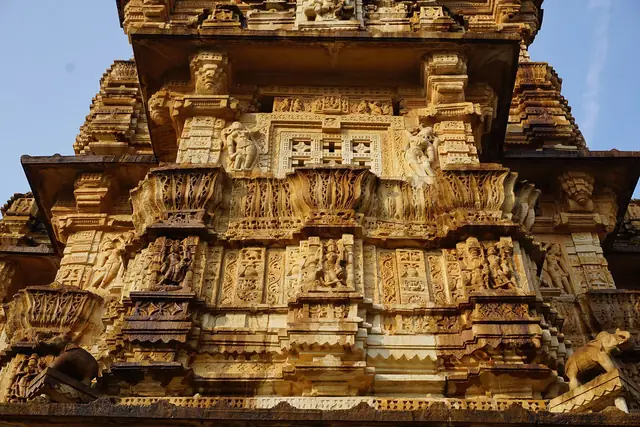
The tower is dedicated to Bhagwan Vishnu, and some call it Vishnu Dhvaja. Its walls carry hundreds of images, many labelled in the stone with their names: the avatars of Vishnu, Brahma, Shiva in his forms, the Devis, the dikpalas, the seasons, the rivers and even the weapons, laid out so that the building is a sculptor’s catalogue of the Shastras. On the upper storey were set slabs of the Kirti Stambha prashasti, a long Sanskrit inscription on the Guhila kings composed by Atri and his son Mahesha, completed in 1460. The tower came through the sieges of 1535 and 1568 and stands today as the emblem of Chittor and of Rajasthan.
The life of this place
- 1437 CERana Kumbha defeated Mahmud Khalji of Malwa at Sarangpur.
- 1448 CEThe Vijay Stambha was completed.
- 1460 CEThe Kirti Stambha prashasti of Atri and Mahesha was completed.
- 1568 CEThe tower survived Akbar’s siege and capture of Chittor.
Inside Chittorgarh fort near the Rana Kumbha palace; the inner stair is sometimes closed to visitors.