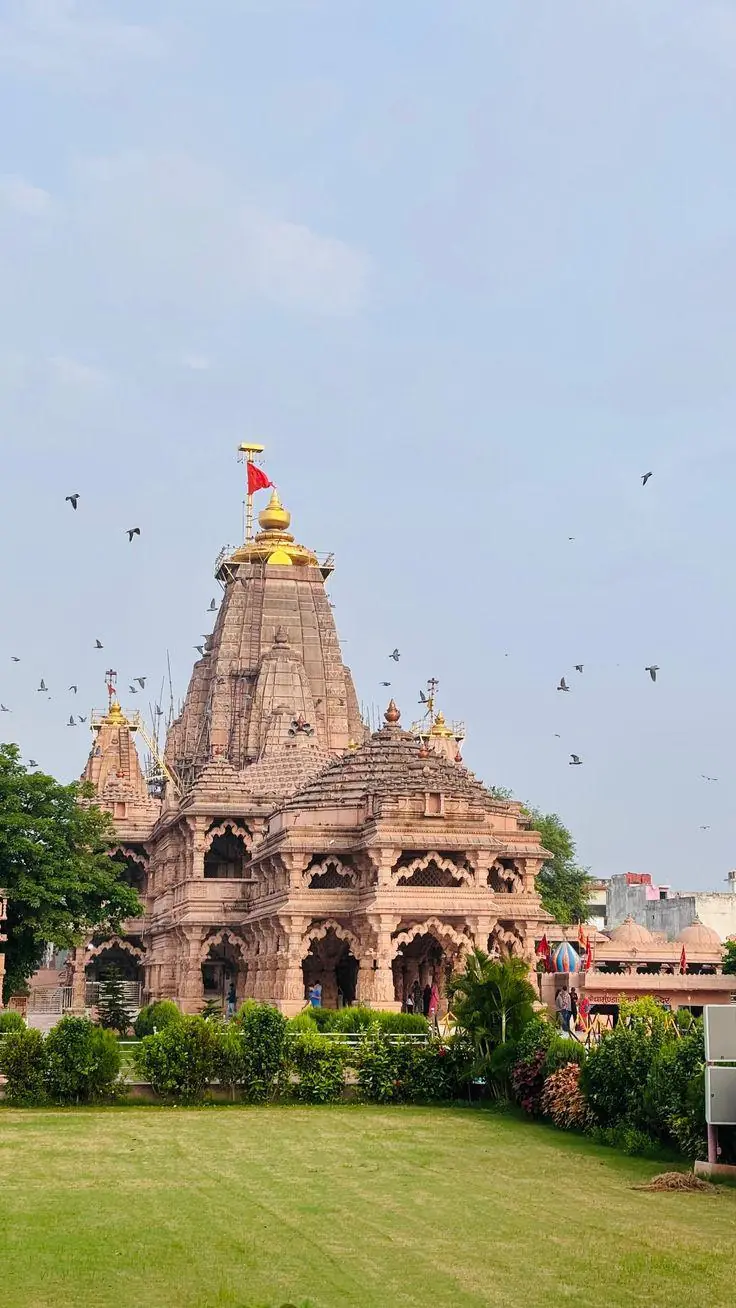
01Three murtis from one field
The temple’s account: in 1840 a cowherd, Bholaram Gurjar, dreamt of murtis buried at Chhapar near Bagund. The ground was dug and three black stone images of Krishna came out. One was installed at Mandaphiya, one at Bhadsoda and one at the spot itself, Chhapar, and all three are called Sanwaliya ji. Mandaphiya grew into the great temple. Sanwaliya means the dark-complexioned one, Krishna’s own colour.
02The Seth’s share
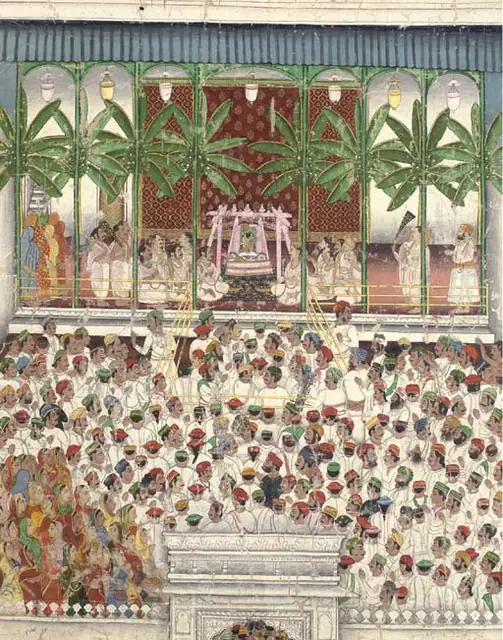
Opium growers, traders and shopkeepers from the Mewar–Malwa belt take Sanwaliya Seth into partnership: a fixed share of the profit, written into the books, is brought to the temple each year. The donation boxes are opened once a month, on the Chaturdashi of the dark fortnight, and the count, done in public over several days, now runs to many crores of rupees, gold and silver. The great fair is on Jaljhulni Ekadashi in Bhadrapada, when the deity is taken out in procession to the water.
The life of this place
- 1840 (temple tradition)Bholaram Gurjar’s dream leads to the finding of three murtis at Chhapar.
Mandaphiya is about 40 km from Chittorgarh on the Chittorgarh–Udaipur road; Udaipur airport is about 65 km.