01The plough at Asota
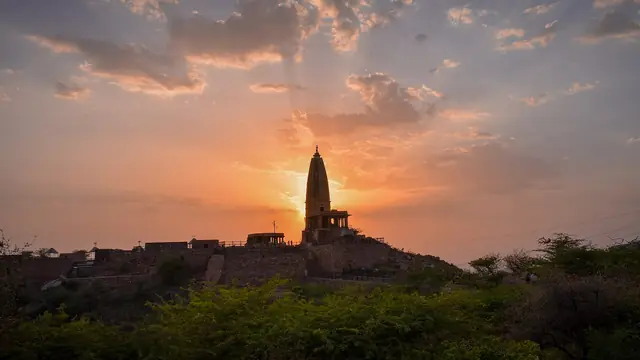
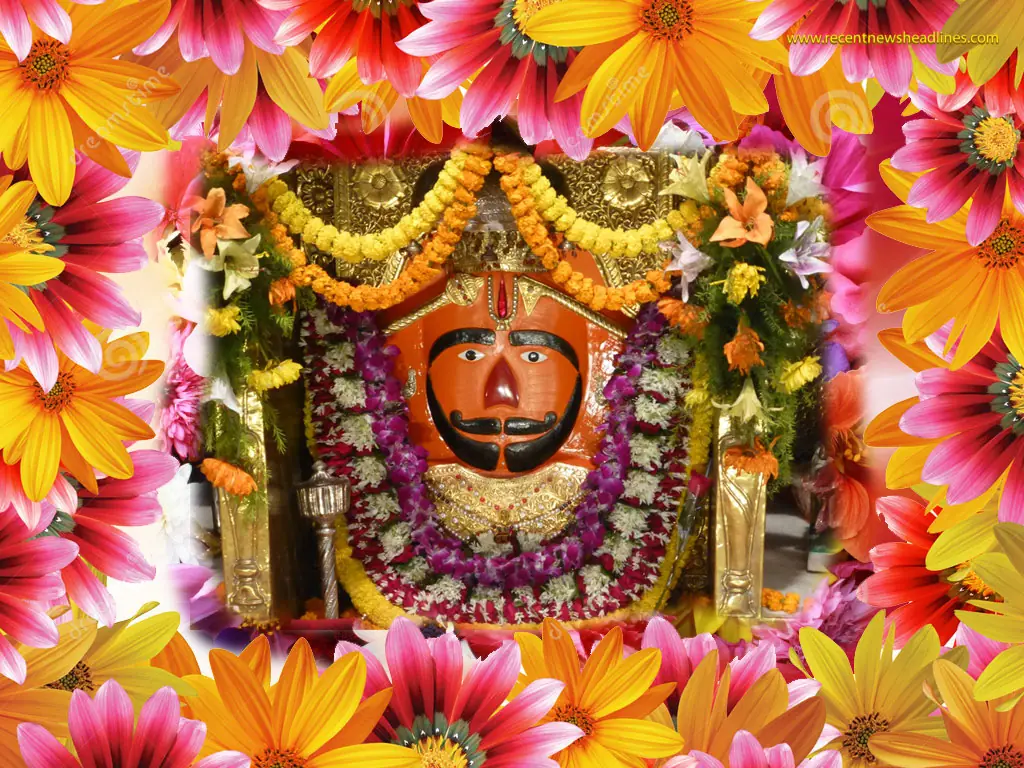
On a Tuesday, the ninth of the bright half of Shravan, a Jat farmer ploughing at Asota in Nagaur felt the blade strike stone. He dug and found a murti of Balaji. His wife had just brought his lunch, bajra churma, and he offered it on the spot; churma has been the bhog at Salasar ever since. That night Balaji appeared in a dream to the Thakur of Asota and to Mohandas, a devotee at Salasar, and the murti was carried to Salasar by bullock cart. Where the bullocks stopped, the temple was built.
02Mohandas and the two fairs
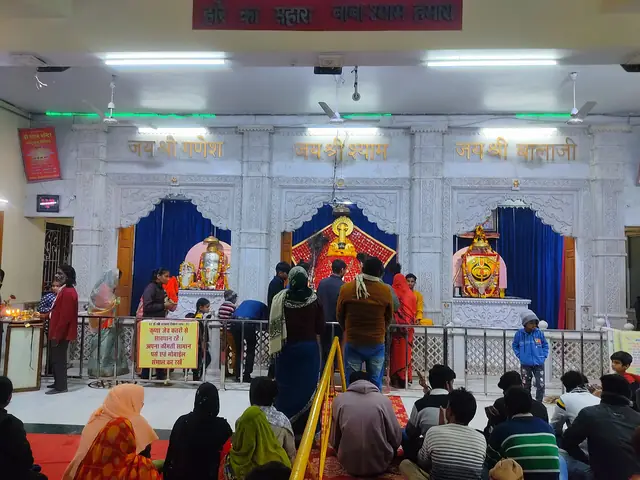
Mohandas Maharaj served the murti till the end of his life, and his lamp, the dhuni he lit, is still kept burning. The image is unusual: Balaji here has a round face with beard and moustache, as Mohandas is said to have first seen him. Two great fairs fill the town, at Chaitra Purnima, Hanuman Jayanti in the north Indian reckoning, and at Ashwin Purnima. Devotees tie coconuts with red thread to a tree in the compound for a wish, and come back to untie them when it is granted.
The life of this place
- 1754 (Samvat 1811)The murti is found at Asota and installed at Salasar.
Salasar lies on the Jaipur–Bikaner road near Sujangarh; Sujangarh and Sikar are the nearest railheads. Tuesdays and Saturdays are crowded.