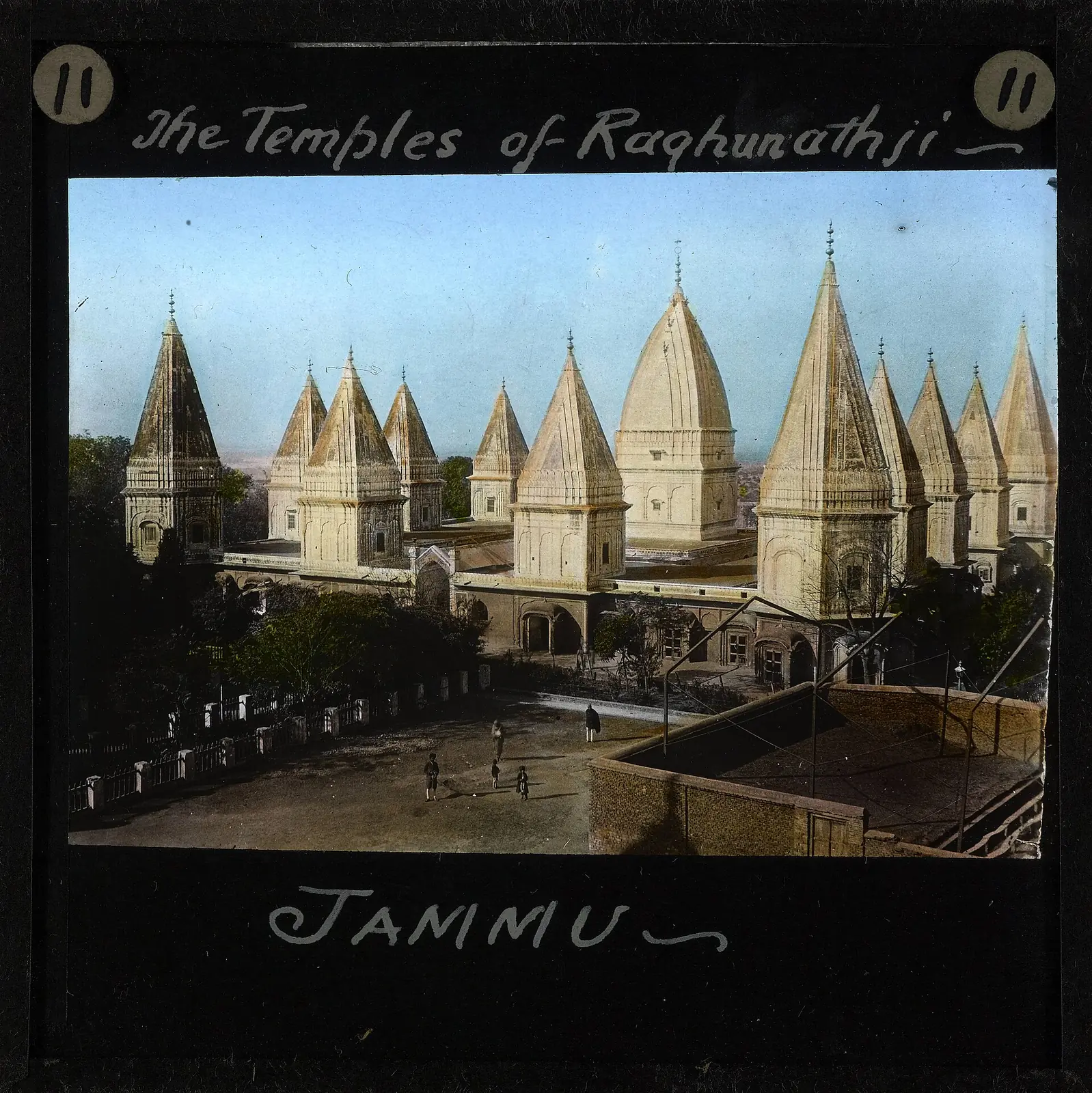
01Gulab Singh’s vow
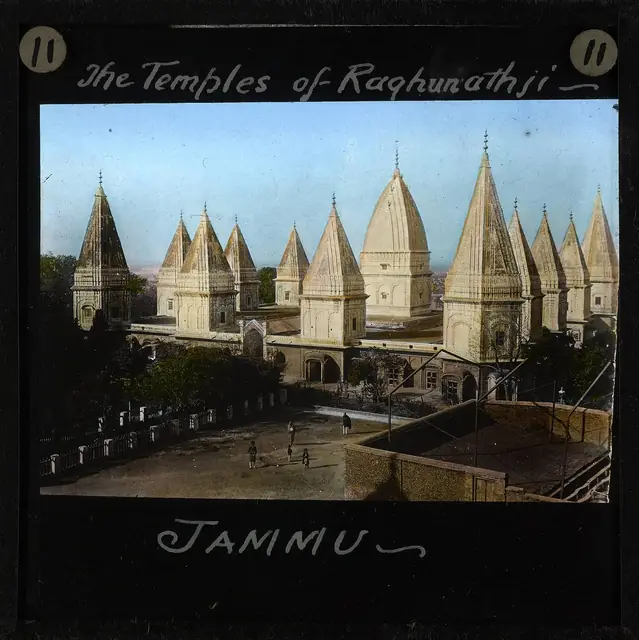
Gulab Singh, the Dogra chief who became Maharaja of Jammu and Kashmir, began the temple in 1835. He did not live to see it finished; his son Ranbir Singh completed it in 1860. The main shrine holds Shri Rama as Raghunath, the family deity of the Dogra house. Around it stand shrines whose walls carry hundreds of murtis of devatas, most from the lilas of Rama and Krishna, and the inner walls are covered with gold leaf. Rows of small lingas, said to number in the lakhs, are set in the side chambers, so that a pilgrim can do darshan of many tirthas in one walk.
02The library and the attacks of 2002
Ranbir Singh was a patron of Sanskrit. He set up a pathshala and a library in the temple, and had texts copied and translated. Aurel Stein catalogued its manuscripts in 1894; among them are old copies of the Vedas and works on yoga, jyotisha and grammar. In 2002 the temple was attacked twice by terrorists, on 30 March and again on 24 November; pilgrims and security men were killed, and darshan resumed each time within days.
The life of this place
- 1835Maharaja Gulab Singh begins the temple.
- 1860Maharaja Ranbir Singh completes it.
- 1894Aurel Stein publishes the catalogue of the temple’s Sanskrit manuscripts.
- 30 March and 24 November 2002Terrorists attack the temple twice; worship resumes after each attack.
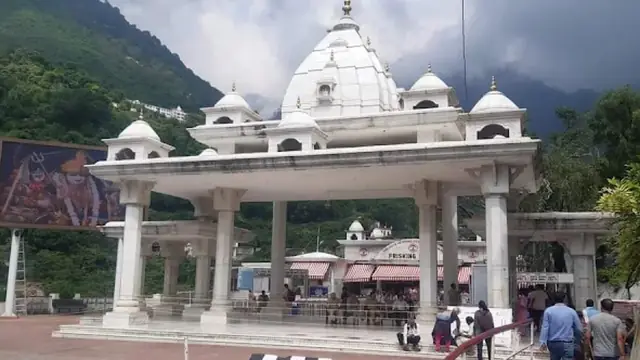
In Raghunath Bazaar, central Jammu, a short ride from the railway station; it is a usual stop for pilgrims on the way to Vaishno Devi. Bags and phones are deposited at the gate.