01Jambulochan’s city
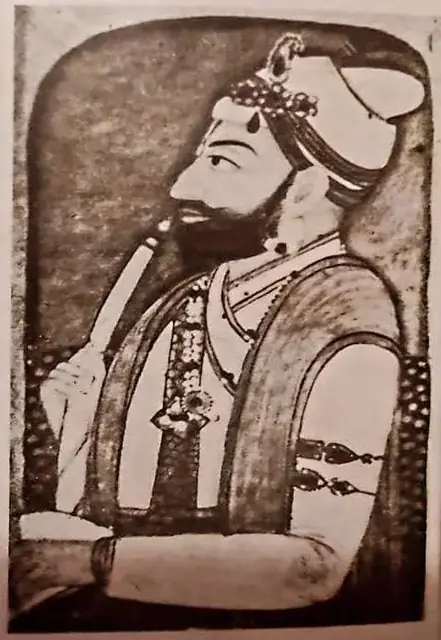
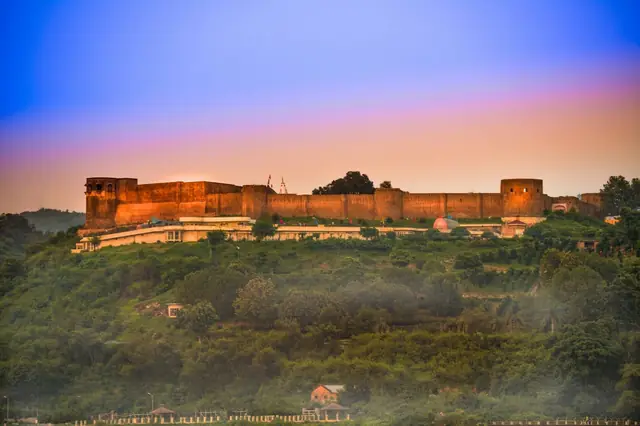
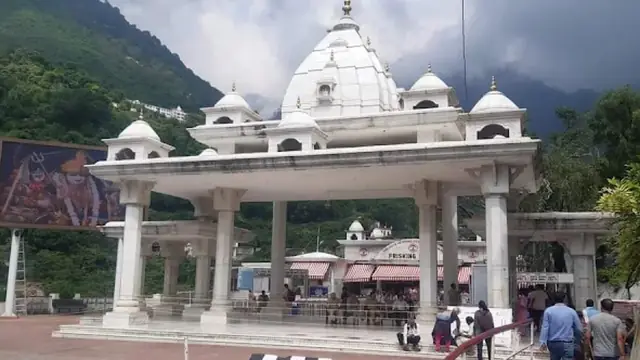
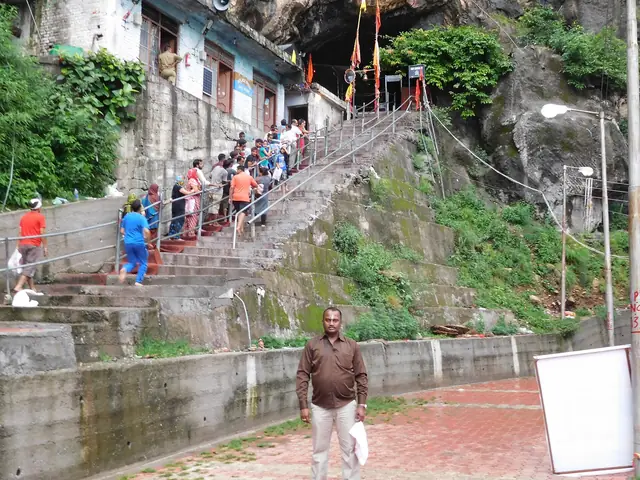
Dogra tradition says Raja Jambulochan, hunting on the Tawi, saw a lion and a goat drink at the same pool and founded a city there, while his brother Bahulochan built the fort on the opposite bank. Bahu Fort still stands, with its temple of Mahakali, Bawe Wali Mata, where crowds come on Tuesdays and Sundays. For centuries Jammu was one of the small Rajput hill states between the Punjab and Kashmir. Ranjit Singh took it in 1808, and in 1822 he made Gulab Singh, a Dogra who had served in his army, Raja of Jammu. With his brothers Dhian Singh and Suchet Singh, Gulab Singh became one of the great powers of the Lahore court.
02Raghunath and the Dogra state
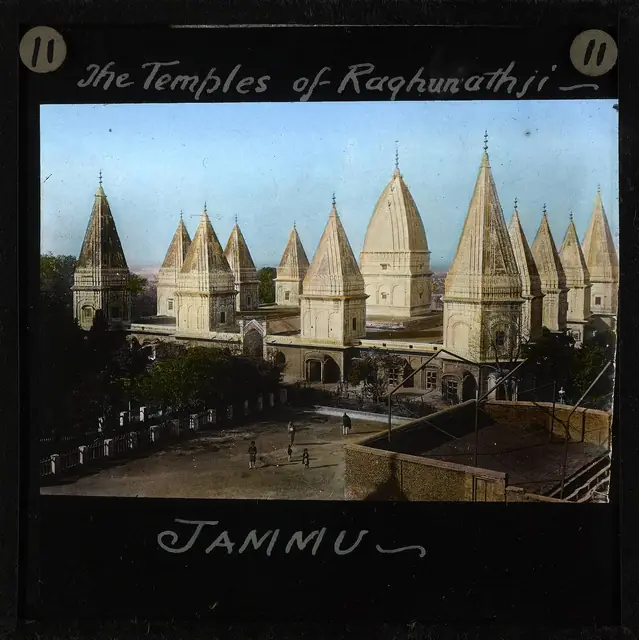
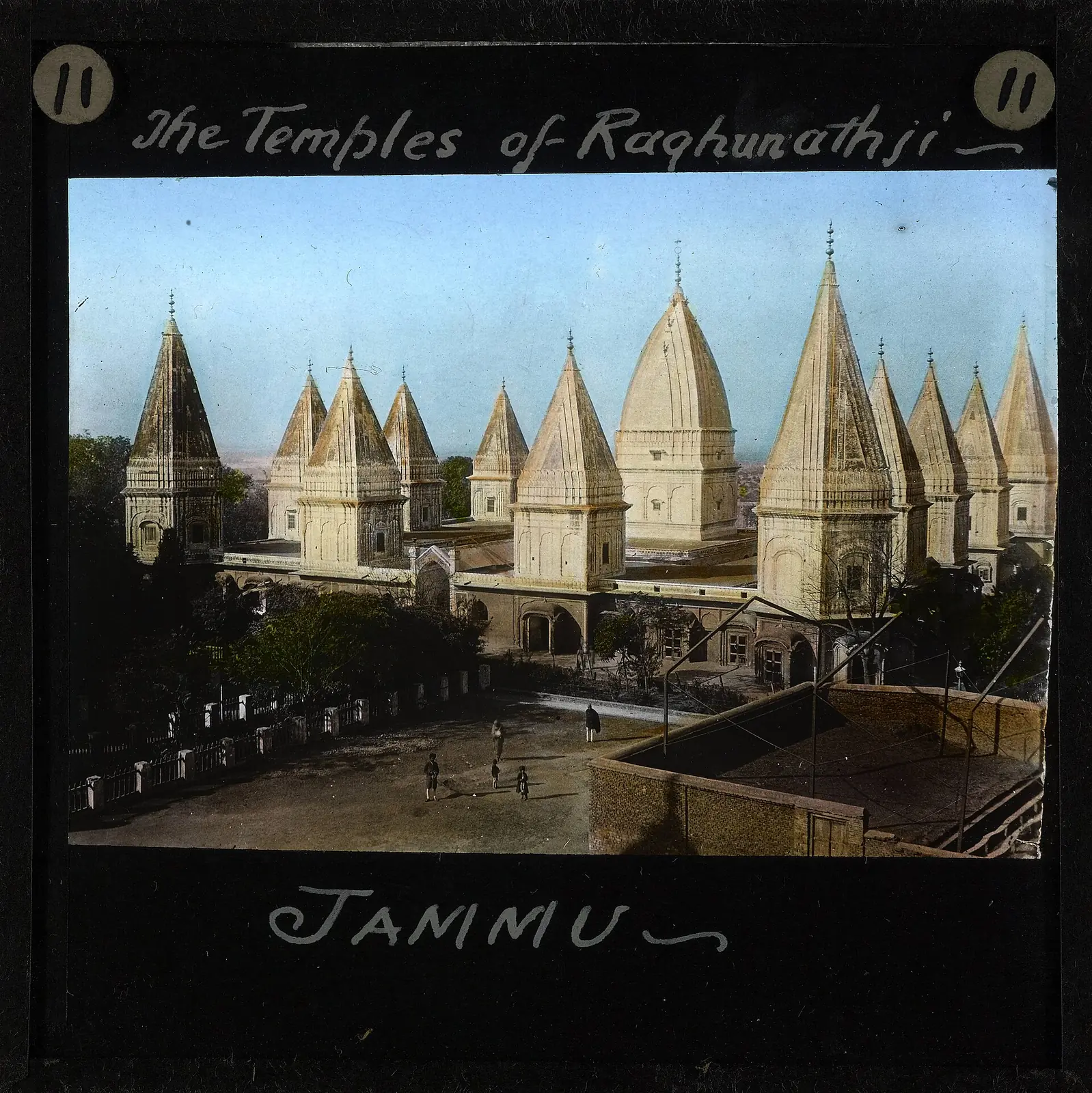
From Jammu Gulab Singh’s general Zorawar Singh crossed the Himalaya into Ladakh in 1834 and Baltistan in 1840, and reached Lake Mansarovar in 1841. After the first Anglo-Sikh war the Treaty of Amritsar of 16 March 1846 gave Gulab Singh the Kashmir valley as well, and the state of Jammu and Kashmir was born. Gulab Singh began the Raghunath temple in 1835 and his son Ranbir Singh finished it in 1860; its sanctum holds Shri Rama with Sita and Lakshmana, and Ranbir Singh gathered there a library of Sanskrit manuscripts, among them Vedic texts copied centuries ago. On 26 October 1947 Maharaja Hari Singh signed the instrument of accession to India.
The life of this place
- 1822Ranjit Singh makes Gulab Singh Raja of Jammu.
- 1835Gulab Singh begins the Raghunath temple.
- 16 March 1846The Treaty of Amritsar creates the state of Jammu and Kashmir.
- 1860Ranbir Singh completes the Raghunath temple.
- 26 October 1947Maharaja Hari Singh accedes to India.
- 2002Terrorists attack the Raghunath temple twice, in March and November.