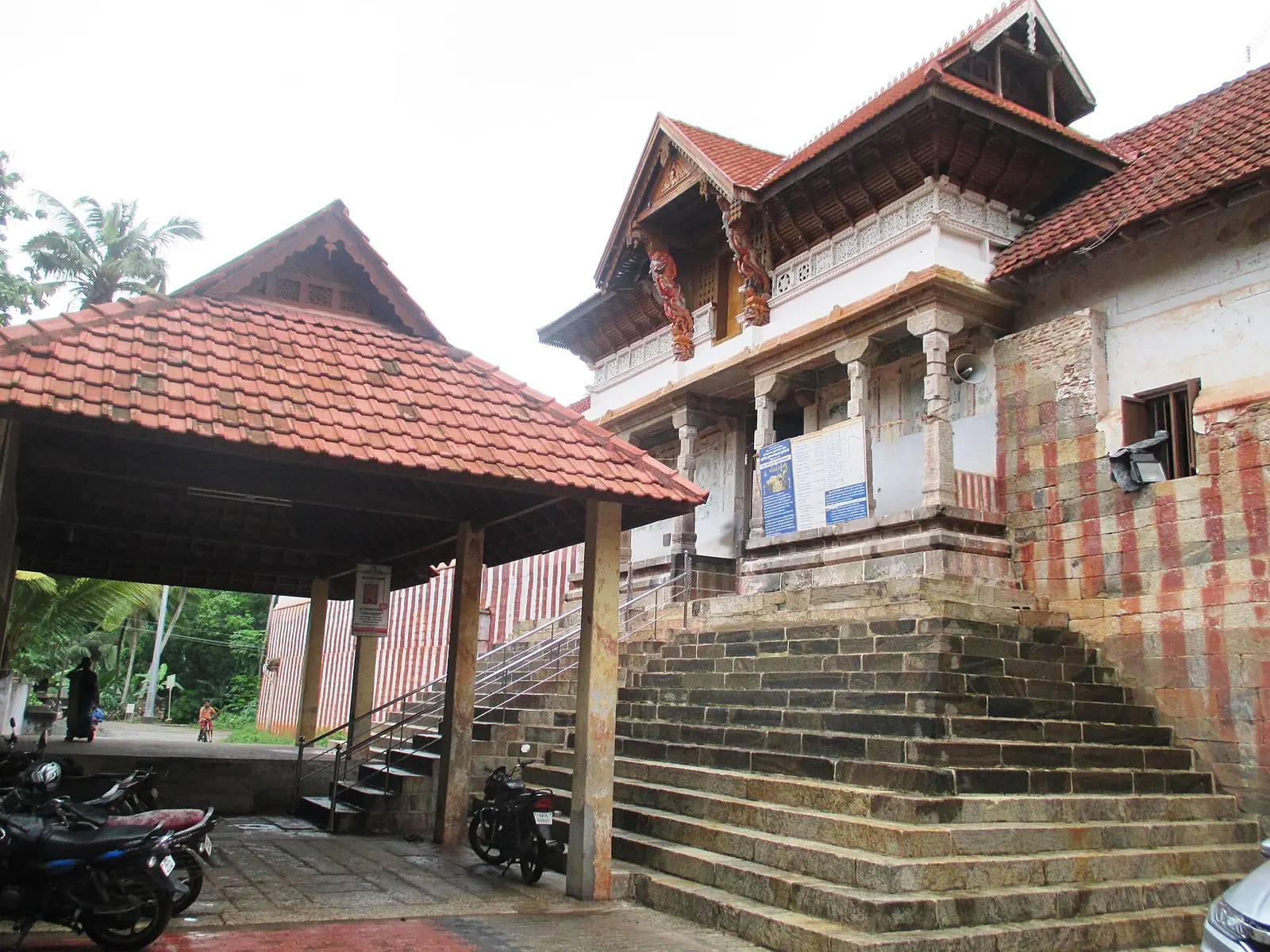
01Keshi and the circling river
The temple’s katha says the Lord slew the asura Keshi and lay down upon him, and that Keshi’s wife sent the rivers to drown the place; Bhumi Devi raised the ground, and the waters could only flow round it. Vattaru means the circling river, and the Kothai and Pahrali still bend about the hill. The reclining image, about twenty-two feet long, faces west and is made of katusarkara, a compound of herbs and lime, not stone, so it is never bathed. Its plan matches the Padmanabhaswamy temple.
02Nammalvar’s decad and Travancore
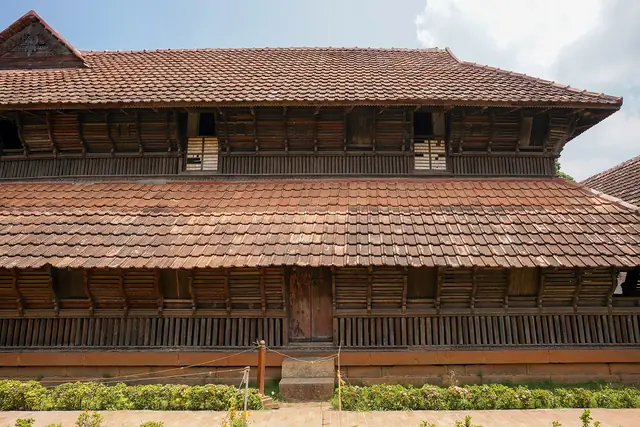
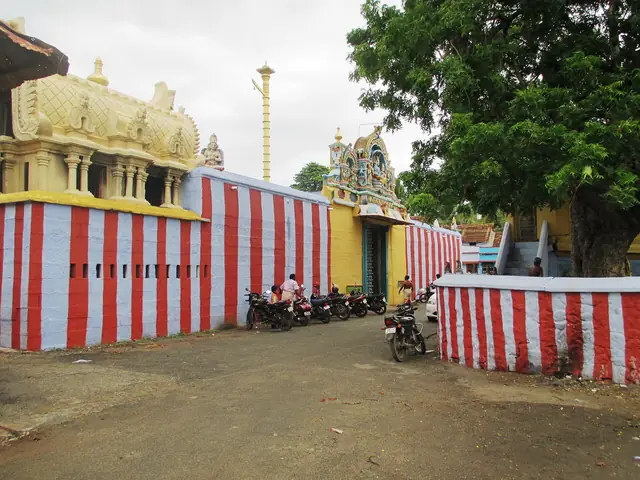
Nammalvar sang Thiruvattaru in the sixth decad of the tenth hundred of the Thiruvaimozhi, eleven pasurams; he says he will cut his old karma by praising Adikesava. The temple, a blend of Tamil and Kerala building, sits within high walls; the outer corridor stands on more than two hundred stone pillars, and the Othakkal mandapam is cut from a single rock. Vijayanagara-period Virabhadra pillars of the early 1500s stand in the halls. The flagstaff was renewed under Sree Moolam Thirunal in 1071 of the Kollam era. After the states were reorganised in 1956 the temple passed from Travancore to Tamil Nadu’s HR&CE.
The life of this place
- Alvar periodNammalvar sings Thiruvattaru in the Thiruvaimozhi.
- Kollam era 1071 (1895–96 CE)The flagstaff is renewed under Sree Moolam Thirunal of Travancore.
- 2022The temple’s kumbhabhishekam is held after about four centuries.
About 6 km from Marthandam and 50 km from Thiruvananthapuram. Men may be asked to remove shirts, as in Kerala temples.