01The road and the toll
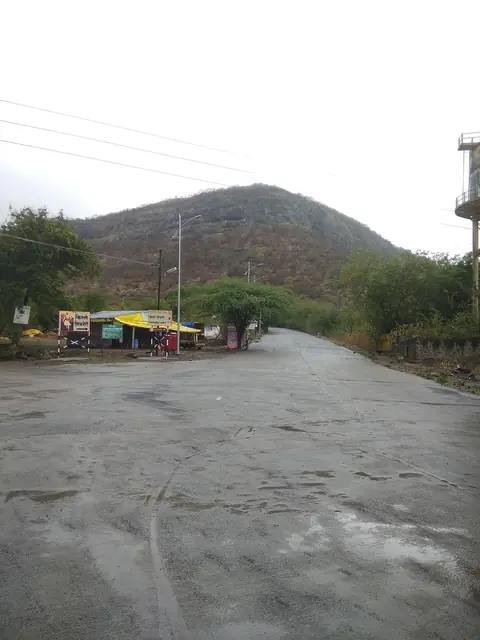
Goods landed at Kalyan and Sopara came up the Sahyadri wall by this pass, a climb of some 700 metres through a cleft in the rock, to reach Junnar and the Deccan plateau. The name is usually read as nane, coins, and ghat: the coin pass. At the top stands a huge stone pot carved from one block, which local people say held the toll coins. The road is still walked, and on a clear morning you can see down the whole stepped gorge to the plain.
02Naganika’s inscription
In the cave at the head of the pass, the widowed queen Naganika had a long Prakrit inscription in Brahmi cut on the walls. It opens with salutations to Dharma, Indra, Sankarshana and Vasudeva, Chandra and Surya, and the four lokapalas Yama, Varuna, Kubera and Vasava. It then lists the sacrifices of her husband Satakarni: two Ashvamedhas, a Rajasuya, the Agnyadheya, the Gavamayana and many soma rites, with the dakshina paid for each in cows, horses, elephants, villages and karshapana coins. Above it were relief figures labelled with the names of Simuka, Satakarni and Naganika; only the labels and the feet survive. It is the earliest record of the Satavahanas and one of the first to name Vasudeva and Sankarshana together.
The life of this place
- c. 1st century BCEQueen Naganika has the cave and the record of Satakarni’s sacrifices cut at the head of the pass.
- 1883The inscription is published by Georg Bühler in the Archaeological Survey of Western India.
Reached from the Malshej road above, or as a stiff climb from Vaishakhare village below; avoid the heaviest monsoon days.