01Bhima, son of Kumbhakarna
The Shiva Purana tells the katha in its Kotirudra Samhita. Bhima, a son of Kumbhakarna born after Rama had slain his father, won a boon from Brahma and turned on the devotees of Shiva. He threw King Sudakshina of Kamarupa into prison, where the king went on worshipping a linga of clay. When Bhima raised his sword to strike that linga, Mahadev burst out of it and burned the asura to ash. The devas begged him to stay, and he remained as Bhimashankar. The Dvadasha Jyotirlinga Stotra names him in a single phrase, ‘Dakinyam Bhimashankaram’.
02A bell from Vasai
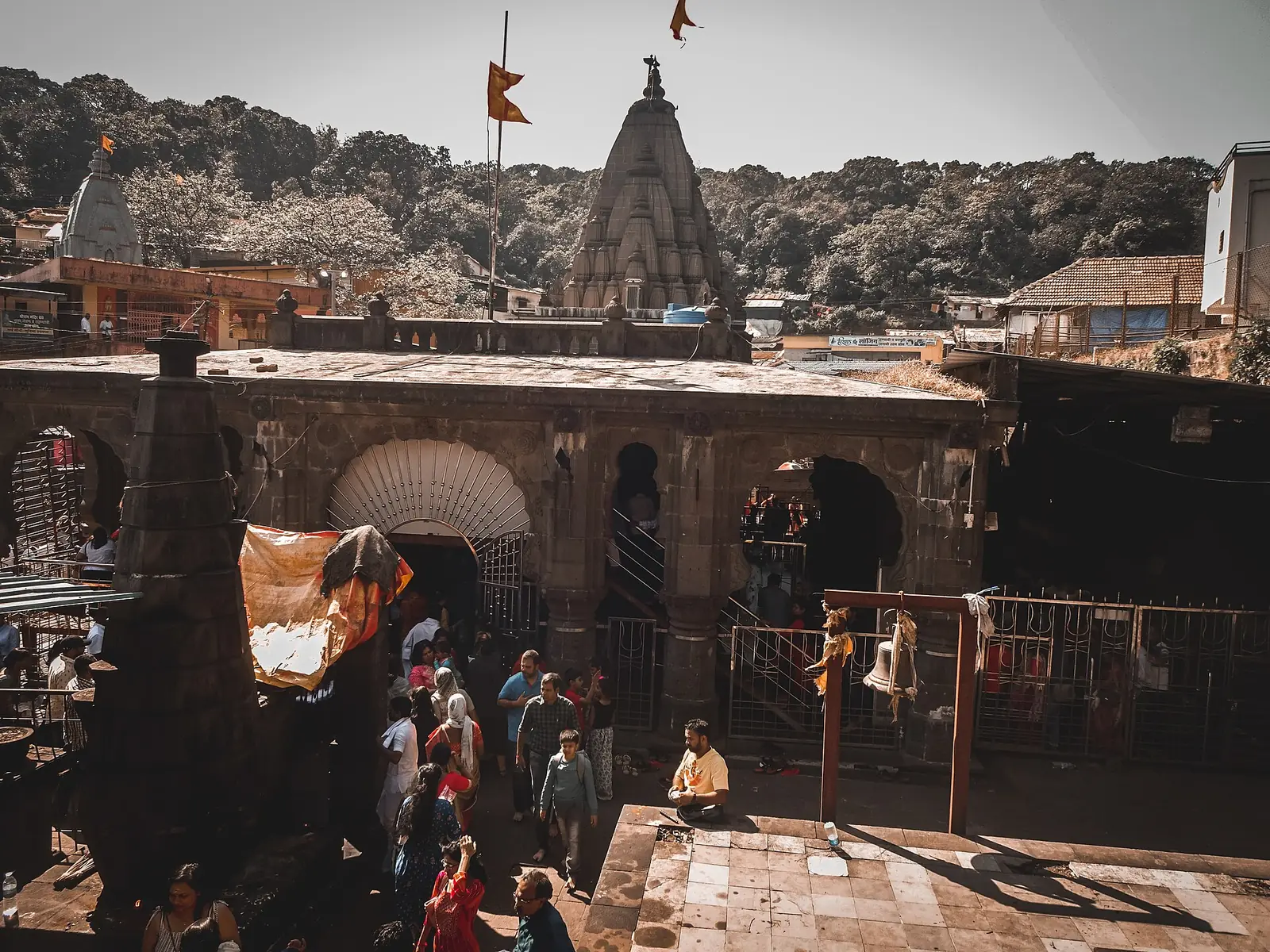
The temple you see is built in the Nagara manner of hard local basalt, with a low shikhara and a carved sabhamandapa; Maratha tradition credits Nana Phadnavis with much of the 18th-century work. Hanging near the entrance is a great bell of European make with a cross on it. It came from a Portuguese church at Vasai, taken when Chimaji Appa captured the Vasai fort in 1739, and was offered here as a trophy. Around the temple the forest is protected as the Bhimashankar Wildlife Sanctuary, home of the shekru, the giant squirrel that is Maharashtra’s state animal.
The life of this place
- 1739After Chimaji Appa takes Vasai from the Portuguese, a church bell is offered at Bhimashankar.
- 18th centuryThe stone temple and sabhamandapa take their present form under Peshwa-era patrons.
- 1985The surrounding forest is declared the Bhimashankar Wildlife Sanctuary.
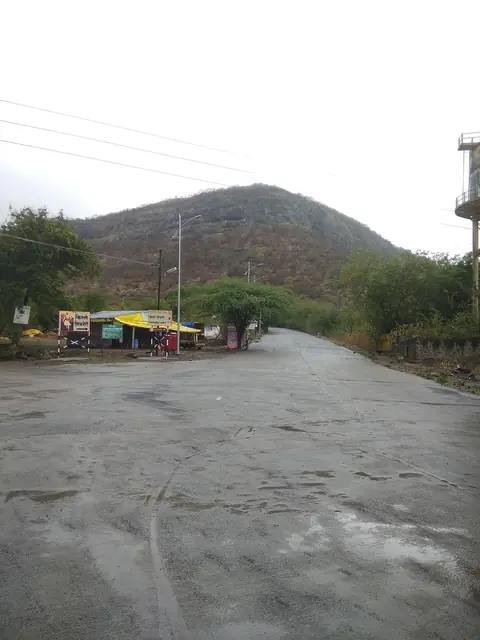
About 110 km north-west of Pune by road. Mahashivaratri and the Shravan Mondays draw the biggest crowds; in the monsoon the last stretch is often in thick fog.