01Mandapadurga
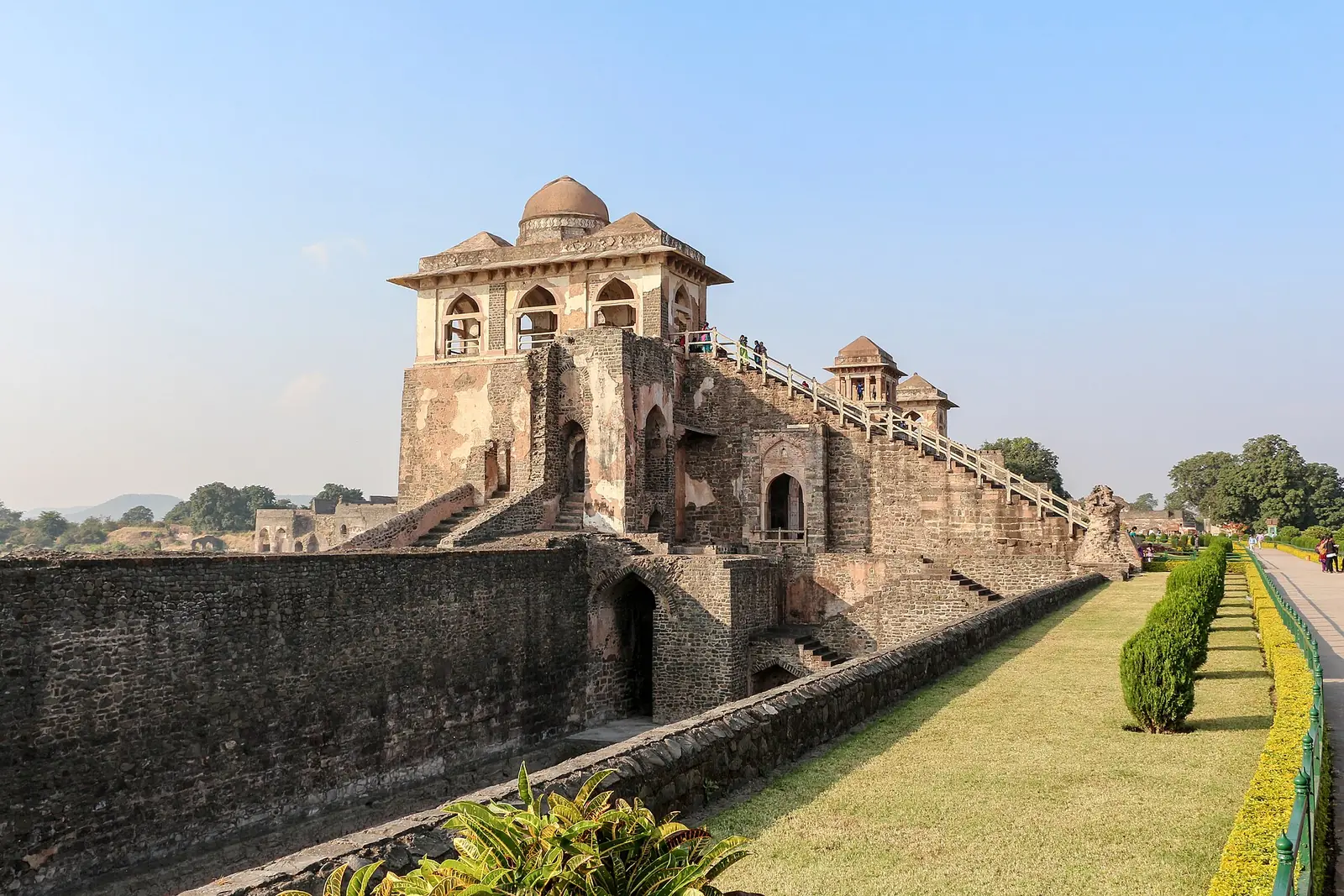
The Paramaras of Dhar held this plateau as a fort, Mandapadurga, which they used as a refuge in hard years. In 1305 Ain-ul-Mulk Multani, Alauddin Khalji’s general, took Malwa and killed the Paramara king Mahalakadeva, and Mandu passed to the Delhi governors. When Delhi broke up after Timur’s sack, Dilawar Khan Ghuri made himself independent, and his son Hoshang Shah moved the capital from Dhar to Mandu. Hoshang’s marble tomb and the Jami Masjid, the Jahaz Mahal between two tanks and the Hindola Mahal belong to this Sultanate city. Mahmud Khalji, who seized the throne in 1436, fought Rana Kumbha of Mewar for years, and both sides raised towers claiming victory.
02Roopmati’s pavilion
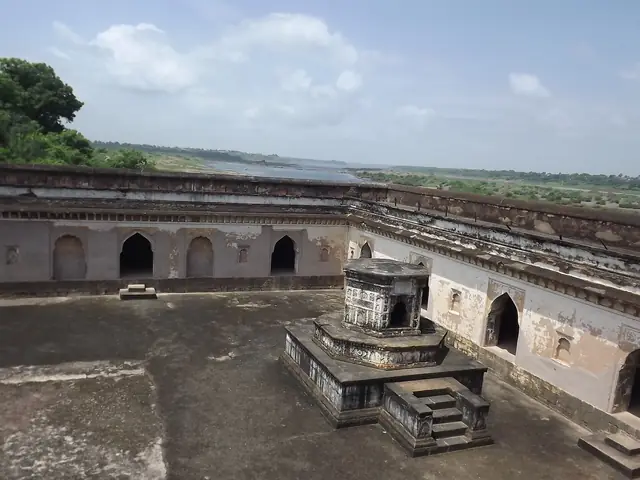
Bahadur Shah of Gujarat took Mandu in 1531, and Humayun took it from him in 1535. The last independent ruler, Baz Bahadur, is remembered for his music and for Roopmati, the singer from the Narmada country whose pavilion on the southern edge looks down over the Nimar plain towards the river. In 1561 Akbar’s general Adham Khan defeated Baz Bahadur at Sarangpur and marched on Mandu, and Roopmati took poison rather than be taken, as the Malwa ballads and Akbar’s own chroniclers tell. Jahangir spent months at Mandu in 1617 and wrote of its monsoon. The Marathas took Malwa in the 1730s, and Mandu passed to the Pawars of Dhar. Within the walls, the Rewa Kund tank and the Nilkanth Mahadev shrine in a Mughal pavilion are still visited.
The life of this place
- 1305Ain-ul-Mulk Multani takes Malwa and kills the Paramara king Mahalakadeva.
- early 15th centuryHoshang Shah moves the Malwa Sultanate’s capital from Dhar to Mandu.
- 1531Bahadur Shah of Gujarat takes Mandu.
- 1535Humayun takes Mandu from Bahadur Shah.
- 1561Adham Khan defeats Baz Bahadur; Roopmati takes poison.
- 1617Jahangir stays at Mandu through the monsoon.
- 1730sThe Marathas take Malwa; Mandu passes to the Pawars of Dhar.
Mandu is 100 km from Indore by Dhar. Go in the monsoon, July to September, when the tanks fill and the plateau turns green.