01Bhoja’s Dhar
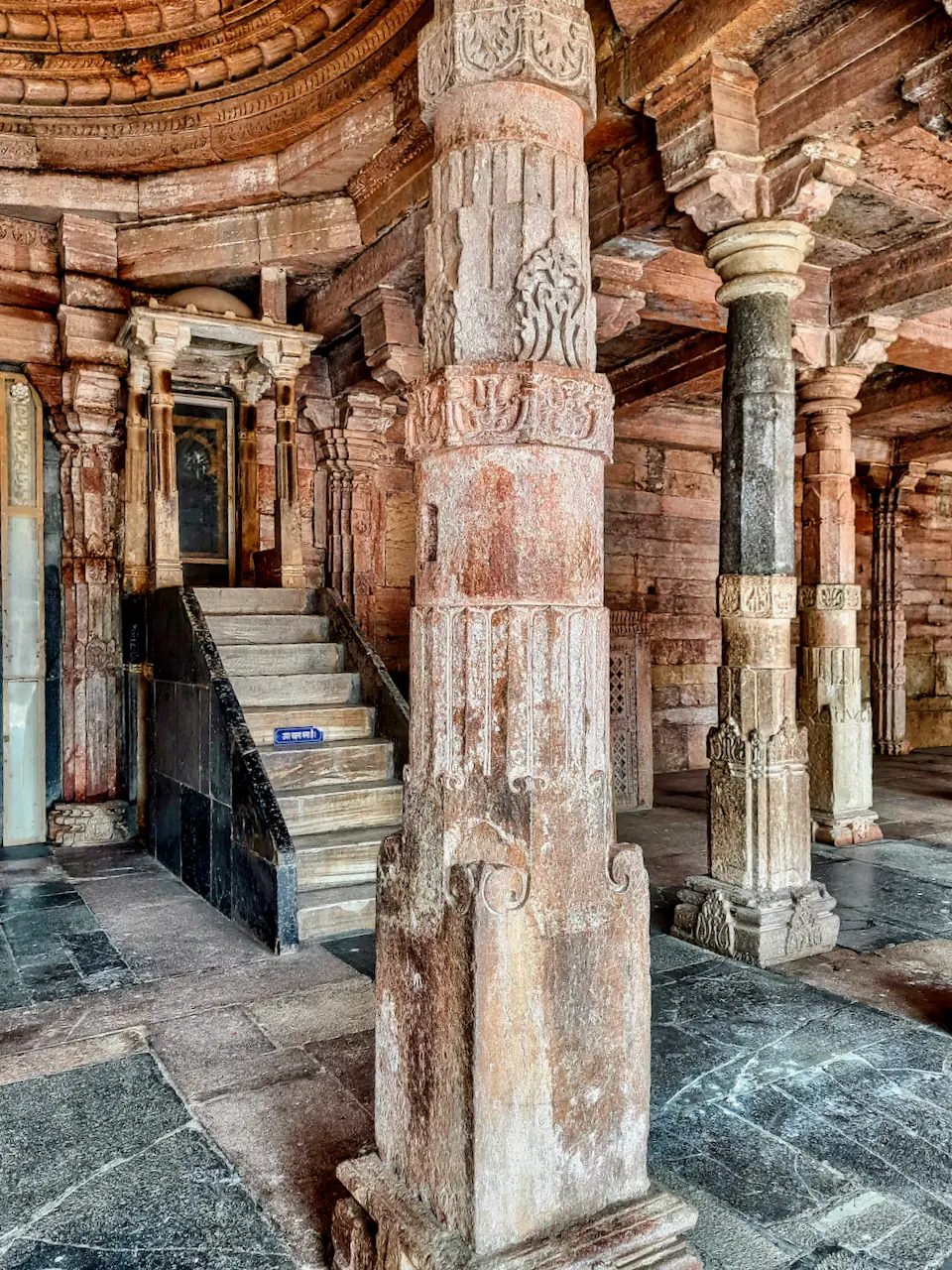
Bhoja of the Paramaras was the most famous scholar-king of medieval Bharat. Works on poetics, grammar, architecture and yoga go under his name, among them the Samarangana Sutradhara and the Sarasvatikanthabharana, and his capital Dhar became a city of pandits. In 1903 the Sanskritist K. K. Lele noticed that slabs set into the walls and floor of the old building at Dhar were covered with Sanskrit and Prakrit. They carry a serpentine chart of the Sanskrit letters and verb endings, two Prakrit poems in praise of the Kurma avatar ascribed to Bhoja, and the play Parijatamanjari by Madana, the court poet of the Paramara king Arjunavarman, performed at Dhar in the early 13th century.
02Mosque, image and the dispute
Alauddin Khalji’s army took Dhar in 1305, and under the Khaljis and the Malwa Sultans the building was made into a mosque, its columns and inscribed slabs reused. A marble image from Dhar in the British Museum, dated by its inscription to 1034 CE, is held by the Hindu side to be the Vagdevi of Bhojshala; the museum catalogues it as Ambika. From 2003 an ASI order allowed Hindu puja on Tuesdays and Vasant Panchami and namaz on Fridays. In 2024 the Madhya Pradesh High Court ordered an ASI survey, whose report was filed that July. On 15 May 2026 the High Court held the complex to be a temple of Vagdevi and set aside the Friday namaz arrangement. In July 2026 the Supreme Court declined to stay that judgment and kept the appeals for final hearing.
The life of this place
- 1034 CEDate of the inscribed marble image from Dhar, now in the British Museum.
- early 13th centuryMadana’s play Parijatamanjari is staged at Dhar in Arjunavarman’s reign and later cut on stone.
- 1305Ain-ul-Mulk Multani takes Malwa and Dhar for Alauddin Khalji.
- 14th–15th centuryThe building is converted into a mosque, with temple and school material reused.
- 1903K. K. Lele identifies the inscribed slabs in the walls and floor.
- 2003ASI order allows Hindu puja on Tuesdays and Vasant Panchami and namaz on Fridays.
- March–July 2024ASI survey ordered by the Madhya Pradesh High Court; report filed in July.
- 15 May 2026The High Court’s Indore bench holds the complex to be a temple of Vagdevi and sets aside the Friday namaz arrangement of 2003.
- 14 July 2026The Supreme Court declines to stay the judgment and keeps the appeals for final hearing.
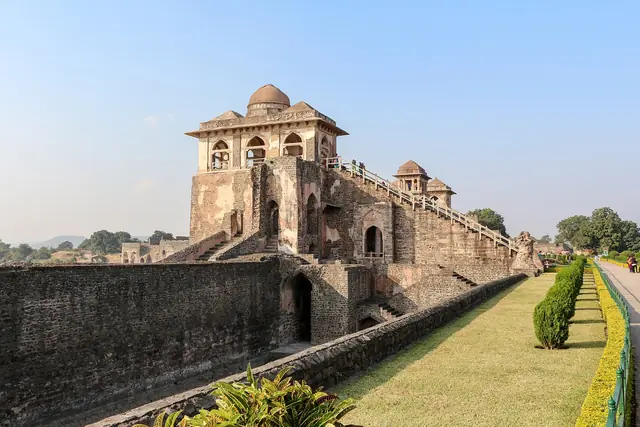
Dhar is 60 km west of Indore. The site is an ASI monument, and its arrangements have changed since the 2026 judgment, so check before you go. Mandu is 35 km on.