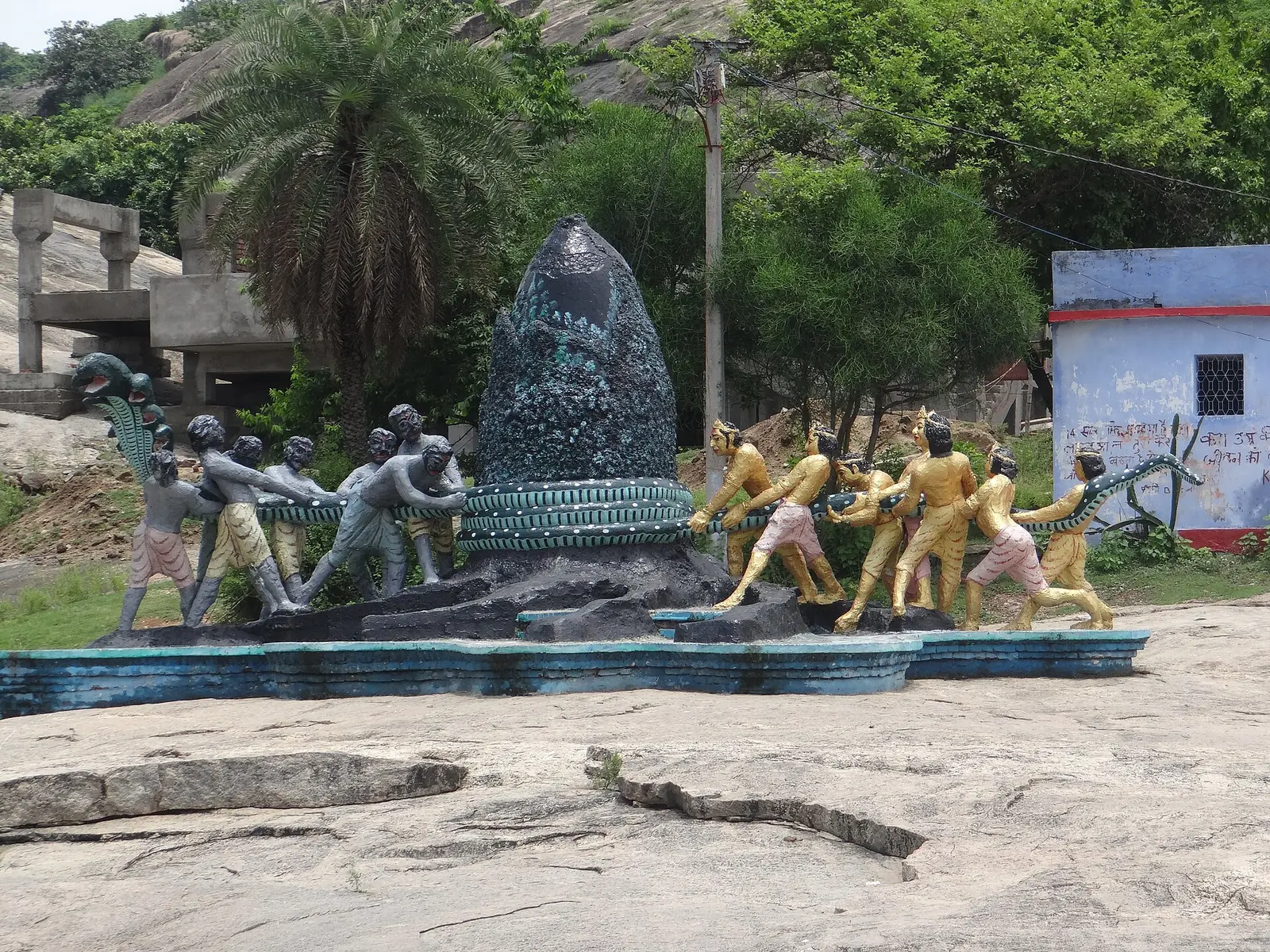
01The churning rod
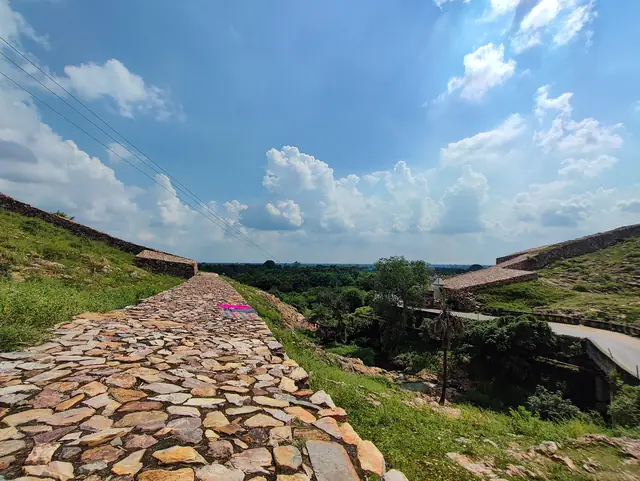
The Bhagavata Purana tells how the devas and asuras made Mount Mandara the churning rod and the serpent Vasuki the rope to churn the ocean of milk for amrita, and how Bhagwan Vishnu as Kurma bore the mountain on his back. At Mandar the hill rises alone out of the plain, and a band cut round its flank is shown as the rope’s mark. At its foot lies the Papaharini tank, and a great fair gathers here at Makar Sankranti, when pilgrims bathe and climb. Vishnu is worshipped here as Madhusudan, slayer of the asura Madhu, whom the local katha says he buried under the hill.
02Kings and Tirthankaras
Rock inscriptions on the hill record pious works by the Later Gupta king Adityasena and his queen Konadevi in the seventh century, when the Later Guptas ruled Magadha. For Digambara Jains Mandargiri is the place where Vasupujya, the twelfth Tirthankara, attained nirvana, and a Jain temple crowns the summit. Rock-cut images and small shrines are scattered up the slopes, along with inscriptions in later scripts.
The life of this place
- 7th centuryAdityasena and Queen Konadevi’s works are recorded on the hill.
Mandar is near Bausi, about 50 km south of Bhagalpur; Makar Sankranti brings the largest crowds.