01Where the Ganga turns north
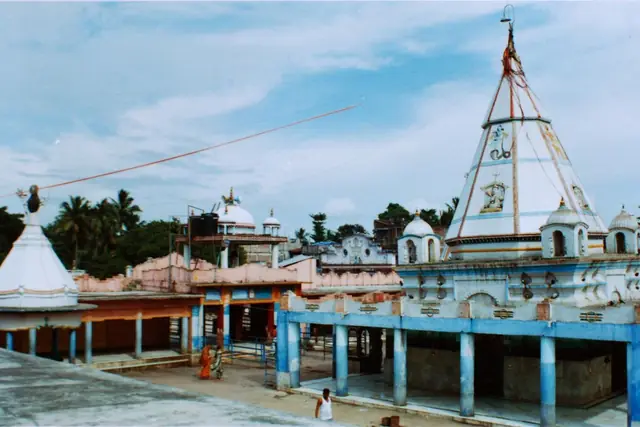
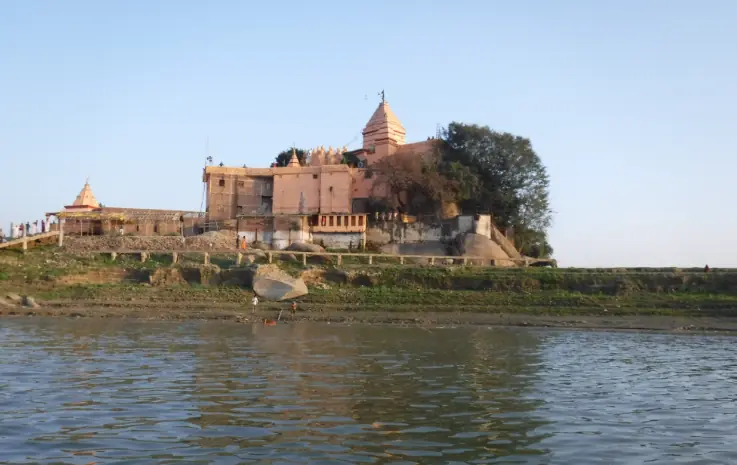
At Sultanganj the Ganga bends and flows north, uttaravahini, and water taken from a north-flowing Ganga is held especially pure. That is why the kanwar to Deoghar starts here and not elsewhere. In the month of Shravan lakhs of kanwariyas in saffron bathe at the ghat, fill their pots, take darshan of Ajgaibinath on his rock, and set off on the barefoot walk to Baidyanath, chanting “Bol Bam”. The pots must not touch the ground until the water is poured on the Jyotirlinga.
02Jahnu’s rock
The rocks here are linked with the rishi Jahnu, who, the Puranas tell, drank up the Ganga when her flood disturbed his yajna and released her again at Bhagiratha’s prayer, which is why she is called Jahnavi. The rock next to the temple, Jahangira, carries old reliefs of Shiva, Vishnu and other deities cut into its face. The great copper Buddha found at Sultanganj in the 1860s shows how old this river crossing is.
Sultanganj is on the Bhagalpur–Patna rail line; boats cross to the rock temple. The Shravani Mela runs through Shravan (July–August).