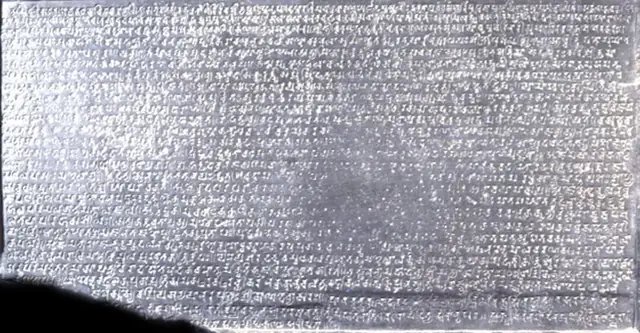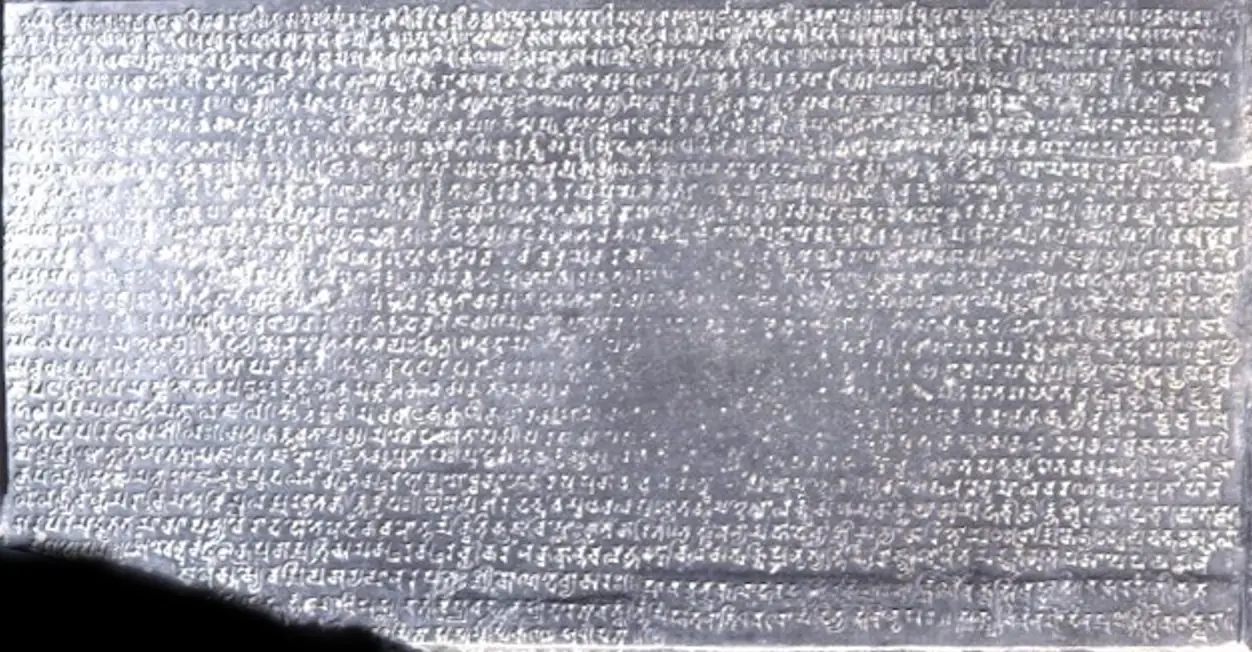
01The Aphsad stone
Almost all we know of them comes from one inscription, found at Aphsad near Nawada in Bihar and set up by Adityasena. It gives eight generations from Krishnagupta. Kumaragupta of this line defeated the Maukhari Ishanavarman, then went to Prayaga and gave up his life in fire there. His son Damodaragupta broke through the Maukhari elephant ranks and fell in the battle. Mahasenagupta won a victory over Susthitavarman of Kamarupa on the banks of the Lauhitya, the Brahmaputra, and his fame was sung there, the inscription says.
02Kumara and Madhava at Thanesar
Bana’s Harshacharita brings two princes, Kumaragupta and Madhavagupta, sons of the king of Malava, to Prabhakaravardhana’s court as companions for Rajyavardhana and Harsha. Madhavagupta stayed at Harsha’s side through his reign; the Aphsad inscription calls him a friend of Harsha. After Harsha died in 647, Madhavagupta’s son Adityasena took the title of maharajadhiraja and performed an Ashvamedha. His records are found at Aphsad, at Shahpur on a Surya image dated 672, and on Mandar hill in Bhagalpur, where his queen Konadevi dug a tank.
03The last of the line
Adityasena’s son Devagupta, his grandson Vishnugupta and then Jivitagupta II kept Magadha into the 8th century; the Deo-Baranark inscription of Jivitagupta II records grants continued from earlier kings. In the 730s Yashovarman of Kannauj killed a king of Gauda and Magadha, as Vakpati’s Prakrit poem Gaudavaho tells, and the line disappears after that. Within a few decades Gopala was chosen king of Bengal and the Palas took Magadha.
The rulers
- 1KrishnaguptaFirst in the Aphsad listc. 490–505 CE
- 2Harshaguptac. 505–525 CE
- 3Jivitagupta Ic. 525–545 CE
- 4KumaraguptaBeat Ishanavarman; gave up his life at Prayagac. 545–560 CE
- 5DamodaraguptaFell fighting the Maukharisc. 560–575 CE
- 6MahasenaguptaVictory on the Lauhityac. 575–600 CE
- 7MadhavaguptaCompanion of Harshac. 600–655 CE
- 8AdityasenaMaharajadhiraja; Ashvamedha; Aphsad inscriptionc. 655–680 CE
- 9Devaguptac. 680–700 CE
- 10Vishnuguptac. 700–720 CE
- 11Jivitagupta IIDeo-Baranark inscriptionearly 8th century CE
What they left
- The Aphsad inscription, the family’s own history in stone
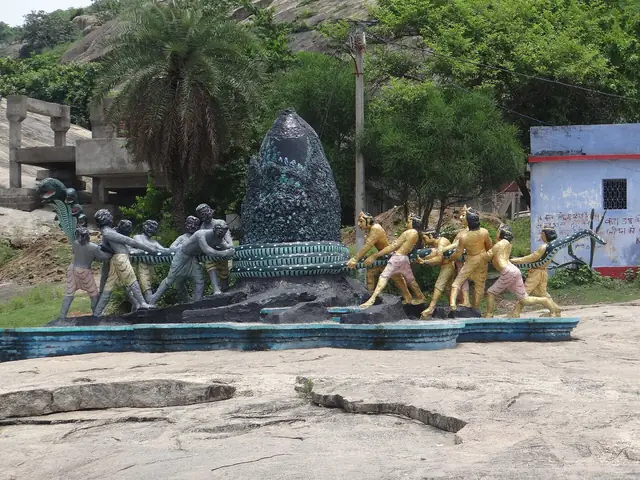
- Vishnu temple and tank at Aphsad
- Records on Mandar hill, a tirtha of Bihar