01Murugan behind the curtain
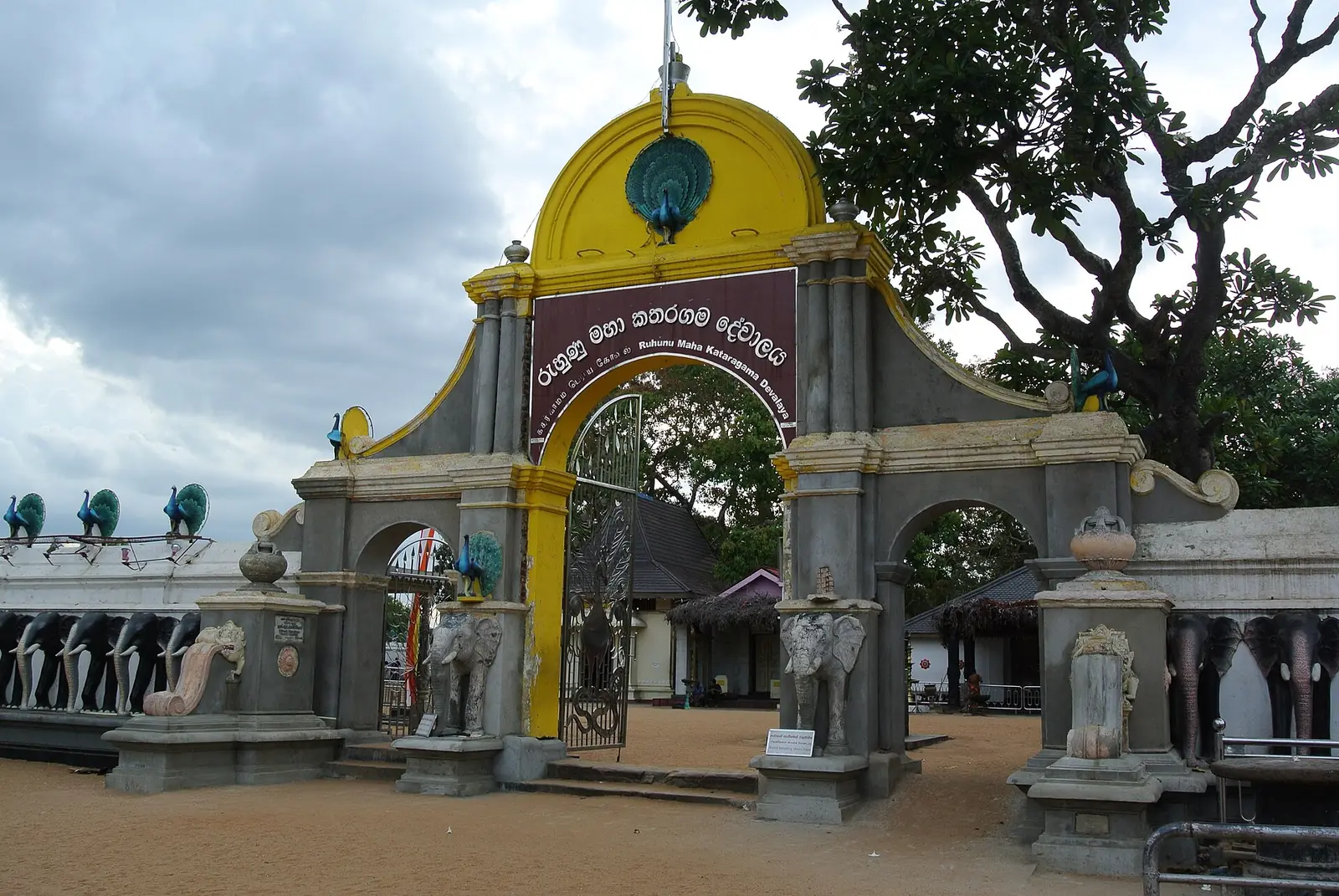
Kataragama has no murti on view. The main shrine is a low, plain building, and in its inner room hangs a painted curtain showing Murugan with his two consorts. Behind it, devotees are told, is a casket holding a yantra, which no one sees. The kapurala priests carry the offerings in with a white cloth tied across the mouth. The katha of the place says Murugan, after his victory over Surapadman, came to this forest and fell in love with Valli, a girl of the hunters, and won her. Arunagirinathar sang Kathirkamam in his Thiruppugazh in the 15th century, and the Tamil name still means the place of the light.
02Pada yatra and the Esala festival
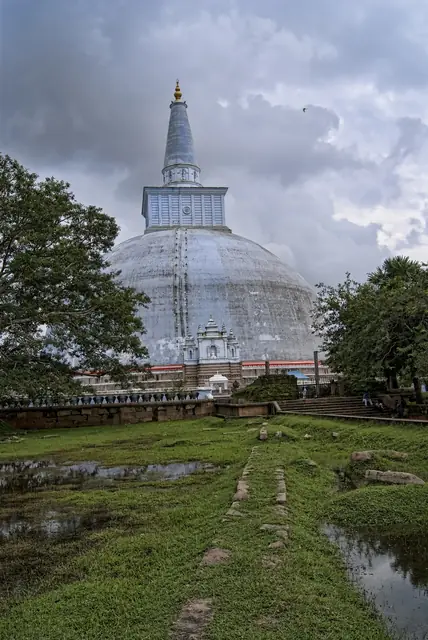
The great festival falls in Esala, July–August, and ends on the full moon with a water-cutting in the Menik Ganga. Through its nights the casket rides an elephant round the sacred ground, and devotees roll in the sand, carry kavadi, pierce their cheeks with vels and walk across fire. For centuries Tamil Hindus came on foot down the east coast from Jaffna, through Batticaloa and the forest of Yala, a walk of some six weeks that a few still make. The Buddhist Kiri Vehera stupa, a mosque and shrines of Shiva, Ganesh and Devasena share the same grounds.
The life of this place
- 15th centuryArunagirinathar sings Kathirkamam in the Thiruppugazh.
About 18 km north of Tissamaharama in the south-east. Evening puja is the main daily worship; the Esala festival runs about two weeks up to the Esala full moon.