01Besieged at eighty
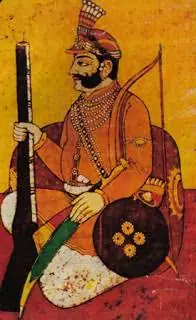
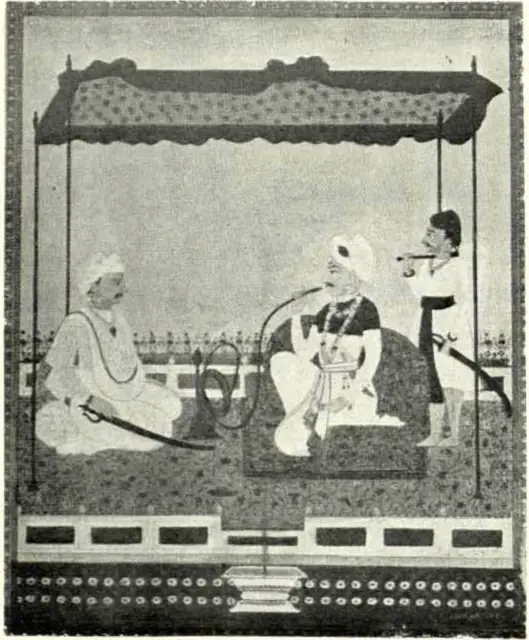
Muhammad Khan Bangash, the Mughal governor of Allahabad, overran Bundelkhand in the winter of 1728, and Chhatrasal, nearly eighty, fell back on the fort of Jaitpur, where he was shut in. He wrote to the young Peshwa Bajirao I for help. A couplet attributed to him in the Bundela tradition compares his plight to that of the elephant Gajendra seized by the crocodile, calling on Bajirao as Vishnu came to Gajendra. Bajirao marched from the Deccan with his cavalry and reached Bundelkhand in March 1729. The Marathas cut Bangash’s supplies, and the besieger was himself hemmed in until he was allowed to withdraw on his promise not to return.
02A gift to the Peshwa
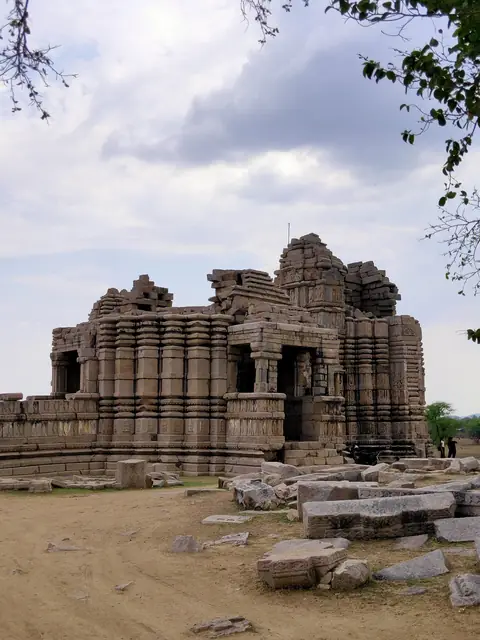
In gratitude Chhatrasal adopted Bajirao as a son and, at his death in 1731, left him a third of his kingdom, the lands around Jhansi, Sagar and Kalpi, which brought the Marathas into Bundelkhand and the Ganga plain. Tradition also tells that Mastani, Bajirao’s companion, came from Chhatrasal’s household. Jaitpur itself went to Chhatrasal’s son Jagat Raj, who ruled it as a separate state from 1731. In 1746 Maratha generals besieged it and made terms with Jagat Raj. The state came under British protection in 1807 and was annexed when its last raja, Khet Singh, died without an heir in 1849. The ruined fort stands above the Bela Tal reservoir.
The life of this place
- 1728–29Muhammad Khan Bangash besieges Chhatrasal at Jaitpur; Bajirao I arrives in March 1729 and breaks the siege.
- 1731Jagat Raj, Chhatrasal’s son, makes Jaitpur the capital of his state.
- 1746Maratha generals besiege Jaitpur and make terms.
- 1849The British annex Jaitpur on the death of Khet Singh.