01The Heggade house and the Daivas
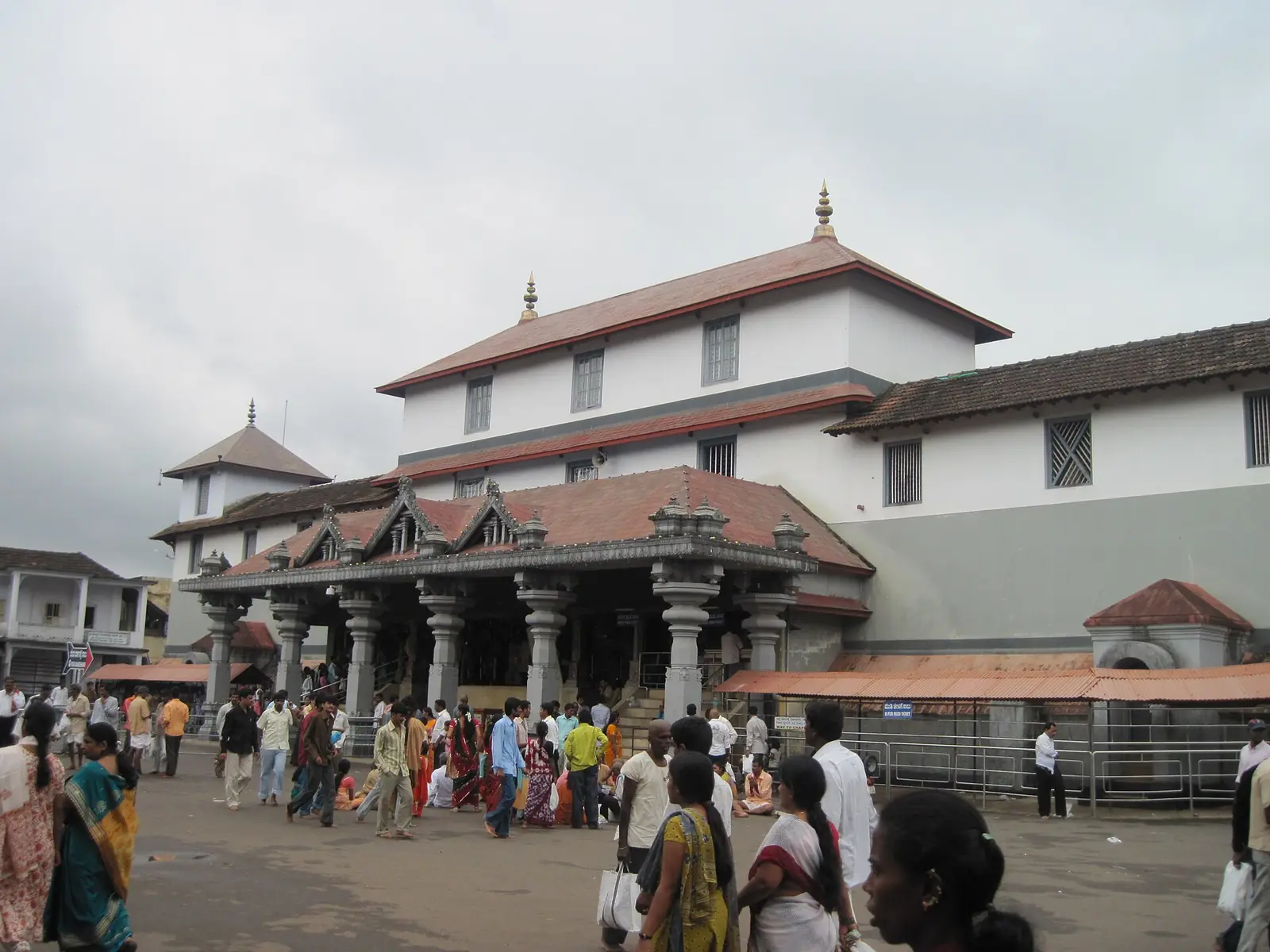
The kshetra’s own account begins with Birmanna Pergade and his wife Ammu Ballalthi, Jains of the village of Kuduma, to whom the Dharma Daivas, the guardian spirits of dharma, appeared and asked for a home. The family gave their house to the Daivas and built shrines for them, and the village became Dharmasthala, the place of dharma. A Shiva linga was later brought from the Kadri temple near Mangaluru and installed as Manjunatha. In the 16th century Sri Vadiraja Tirtha of Sode, the Madhwa saint, reconsecrated it at the family’s request, and ever since Madhwa Brahmins have been the priests while the eldest of the Heggade family, the Dharmadhikari, governs the kshetra.
02Four gifts
Dharmasthala is known for chaturvidha dana, the four gifts: food, learning, medicine and protection. The annachatra serves free meals to every pilgrim, tens of thousands on festival days. People also come to have disputes settled before Manjunatha; a promise made here is held binding. Lakshadeepotsava in Kartik lights the town with lamps, and a sarva-dharma sammelana is held with it. On the Ratnagiri hill stands a 39-foot monolith of Bahubali, set up by the Heggade family in 1982.
The life of this place
- 16th centurySri Vadiraja Tirtha reconsecrates the Manjunatha linga.
- 1982The Bahubali monolith is installed on Ratnagiri hill.
About 75 km east of Mangaluru. Men remove shirts for darshan; the free meal hall is beside the temple.