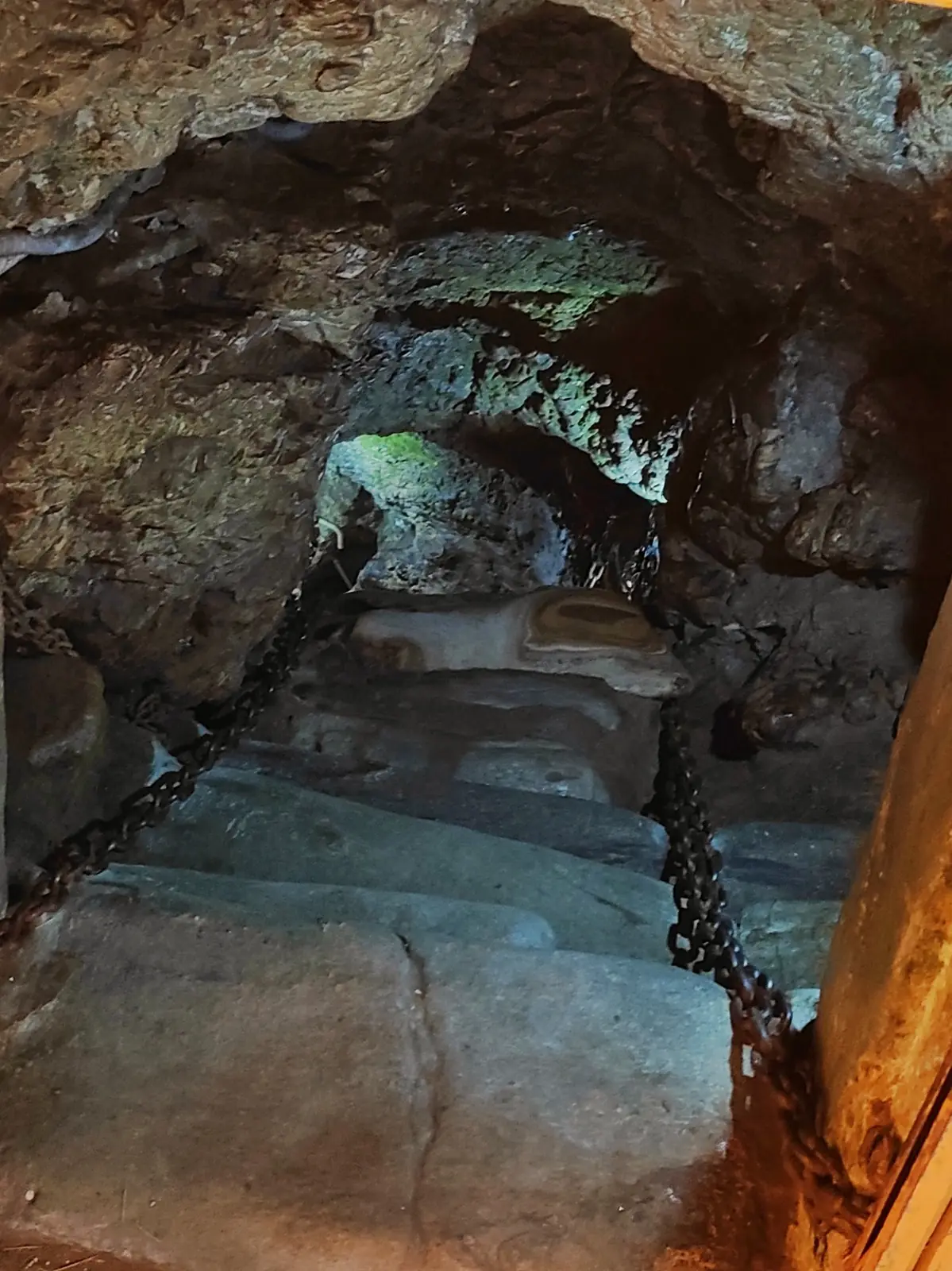
01Rituparna in the cave
The Manas Khand of the Skanda Purana tells how Raja Rituparna of Ayodhya, the same king whom Nala served as charioteer, followed a deer into the forest here and was led by a guardian down into the cave. Sheshnag himself showed him the way, and inside he found Shiva and all the devatas. The cave was then forgotten through the yugas; the Pandavas, the priests say, came here in their exile, and Adi Shankaracharya re-established the worship. The Bhandari family of priests has served the cave for many generations.
02What the rock shows
The priest leads you with a lamp from form to form. The ribs of Sheshnag run along the roof. A stone like a severed head with water dripping on it is Shri Ganesha’s, cut off by Shiva and bathed from above by a lotus of rock. Four small openings are the doors of sin, war, dharma and moksha, two of them shut, according to the tradition, since the ages they stood for are past. There are rocks shown as Kedarnath, Badrinath and Amarnath, and the matted hair of Shiva spreading over the wall. Phones and cameras are not allowed.
About 14 km from Gangolihat and 90 km from Almora. The descent is tight and slippery; it is not for those with knee or breathing trouble. Under ASI protection.