
Kalinga (Odisha)
Odisha and the northern Andhra coast · 7th–13th century, still practised
Odisha developed its own branch of the northern temple with its own names, laid down in the Bhuvana Pradipa and other local Shilpa texts. The sanctum tower is the rekha deula, tall and almost straight-sided until it curves in sharply at the top under a heavy amalaka. In front of it stands the pidha deula, the jagamohana, whose roof is a pyramid of horizontal tiers. Larger temples add a natamandira for dance and a bhogamandapa for the offering, all on one line.
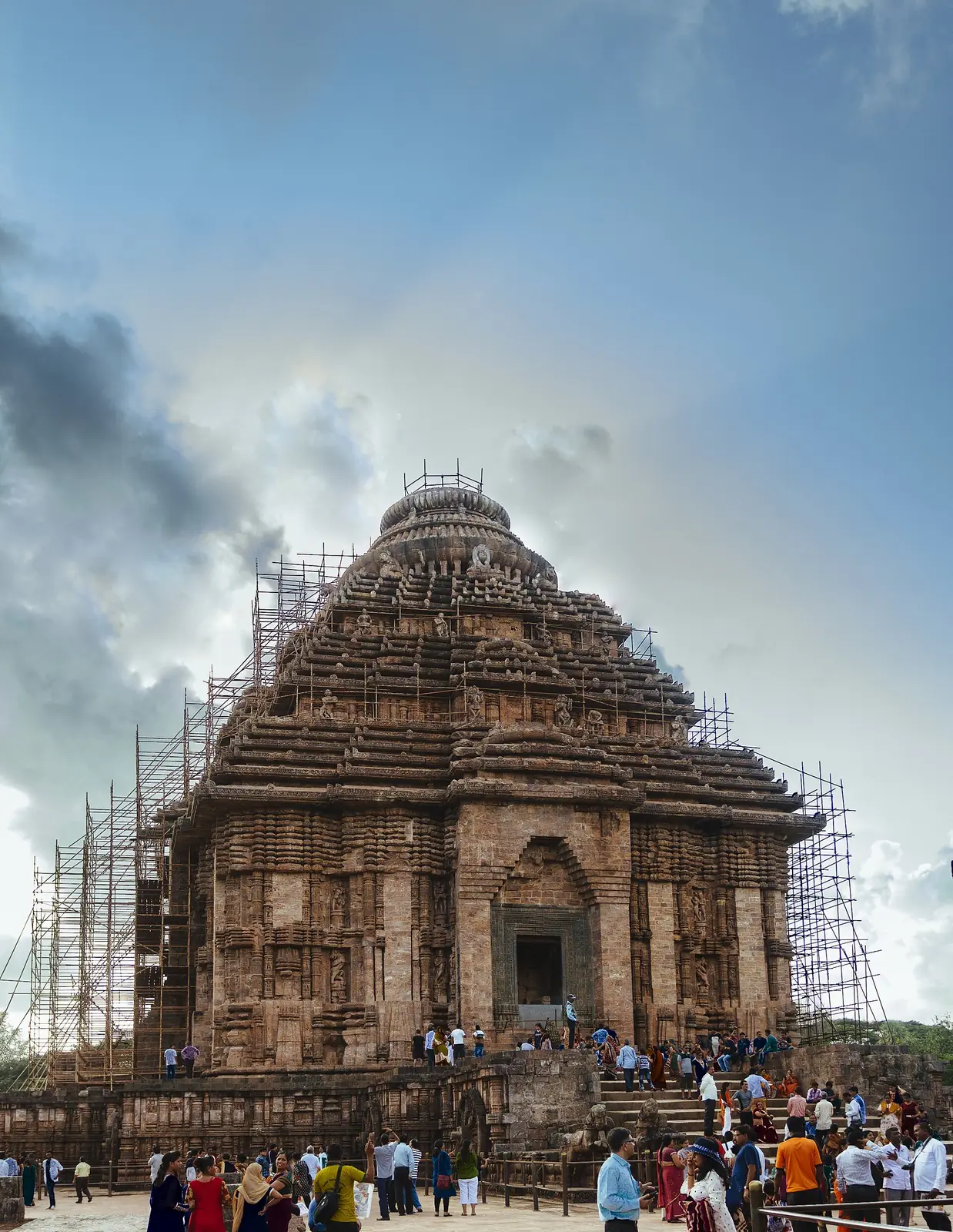
Bhubaneswar holds the whole history in one city: the Parashurameswara of the 7th century, the Mukteshwar of about 950 with its torana arch, and the Lingaraja of the 11th century, whose tower rises about 55 metres. The Jagannath temple at Puri, built under Anantavarman Chodaganga Deva of the Eastern Gangas in the 12th century, is the tallest of the living ones; the Konark sun temple of Narasimhadeva I, built about 1250 as a stone chariot with 24 wheels and seven horses, lost its great tower but keeps its jagamohana. Interiors are plain; the carving is on the outside.
How to recognise it
- Rekha deula over the sanctum, pidha deula over the hall
- Sequence of deula, jagamohana, natamandira, bhogamandapa
- Heavy amalaka, near-vertical tower walls
- Plain interiors, carved exteriors
Great examples
 Standing
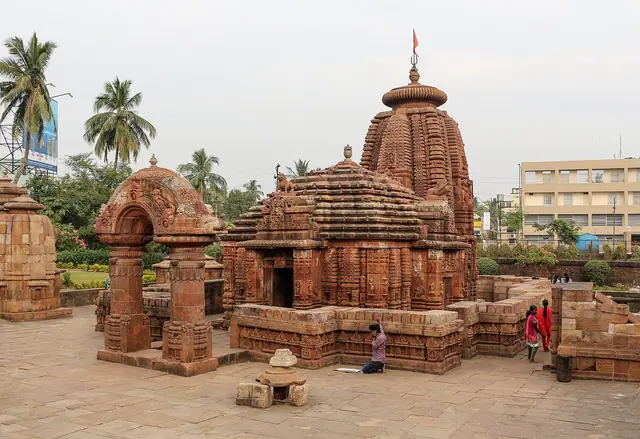
Mukteshwar Temple, Bhubaneswar
A small sandstone temple, barely 10 metres high, that marks the turn from the early to the mature Kalinga style. Its arched torana is found nowhere else in Odisha.
 Standing
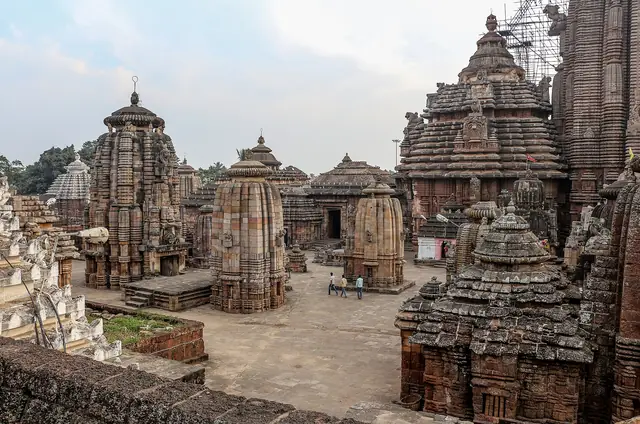
Lingaraja Temple, Bhubaneswar
The great temple of Ekamra Kshetra, from whose name Tribhuvaneshvara the city of Bhubaneswar takes its own. The swayambhu linga is worshipped as Harihara, Shiva and Vishnu together, with bilva and tulsi both offered.
 Standing
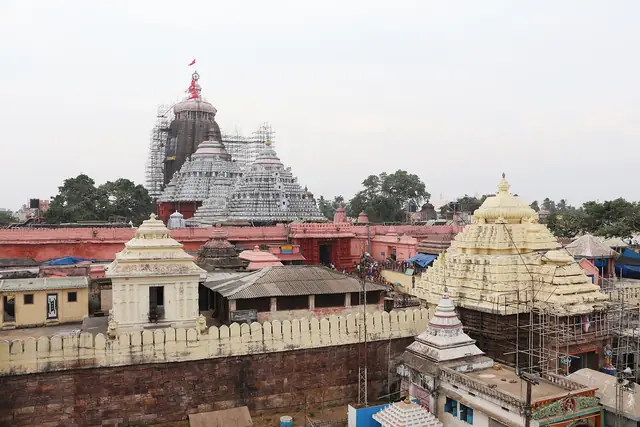
Shri Jagannath Temple, Puri
Purushottama Kshetra, the eastern dham of the Char Dham, where Bhagwan Jagannath, his elder brother Balabhadra and sister Subhadra sit in wooden forms renewed in the Navakalevara rite. The present temple rose under the Eastern Gangas and survived repeated raids because the priests carried the deities away and brought them back.
 Ruined
Konark Sun Temple
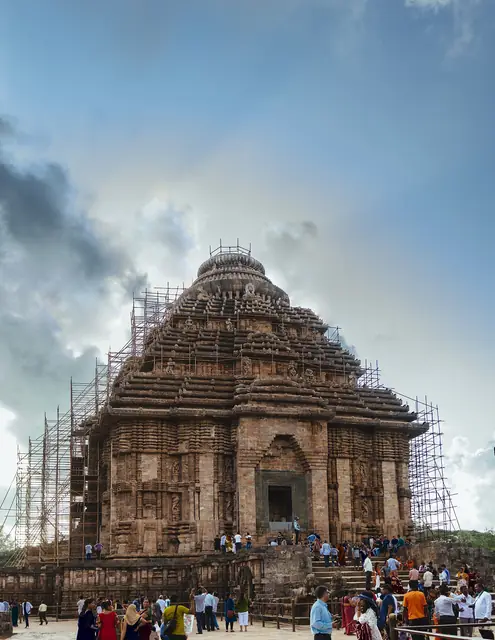
Surya’s chariot in stone, with twenty-four carved wheels and seven horses, raised by Narasimhadeva I around 1250 at Konark, the Arka Kshetra. The great tower has fallen; the jagamohana still stands, filled with sand since 1903 to keep it standing.
 Standing
Maa Biraja Temple, Jajpur
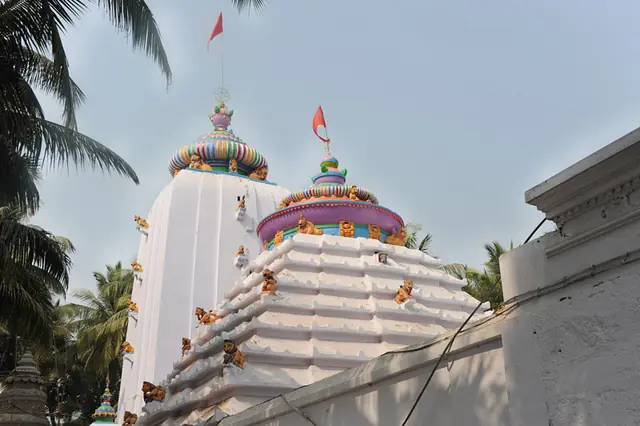
Biraja Kshetra on the Vaitarani, one of the Shakti Peethas, where the Devi stands as a two-armed Mahishamardini. Jajpur is also Nabhi Gaya, where pinda is offered for the ancestors as at Gaya.
 Standing
Mukhalingam Temples (Kalinganagara)
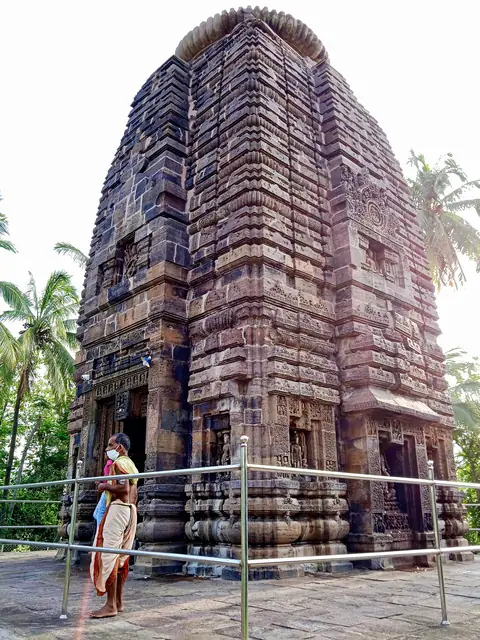
The old Eastern Ganga capital Kalinganagara on the Vamsadhara, where three Shiva temples show the Kalinga style in its youth, before Bhubaneswar and Puri.
 Standing
Chausath Yogini Temple, Hirapur
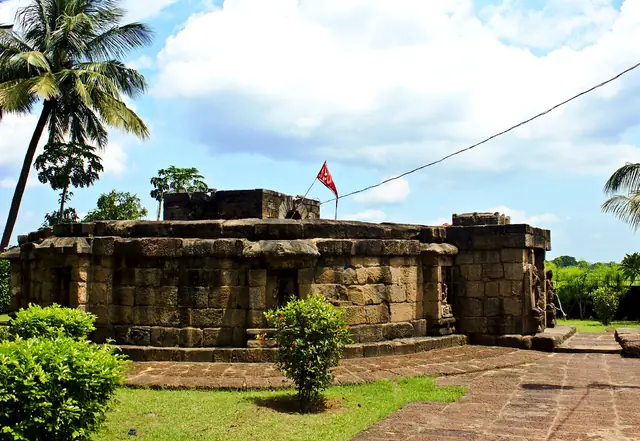
A roofless ring of sandstone, about 7.5 metres across, in the paddy fields 15 km from Bhubaneswar, with sixty-four Yoginis in black chlorite standing in niches round its inner wall.