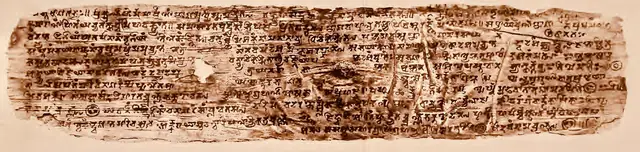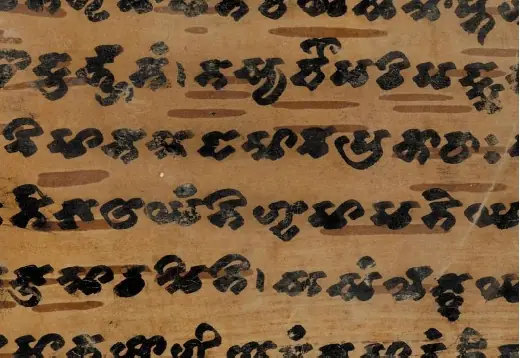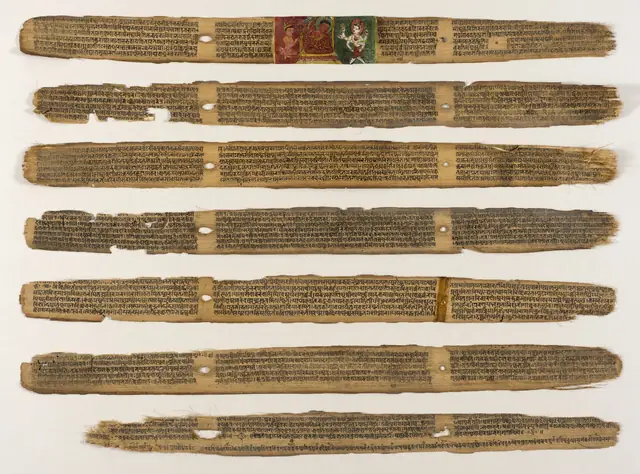
Photo: Ms Sarah Welch · CC BY-SA 4.0
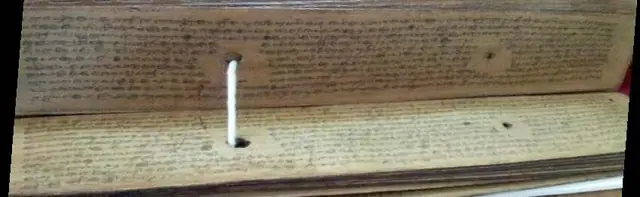
Manuscript · c. 2nd century CE (radiocarbon 80–230 CE)

The Spitzer manuscript

Found
As a heap of more than 1,000 palm-leaf fragments in the Kizil caves near Kucha (Xinjiang, China), by the third German Turfan expedition under Albert Grünwedel in 1906
Kept at
Turfan collection, Berlin

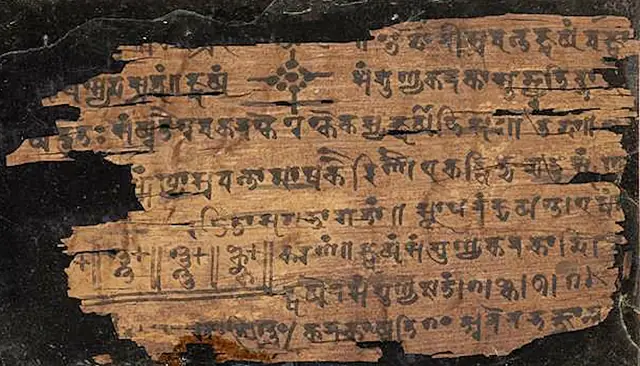
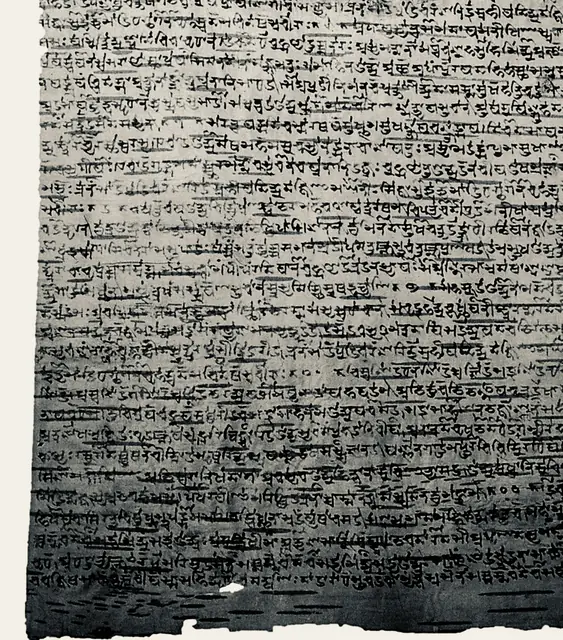
The oldest philosophical manuscript in Sanskrit, named after Moritz Spitzer who first studied it, which holds a list of the parvas of the Mahabharata.

What it says

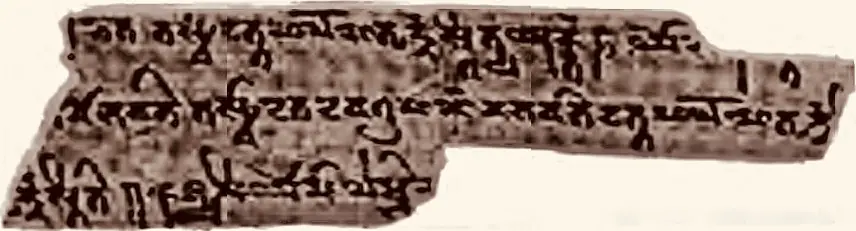
Most of it is Buddhist debate, but it also discusses Nyaya-Vaisheshika and Sankhya ideas and lists the sixty-four arts. One fragment carries a table of contents naming the parvas of the Mahabharata in order with numbers after each; the Virata and Anushasana parvas are not in it.

What it proves

It is the oldest dated list of the Mahabharata’s parvas, showing Maharshi Vyasa’s Itihasa read as a book of parvas in Central Asia by the 2nd century CE.
Evidence for