
गुरु गोविंद दोऊ खड़े, काके लागूँ पाँय।
बलिहारी गुरु आपनो, गोविंद दियो बताय॥
दुख में सुमिरन सब करे, सुख में करे न कोय।
जो सुख में सुमिरन करे, दुख काहे को होय॥
माला फेरत जुग भया, फिरा न मन का फेर।
कर का मनका डार दे, मन का मनका फेर॥
साँई इतना दीजिये, जा में कुटुम समाय।
मैं भी भूखा न रहूँ, साधु न भूखा जाय॥
जाति न पूछो साधु की, पूछ लीजिये ज्ञान।
मोल करो तलवार का, पड़ा रहन दो म्यान॥
धीरे-धीरे रे मना, धीरे सब कुछ होय।
माली सींचे सौ घड़ा, ऋतु आए फल होय॥
ऐसी बानी बोलिए, मन का आपा खोय।
औरन को शीतल करे, आपहु शीतल होय॥
कस्तूरी कुंडल बसे, मृग ढूँढे बन माहिं।
ऐसे घट-घट राम हैं, दुनिया देखे नाहिं॥
बुरा जो देखन मैं चला, बुरा न मिलिया कोय।
जो मन खोजा आपना, मुझ-सा बुरा न कोय॥
निंदक नियरे राखिए, आँगन कुटी छवाय।
बिन पानी साबुन बिना, निर्मल करे सुभाय॥
काल्ह करै सो आज कर, आज करै सो अब्ब।
पल में परलय होयगी, बहुरि करैगो कब्ब॥
पोथी पढ़ि-पढ़ि जग मुआ, पंडित भया न कोय।
ढाई आखर प्रेम का, पढ़ै सो पंडित होय॥
Guru Govind dou khade, kake lagun panya,
balihari guru apno, Govind diyo bataya.
Dukh mein sumiran sab kare, sukh mein kare na koy,
jo sukh mein sumiran kare, dukh kahe ko hoy.
Mala pherat jug bhaya, phira na man ka pher,
kar ka manka dar de, man ka manka pher.
Sain itna dijiye, ja mein kutum samaya,
main bhi bhukha na rahun, sadhu na bhukha jaya.
Jati na puchho sadhu ki, puchh lijiye gyan,
mol karo talvar ka, pada rahan do myan.
Dhire-dhire re mana, dhire sab kuchh hoy,
mali sinche sau ghada, ritu ae phal hoy.
Aisi bani boliye, man ka apa khoy,
auran ko shital kare, apahu shital hoy.
Kasturi kundal base, mrig dhundhe ban mahin,
aise ghat-ghat Ram hain, duniya dekhe nahin.
Bura jo dekhan main chala, bura na miliya koy,
jo man khoja apna, mujh-sa bura na koy.
Nindak niyare rakhiye, angan kuti chhavaya,
bin pani sabun bina, nirmal kare subhaya.
Kalh karai so aj kar, aj karai so abb,
pal mein pralay hoyagi, bahuri karaigo kabb.
Pothi padhi-padhi jag mua, pandit bhaya na koy,
dhai akhar prem ka, padhai so pandit hoy.
Meaning
Guru and Govind both stand before me: whose feet should I touch first? I give myself to my guru, for he showed me Govind.
Everyone remembers God in sorrow; no one does in happiness. If one remembered him in happiness, why would sorrow come?
Ages have passed turning the rosary, yet the mind has not turned. Drop the beads in your hand and turn the beads of the mind.
Lord, give me just enough to keep my family, so that I do not go hungry and no sadhu leaves my door hungry.
Do not ask a sadhu’s caste; ask what he knows. Value the sword, and let the scabbard lie.
Slowly, slowly, O mind: everything happens in its own time. The gardener may pour a hundred pots of water, but fruit comes only in its season.
Speak words that drop the ego of the mind; they cool others and cool you too.
The musk is in the deer’s own navel, yet it searches the forest for it. So Rama is in every heart, and the world does not see.
I went looking for someone bad and found no one. When I searched my own heart, I found no one as bad as me.
Keep your critic close; give him a hut in your courtyard. Without water or soap he cleans your nature.
What you would do tomorrow, do today; what you would do today, do now. In a moment the end may come; when will you do it then?
The world died reading book after book, and no one became wise. Whoever reads the two and a half letters of “prem”, love, is the true pandit.
About this bhajan
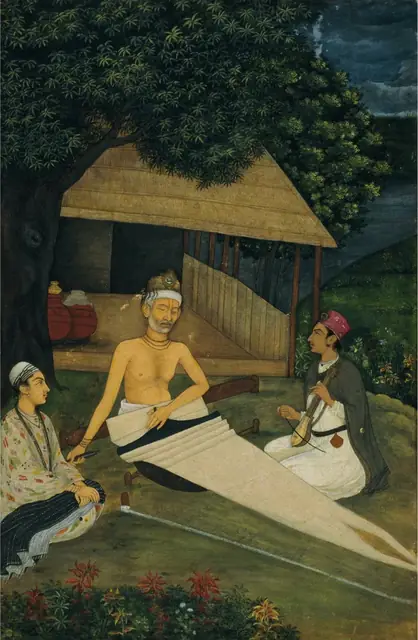
Kabir’s sakhis are two-line sayings, easy to carry in the memory, and these twelve are the ones most Indians know without knowing where they learned them: from a grandmother, a school wall, a truck’s tailboard. The first is recited on Guru Purnima everywhere. Each doha does one thing: it catches a habit (praying only in trouble, counting beads while the mind wanders, judging a sadhu by his birth) and turns it over. Readings of individual words vary between collections; the text follows Kavita Kosh.
Kabir, sakhis (Kabir Dohavali); text as on Kavita Kosh