
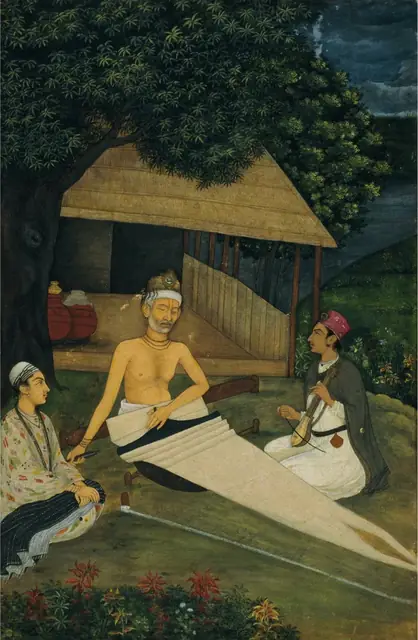
मोको कहाँ ढूँढे रे बंदे
मैं तो तेरे पास में
ना तीरथ में ना मूरत में
ना एकांत निवास में
ना मंदिर में ना मस्जिद में
ना काबे कैलास में
मैं तो तेरे पास में बंदे
मैं तो तेरे पास में
ना मैं जप में ना मैं तप में
ना मैं बरत उपास में
ना मैं किरिया करम में रहता
नहिं जोग संन्यास में
नहिं प्राण में नहिं पिंड में
ना ब्रह्मांड आकाश में
ना मैं प्रकृति प्रवार गुफा में
नहिं स्वाँसों की स्वाँस में
खोजि होए तुरत मिल जाऊँ
इक पल की तालास में
कहत कबीर सुनो भई साधो
मैं तो हूँ बिस्वास में
Moko kahan dhundhe re bande,
main to tere pas mein.
Na tirath mein na murat mein,
na ekant nivas mein.
Na mandir mein na masjid mein,
na Kabe Kailas mein.
Main to tere pas mein bande,
main to tere pas mein.
Na main jap mein na main tap mein,
na main barat upas mein.
Na main kiriya karam mein rahta,
nahin jog sannyas mein.
Nahin pran mein nahin pind mein,
na brahmand akash mein.
Na main prakriti pravar gupha mein,
nahin svanson ki svans mein.
Khoji hoe turat mil jaun,
ik pal ki talas mein.
Kahat Kabir suno bhai sadho,
main to hun bisvas mein.
Meaning
Where are you searching for me, my friend? I am right beside you. Not in pilgrimage places, not in images, not in a lonely retreat; not in temple or mosque, not at the Kaaba or Kailash. I am right beside you, friend, right beside you.
I am not in japa, not in tapas, not in vows and fasts. I do not live in rites and rituals, nor in yoga and renunciation. Not in the breath, not in the body, not in the universe or the sky; not in the caves of nature, not even in the breath of breaths.
If you are a true seeker you will find me at once, in a single moment’s search. Kabir says, listen, seekers: I live in faith.
About this bhajan
Attributed to Kabir and sung across north India in many versions. The voice is the Lord’s own: stop running from shrine to shrine and fast to fast, I am nearer than your breath. Kabir’s nirguna bhakti does not mock worship; it insists that every outer practice is worthless without the inner turning, and that God is found in a moment by one who seeks in earnest. A shorter form was collected by Kshitimohan Sen and translated by Rabindranath Tagore in “One Hundred Poems of Kabir” (1915). We give the longer sung text as on Kavita Kosh.
Popular sung version as on Kavita Kosh; attributed to Kabir (a shorter form in Kshitimohan Sen’s collection)