
Railways, telegraphs, courts and universities came under British rule, but India’s share of world output fell from about 24% in 1700 to about 4% in 1950 in Maddison’s estimates, average income per head was lower in 1950 than in 1913, and famines killed millions, most terribly in Bengal in 1943.
The proof
- Maddison: India’s share of world GDP about 24% in 1700, 16% in 1820, 4% in 1950.
- Dadabhai Naoroji’s Poverty and Un-British Rule in India (1901) set out the "drain" of wealth from India to Britain.
- The Famine Inquiry Commission (1945) put deaths in the Bengal famine of 1943 at about 15 lakh; later estimates run to about 30 lakh.
01The claim
The case is familiar. Britain found a land of warring princes and left behind railways, a civil service, the rule of law, English, cricket and parliamentary democracy. Whatever wrongs were done, the argument says, India came out of the Raj more modern and more prosperous than it went in, and should count the balance in Britain’s favour. The claim returns in British debates about empire and in Indian ones whenever colonial rule is defended as a necessary school.
02What the numbers show
Maddison, the same economist whose tables are quoted for the Mughal period, estimates that India’s share of world output fell from about 24% in 1700 to 16% in 1820 and about 4% in 1950. Some of that fall came from Europe’s industrial leap, which would have shrunk anyone’s share. But by his figures average income per Indian in 1950 was lower than in 1913, after decades of rule that were supposed to modernise. India’s handloom weavers, once the world’s great clothmakers, were undercut by tariff-protected British mills. Life expectancy at independence was about 32 years.
03What was built, and for whom
The railways were real and are still used. They were also built with a guaranteed return of about 5% to British investors, paid from Indian taxes whether the lines made a profit or not, and laid out first to move troops, raw cotton and grain to the ports. The famines of 1876–78, 1896–1900 and 1943 struck while grain was still being moved and exported. Naoroji, a Parsi from Bombay and the first Asian elected to the British Parliament, called this the drain: pensions, salaries, interest and home charges sent out of India year after year.
04Holding the balance
Some economic historians, such as Tirthankar Roy, argue that the decline was more complicated than plunder, and that Indian business and some regions grew under the Raj. That debate is worth reading. What the evidence does not support is the bare claim that British rule made India rich. It found one of the world’s great economies and left one of its poorest countries. India’s democracy was won by Indians, often against the government that now gets the credit for it.
05What to read
Dadabhai Naoroji’s Poverty and Un-British Rule in India (1901) and Romesh Chunder Dutt’s The Economic History of India (1902–04) are the classic Indian cases, built from British official figures. Read Maddison for the long numbers, Tirthankar Roy’s The Economic History of India, 1857–1947 for a more mixed view, Ferguson’s Empire for the defence, and Shashi Tharoor’s An Era of Darkness (2016) for a reply aimed at the general reader.
Read on
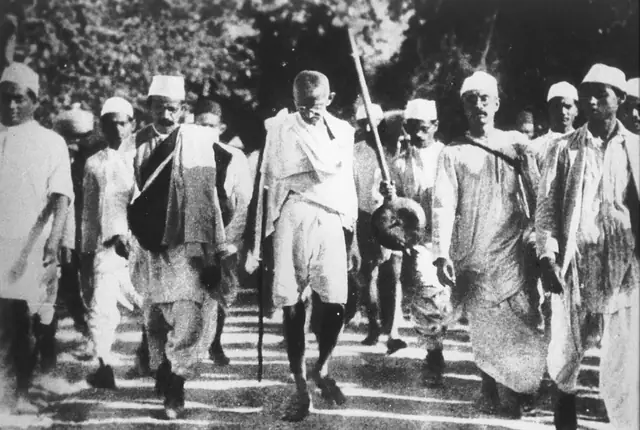
Renaissance and the struggle for Swaraj
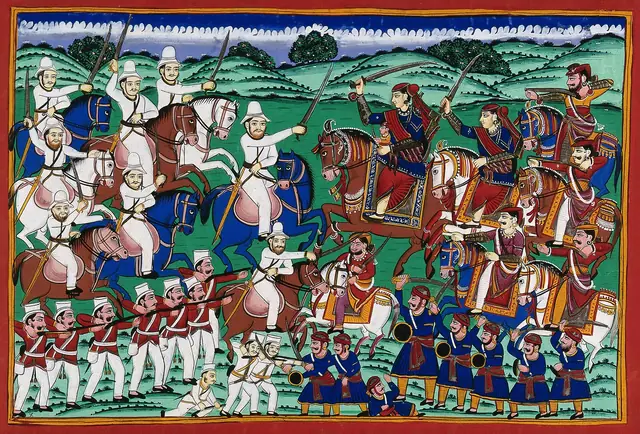
Company rule and the war of 1857
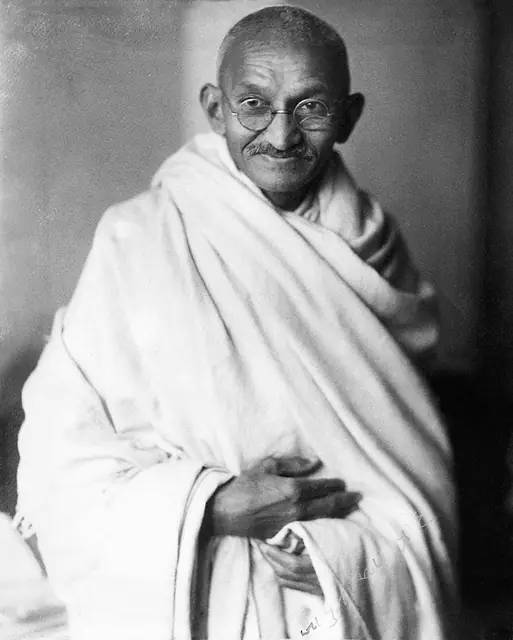
Mahatma Gandhi
Mohandas Karamchand Gandhi of Porbandar shaped satyagraha in South Africa and led the Congress through Non-Cooperation, the Salt March and Quit India. He was shot dead at Birla House, Delhi, on 30 January 1948.