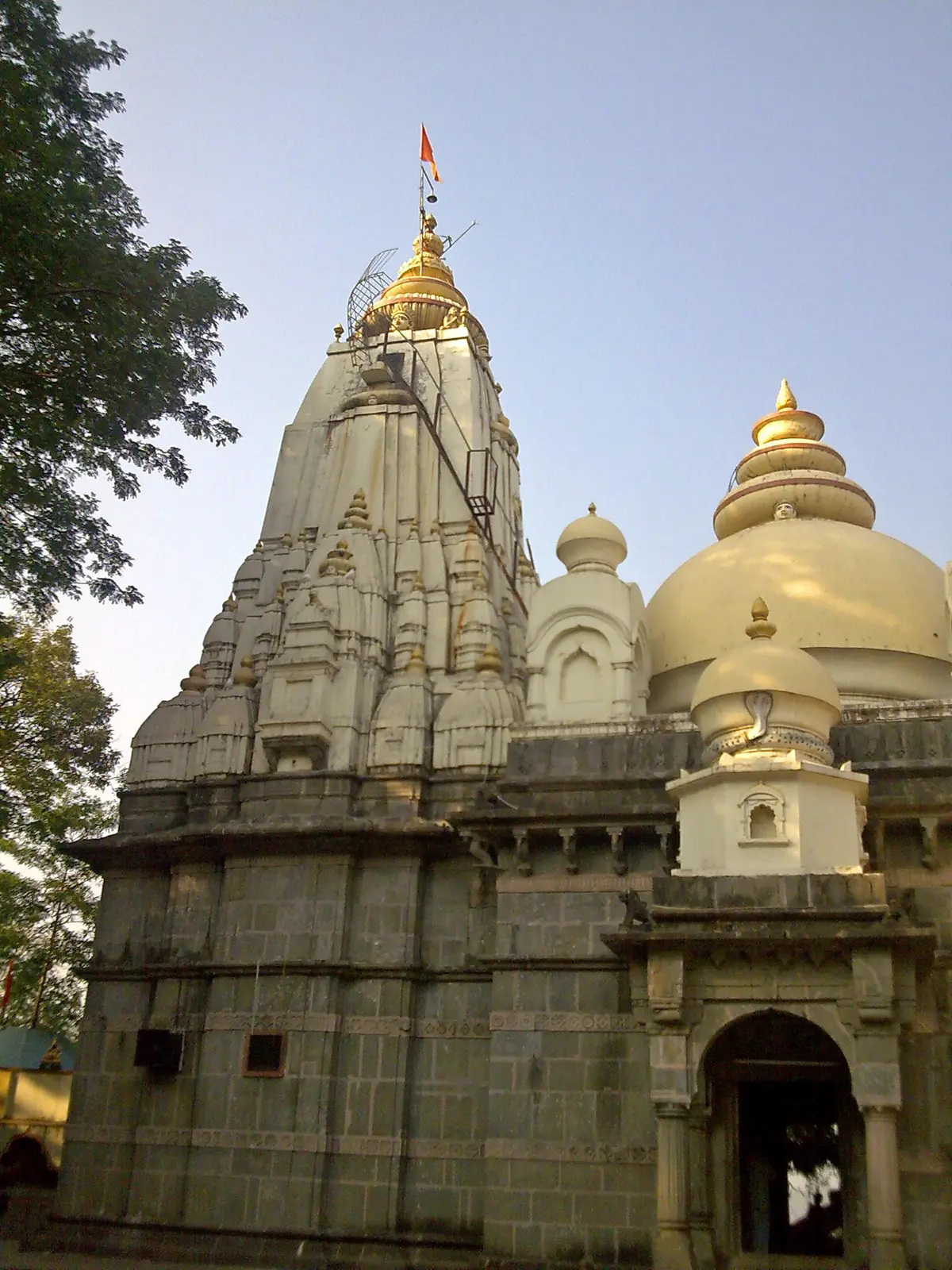
01The Devi who swallowed the vajra
The temple’s katha says that in an earlier age the asura Kalikala troubled the devas and rishis, and in the battle Indra hurled his vajra; the Devi appeared and swallowed the thunderbolt and then destroyed the asura, and so is named Vajreshwari. The hot springs of the valley are said to have risen where the asura’s blood fell. Inside, three murtis stand side by side: Vajreshwari in the centre with Renuka and Kalika. The older seat of the Devi was at Gunj, a few kilometres north, and the worship moved to Vadavali, where the temple now stands.
02Chimaji Appa’s vow
The siege of Vasai by the Marathas under Chimaji Appa, brother of Peshwa Bajirao I, lasted from 1737 to May 1739 and ended Portuguese power on that coast. Chimaji had prayed to the Devi for victory; afterwards he built the temple with a stone wall and gateway like a fort’s, reached by 52 steps. One of the church bells taken at Vasai hangs here, as Chimaji placed it. Nearby, Ganeshpuri holds the samadhi of Swami Nityananda, and pilgrims usually take in both and bathe in the hot springs.
The life of this place
- May 1739Vasai falls to the Marathas; Chimaji Appa builds the temple in fulfilment of his vow.
About 75 km north of Mumbai via Bhiwandi; Virar station is about 30 km. Ganeshpuri is 2 km further.