01The causeway that would not stand
In the 1780s the Company’s engineers set out to close the breach between Malabar Hill and Worli with a sea wall, the Hornby Vellard. The temple’s katha says the wall kept collapsing into the sea until the Devi came in a dream to the contractor, Ramji Shivaji Prabhu, and told him her murtis lay on the seabed nearby. Divers brought up three images; once they were set on the shore in a small shrine, the work held. The Vellard was finished around 1784, and with it much of today’s Mumbai rose out of the marsh.
02Three Devis in gold and pearl
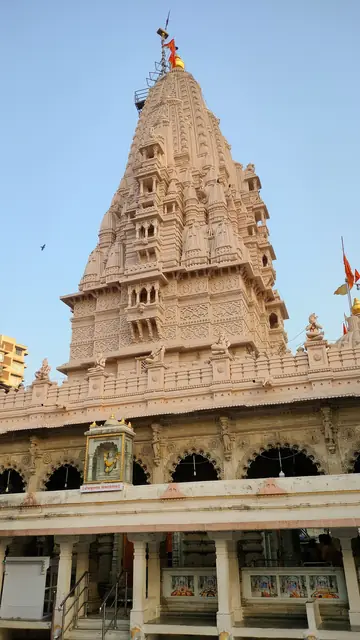
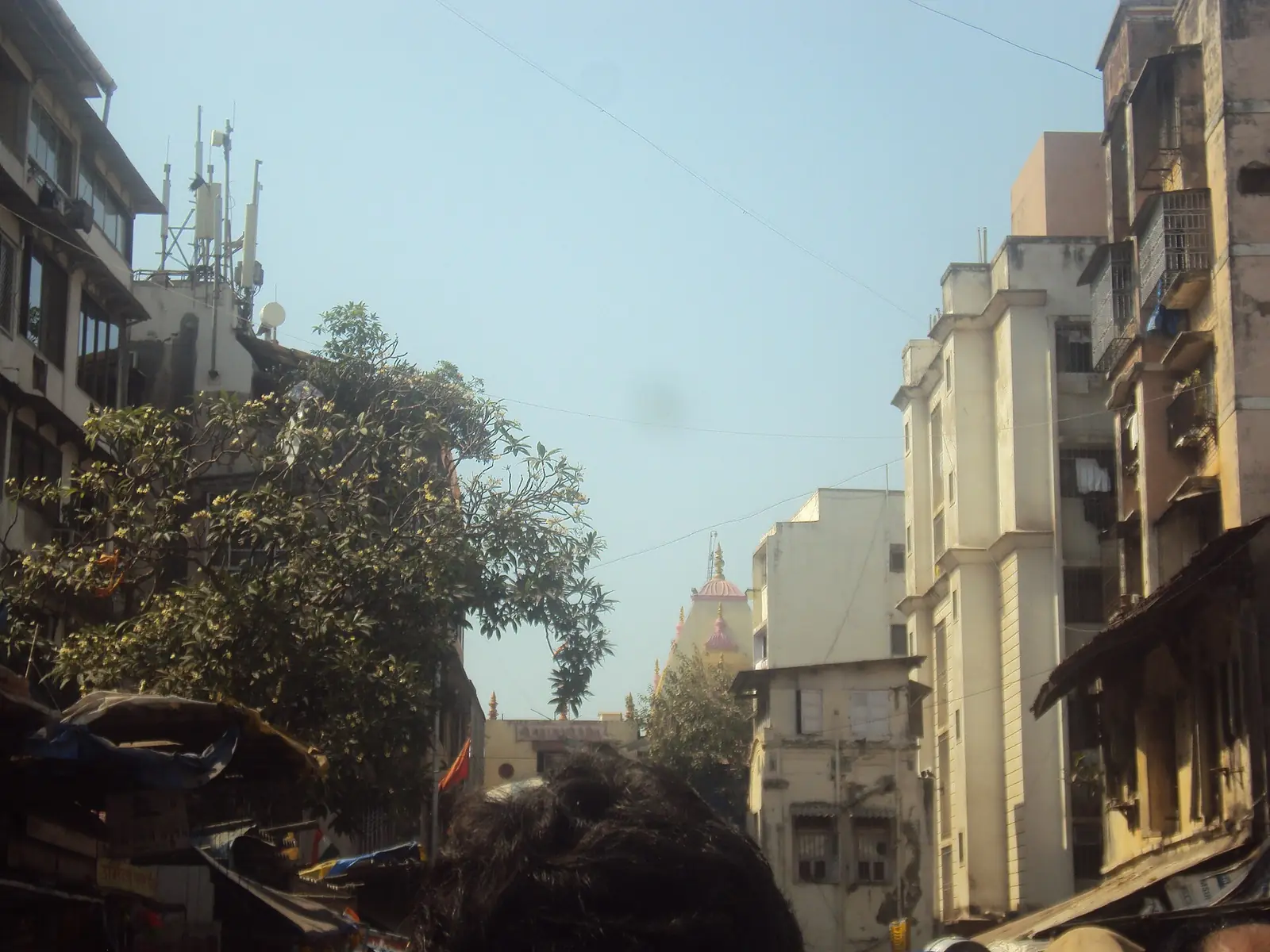
The present temple was built in 1831 by Dhakji Dadaji, a Hindu merchant of the city. In the sanctum stand Mahalakshmi in the centre, Mahakali on one side and Mahasaraswati on the other, the three forms of the Devi Mahatmya, decked in nose-rings, bangles and pearl necklaces. Devotees reach them through a lane of flower and coconut stalls. Navaratri is the great time here, when the queue runs down to the road. A custom of the temple: press a coin to the back wall, and if it sticks, the wish will be granted.
The life of this place
- c. 1784The Hornby Vellard is completed; the temple’s katha places the finding of the murtis here.
- 1831Dhakji Dadaji builds the present temple.
Mahalaxmi station on the Western Railway is a short taxi ride away; Haji Ali is a few minutes north along the shore.