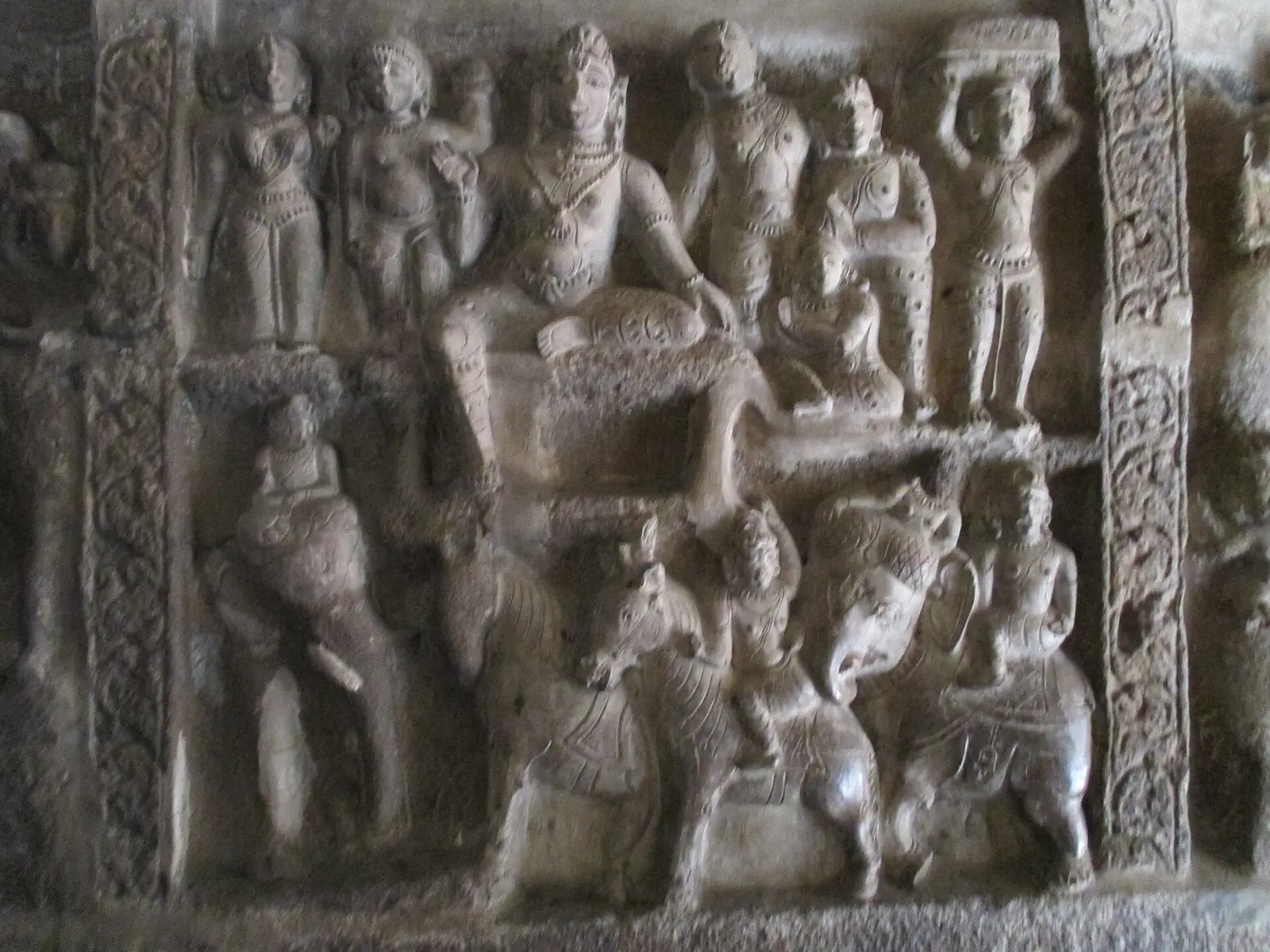
01A king chosen by his people
Nandivarman II came to the throne about 731 CE from a side branch of the Pallava house, after the main line ended. The panels in the cloister around the temple tell how it happened: the death of the old king, the search for an heir, the young prince of fourteen fetched from afar and crowned by the ministers and the people. Short label inscriptions in Pallava Grantha name the scenes. Earlier panels run back through the line of kings. No other temple of the time carries a dynasty’s history on its own walls in this way.
02Three storeys of Vishnu
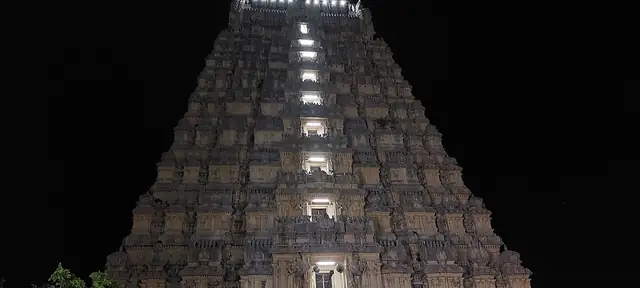
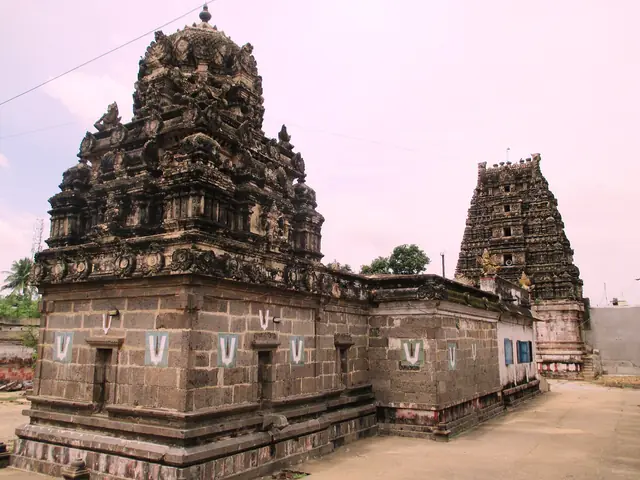
The vimana is built in three storeys, each with its own sanctum: Vishnu seated on the ground floor, reclining on the first, standing on the second. The two upper shrines are reached by a narrow inner stair and are opened on Ekadashi. The temple is a Divya Desam, sung by Thirumangai Alvar as Parameswara Vinnagaram, after the Pallava king’s title Parameswara. It is a protected monument of the Archaeological Survey of India and still in worship.
The life of this place
- c. 731 CENandivarman II Pallavamalla becomes king.
- 8th centuryThe temple is built with its sculptured cloister of Pallava history.
In Kanchipuram town, about 1 km from the railway station. Carry a torch for the dim cloister panels.