01The five Kedars
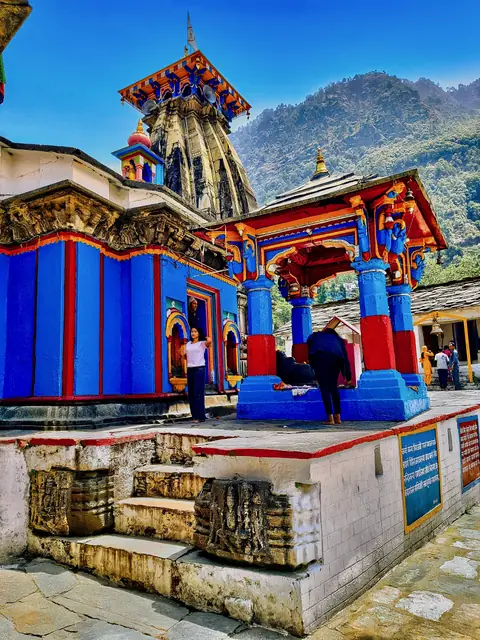
The Kedar Khanda tradition of Garhwal tells that after Kurukshetra the Pandavas went looking for Mahadev to be freed of the sin of killing their own kin. Mahadev would not be found. He took the form of a bull and hid among the herds near Guptakashi. Bhima stood astride two hills to watch the cattle pass beneath, saw the one bull that would not go, and caught it by the hind legs. The bull sank into the earth. Mahadev appeared again in five places: the hump at Kedarnath, the arms at Tungnath, the face at Rudranath, the navel at Madhyamaheshwar and the jata at Kalpeshwar. The Pandavas built a temple at each.
02Below Chandrashila
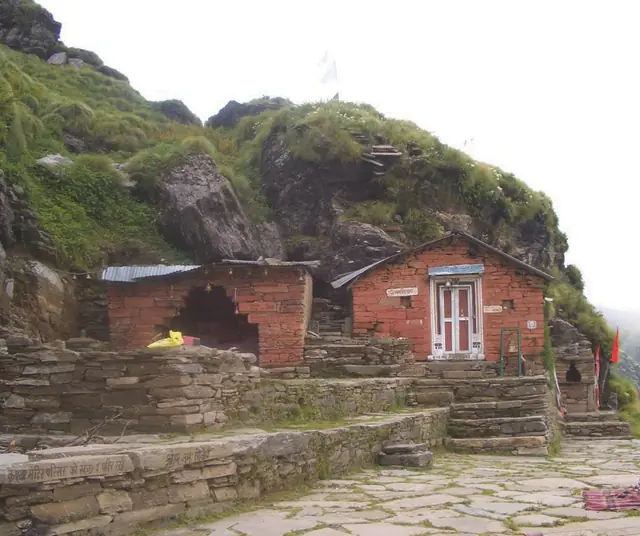
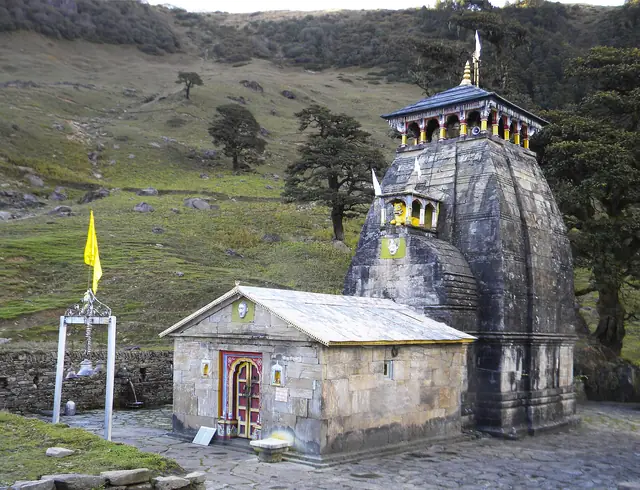
Tungnath means lord of the peaks. The temple sits just below the summit of Chandrashila, where, it is said, Shri Ram meditated after slaying Ravana. It is small and dark inside, built of grey stone in the same Himalayan style as Kedarnath and Madhyamaheshwar, with smaller shrines round a paved court. The priests here are Maithani brahmins of Makkumath village, not the southern priests who serve Kedarnath and Badrinath. When the snow comes, after Diwali, the utsava murti is carried down to the Markandeya temple at Makkumath for the winter, and it returns when the doors open in spring.
Walk about 4–5 km of paved path up from Chopta on the Ukhimath–Gopeshwar road; Chandrashila is another 1.5 km above. Doors open in late April or May and close after Diwali; in winter take darshan at Makkumath.