01The first mandir
The sampradaya’s own chronicle, the Haricharitramrut Sagar, says a British officer of Ahmedabad, remembered as Eron Saheb, met Swaminarayan in 1817 and later promised land at Kalupur for a mandir. The site was granted, Swaminarayan sent his sadhus to supervise, and on Phalgun Shukla Tritiya in 1822 he installed the murtis of Nar-Narayan Dev, the twin rishis of Badrinath, in the central shrine. Before his passing he divided the sampradaya into two seats, Ahmedabad in the north and Vadtal in the south, and Kalupur became the head of the northern one.
02Wood and colour
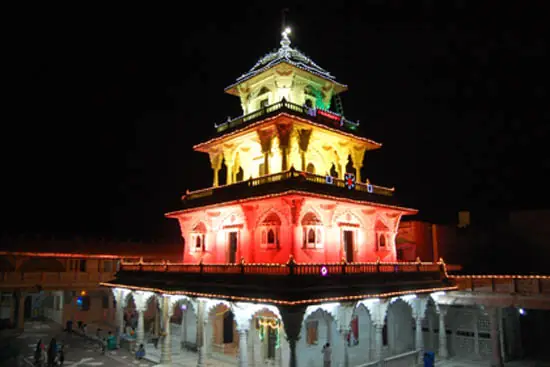
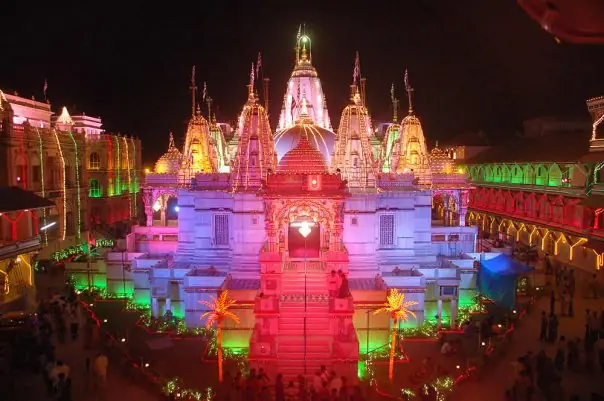
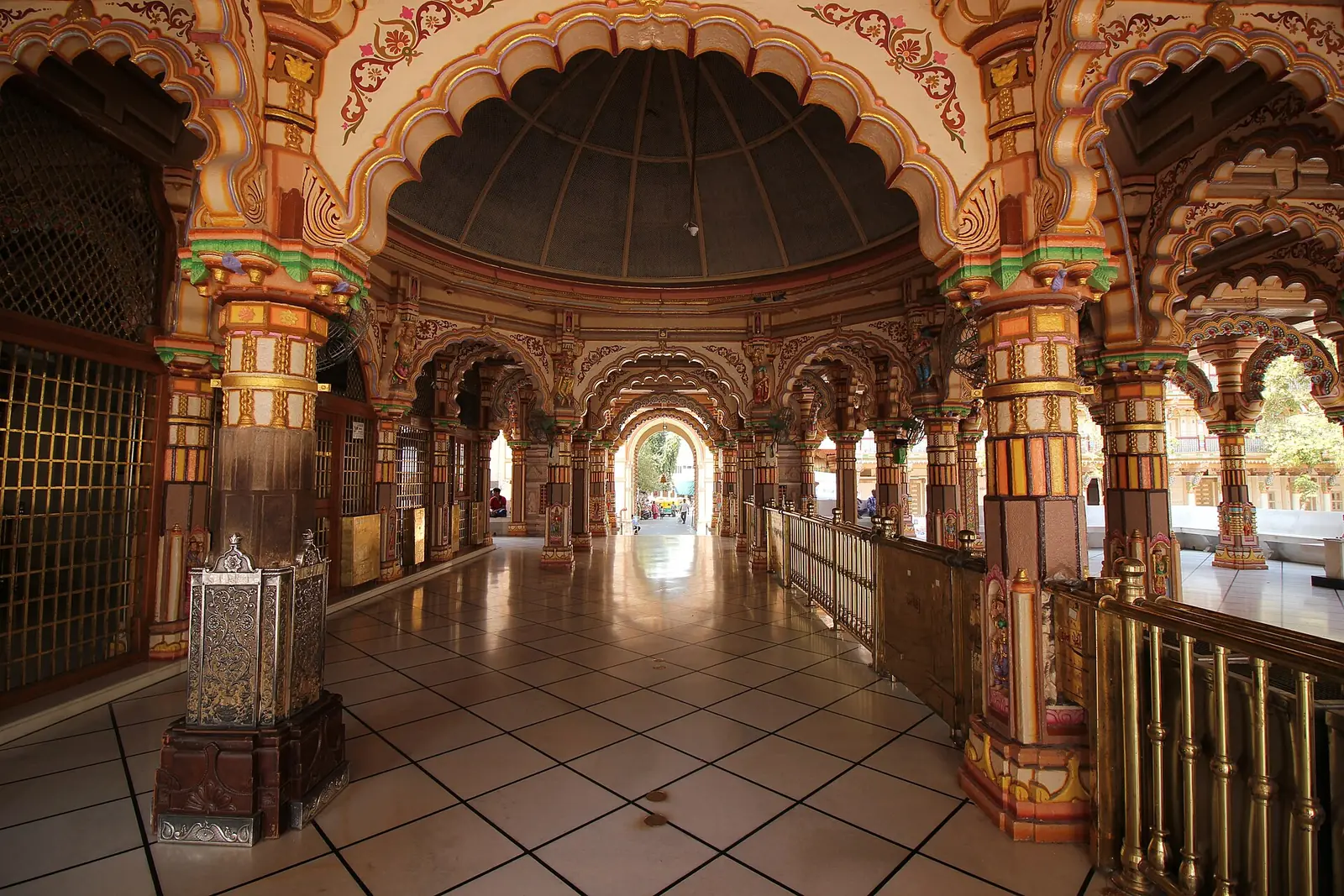
The mandir is famous for its carved wood: brackets, balconies and pillars painted in deep reds, greens and yellows, in the style of the havelis of old Ahmedabad. Beside it stands the haveli for women devotees, with its own shrine. The temple keeps things that Swaminarayan used. In the week after Diwali the annakut, a mountain of food offerings, is set before the deity.
The life of this place
- 1817Swaminarayan meets the British officer who later promises land at Kalupur.
- 1822 (Phalgun Shukla 3, Samvat 1878)Swaminarayan installs Nar-Narayan Dev in the first mandir of the sampradaya.
The mandir is in the Kalupur pol area of old Ahmedabad, a short walk from Kalupur railway station; the morning heritage walk of the city starts here.