01Satyagraha Ashram
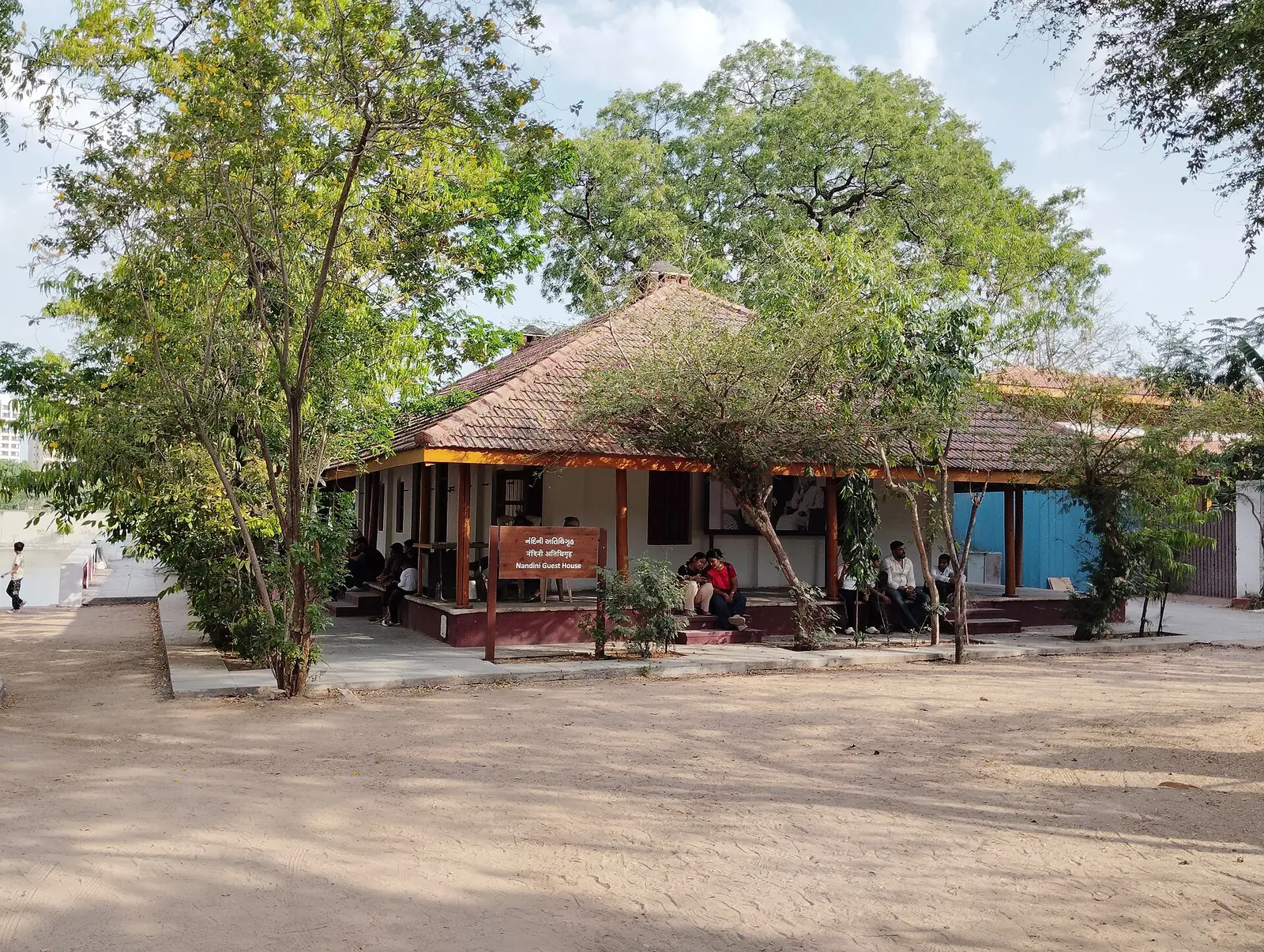
Back from South Africa, Gandhiji founded the Satyagraha Ashram at Kochrab in Ahmedabad on 25 May 1915. When plague broke out there he moved it, in June 1917, to open land on the west bank of the Sabarmati, between a jail and a cremation ground, which he said were the two places a satyagrahi should be ready for. Here the ashramites spun, wove, farmed, kept cows, cleaned their own latrines, and lived by vows of truth, non-violence, brahmacharya and non-possession. Gandhiji’s simple cottage, Hriday Kunj, where he and Kasturba lived, still has his spinning wheel and writing desk; Vinoba Bhave and Mirabehn had their rooms nearby.
02The march to Dandi
On the morning of 12 March 1930 Gandhiji walked out of the ashram with 78 chosen satyagrahis to break the salt law at Dandi, 390 km away on the sea; he reached it on 5 April and picked up salt the next morning. He had vowed not to return to the ashram until swaraj was won, and he never lived here again. In 1933 he disbanded the ashram and handed it over for the uplift of the Harijans. The Gandhi Smarak Sangrahalaya, a museum of low brick pavilions designed by Charles Correa, was opened by Jawaharlal Nehru in 1963.
The life of this place
- 25 May 1915Satyagraha Ashram founded at Kochrab.
- June 1917The ashram moves to the bank of the Sabarmati.
- 12 March 1930Gandhiji leaves on the Dandi March.
- 1933Gandhiji disbands the ashram.
- 1963The Gandhi Smarak Sangrahalaya is opened.
On Ashram Road, Ahmedabad, open daily; the evening prayer by the river is still kept.