01The queen and the priest
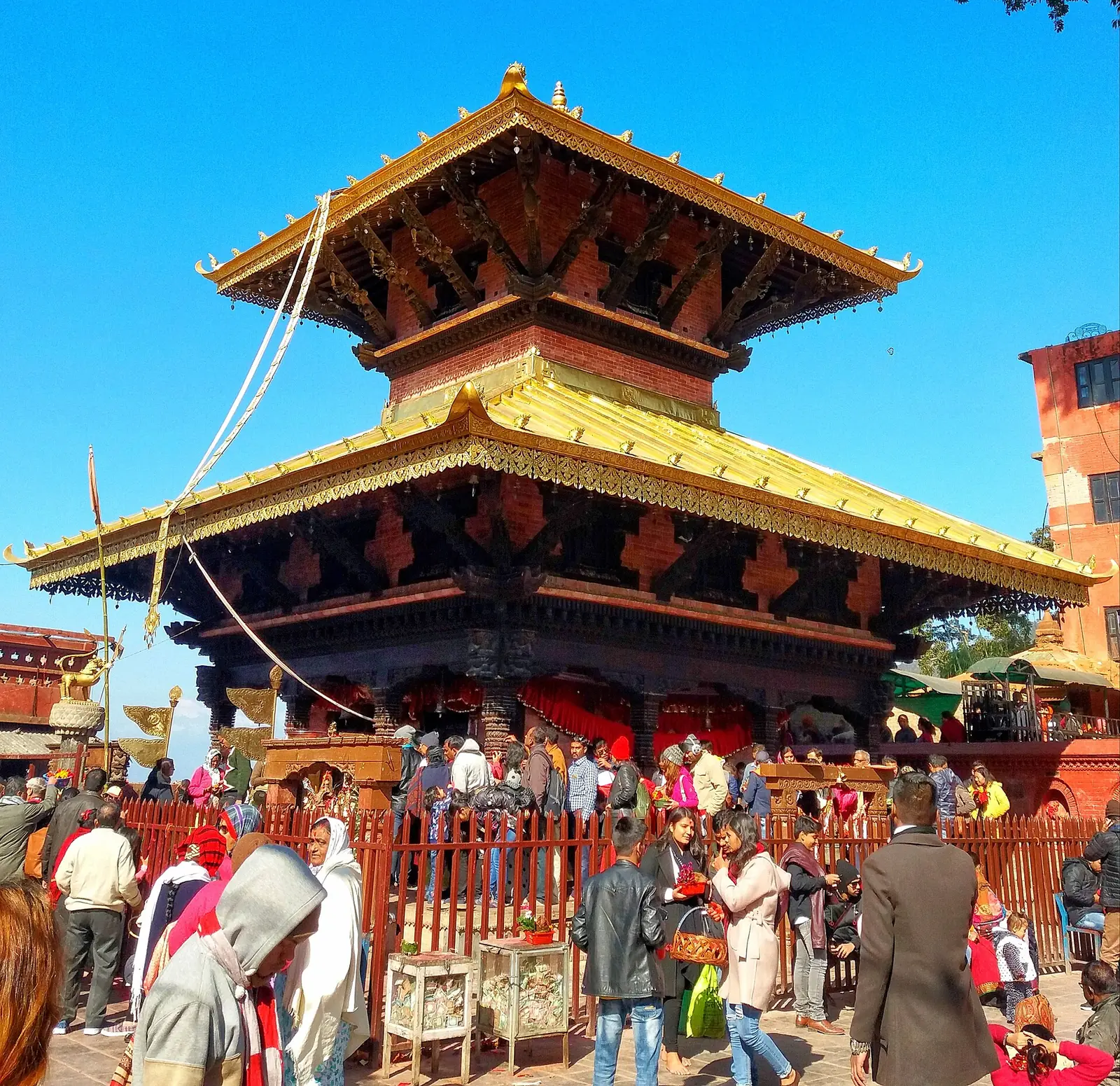
The temple’s own katha goes back to the court of Gorkha in the time of Raja Ram Shah. His queen was the Devi herself in human form, and only one man knew it: Lakhan Thapa, a Magar devotee. One day the raja saw his wife as the Devi and Lakhan Thapa as a lion at her feet. When he spoke of it, he died soon after, and the queen went to the pyre. Before she left she promised Lakhan Thapa she would appear again. Months later a farmer’s plough struck a stone on this hill, and blood and milk flowed from it. Lakhan Thapa’s descendants still serve as the priests.
02On the hill above two rivers
The temple stands at about 1,300 metres on Kafakdada hill, with Annapurna and Manaslu on the northern skyline on a clear morning. For centuries pilgrims climbed three or four hours from the valley. Since 1998 a cable car lifts them from Kurintar on the Prithvi Highway in about ten minutes, and the queue on a Saturday can run down the hillside. Devotees bring coconuts, red cloth, sindoor and bells; many still offer a goat or pigeons at the sacrificial ground behind the shrine. Newly married couples come together, and so do families after a child is born.
The life of this place
- 1606–1636Reign of Ram Shah of Gorkha, to whose court the temple’s katha belongs.
- 1998The Manakamana cable car opens from Kurintar.
Kurintar, the cable-car station, is about 105 km west of Kathmandu on the Prithvi Highway. Saturdays and the Dashain and Nag Panchami festivals are the most crowded days.