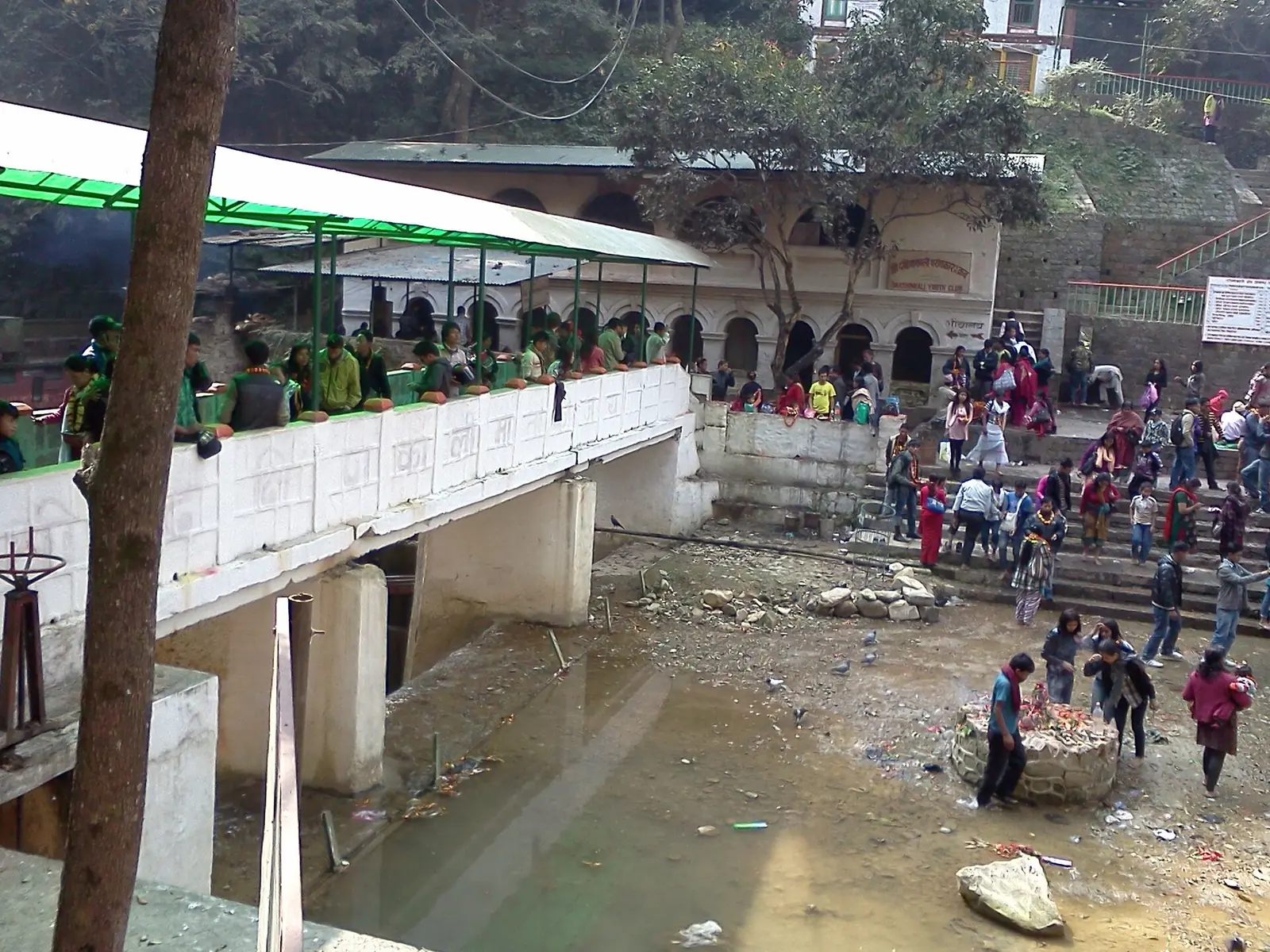
01Kali at the meeting of streams
The shrine has no tower and no roof over the Devi. She stands in black stone under a gilded canopy, with the eight Matrikas around her, at the foot of a forested slope where two streams join. Pilgrims cross a small bridge and come down a long flight of steps lined with sellers of marigolds, red cloth and coconuts. The custom says the Malla kings set up the enclosure after the Devi appeared in a royal dream and asked for a shrine in the south. Above the gorge on the hillside stands the smaller temple of Mata Shanti, which pilgrims visit on the way back.
02Bali and the feast
Dakshinakali is one of the places in the valley where bali is still offered openly, uncastrated male goats and cockerels, as Shakta worship prescribes for her. The animal is offered, the blood given to the Devi, and the meat taken home or cooked in the picnic grounds along the stream, so the day becomes a family feast. On the Ashtami and Navami of Dashain the queues begin before dawn. Those who do not offer animals bring pumpkins, coconuts or sweets, which are accepted the same way.
The life of this place
- 17th centuryThe enclosure is set up, by the valley’s tradition, under the Malla kings.
About 22 km south of Kathmandu by road through Pharping. Saturday mornings and Dashain are busiest; the shrine is often closed to worship by late morning on ordinary days.