01Three streams, two claimants
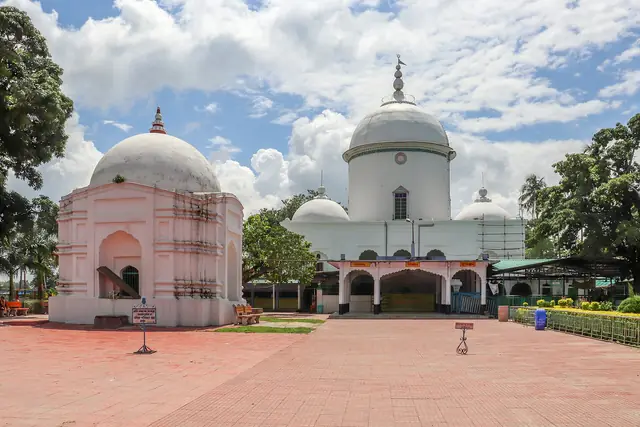
The Stotram’s line is short: at Trisrota the left foot, the Devi Bhramari. Trisrota means three streams, and the people of north Bengal read it as the country of the Teesta and her sister rivers, the Karala and the Mahananda among them. No single shrine holds the name without challenge. The Bhramari temple near Bodaganj, under sal trees in the Baikunthapur forest, is the one most pilgrims from Jalpaiguri and Siliguri visit. The Bhramari temple at Shalbari near Falakata, now in Alipurduar district, is also named as the Trisrota peetha. Shakti Peetha lists differ, and each place keeps its own worship.
02The Devi of the bees
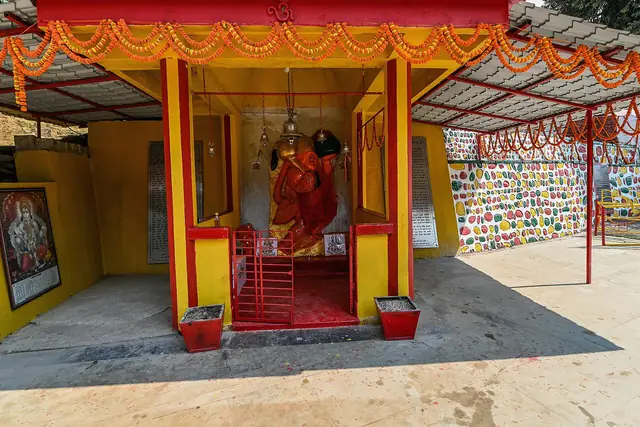
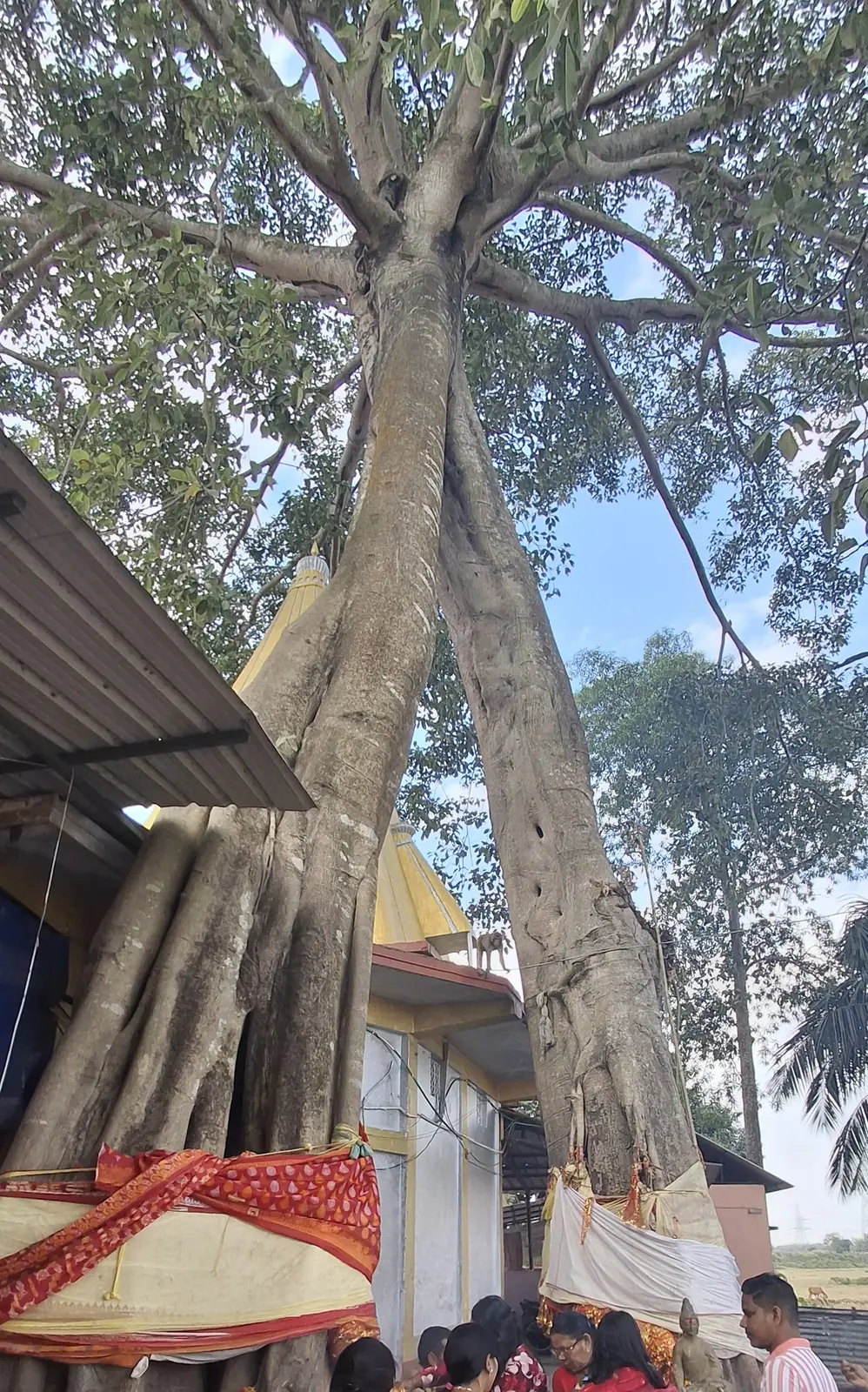
Bhramari is the Devi who, in the Devi Bhagavata Purana, took the form of countless black bees to destroy the asura Aruna, who could not be slain by any two-legged or four-legged being. The forest temple near Bodaganj has a pair of joined banyan trees in its yard, and shrines of Mahadev and Mata Parvati beside the Devi. Our list names Ambar as the Bhairava; other lists give Ishwar. Many in the region hold Jalpesh, the great Shiva temple at Mainaguri, to be Bhramari’s Bhairava. The Baikunthapur forest is also the country of Devi Chaudhurani and Bhavani Pathak, whose story Bankim Chandra wrote.
For the Bodaganj temple, turn off the Siliguri–Jalpaiguri road at Fatapukur for Belakoba, then follow village roads about 10 km. The temple is a short walk from the village.