01The Ujjainiya seat
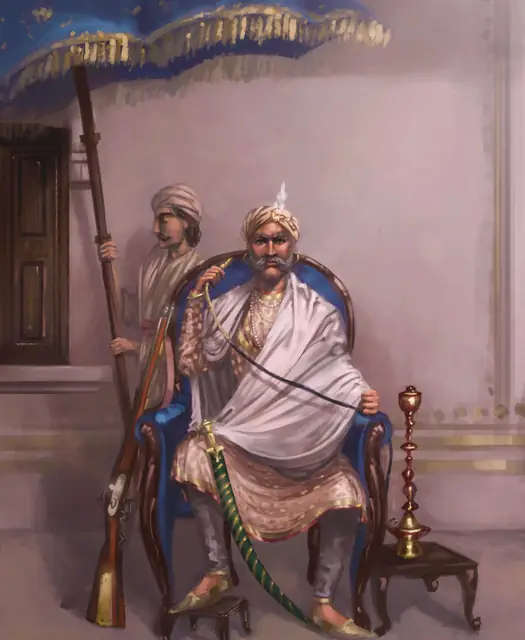
The Ujjainiyas, who trace their line to the Paramaras of Malwa, held the Bhojpur country south of the Ganga for centuries. Gajpati Sahi fortified Jagdishpur before 1539, and Mughal sources say Akbar’s army sacked it in 1575. In 1702 Sujan Sahi made it the seat of an estate, and his successors widened it. Kunwar Singh, born in 1777, inherited a large but debt-laden zamindari. He repaired the fort, dug wells and tanks, set up markets and began a great Shiva temple; at Mahashivaratri a mela gathered at Jagdishpur that merchants from far around were expected to attend. By the 1850s the Company’s revenue courts were pressing him hard.
02Kunwar Singh’s war
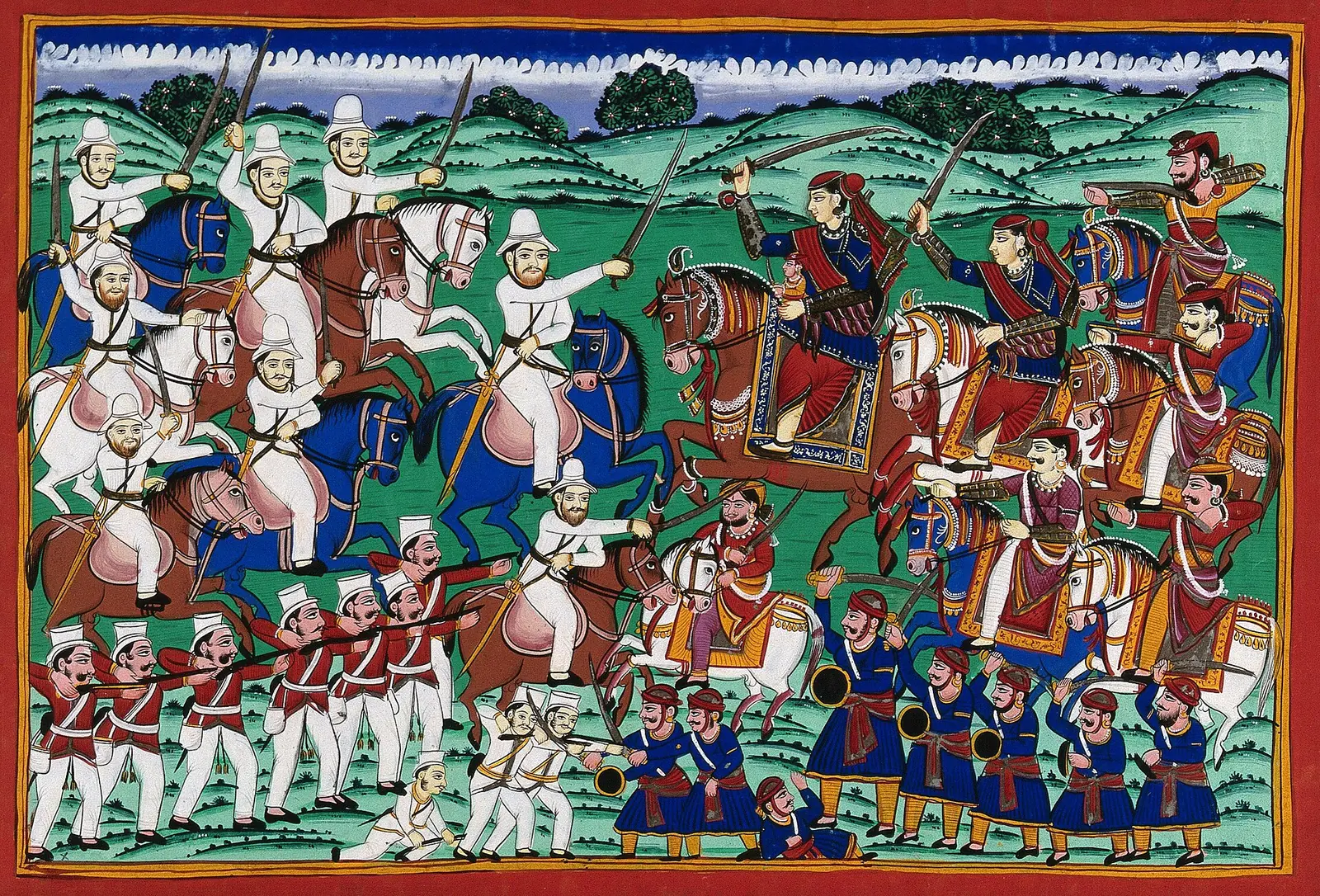
When the sepoys at Danapur rose on 25 July 1857 they marched to Jagdishpur, and the old Raja took command. They besieged the Company’s officials in a fortified house at Arrah from 27 July to 3 August, until Major Vincent Eyre relieved it. Eyre then marched on Jagdishpur, took it on 12 August and had the Raja’s house blown up. Kunwar Singh left Bhojpur and fought his way west through Rewa, Banda and Kalpi, then east again, seizing Azamgarh in March 1858. Crossing the Ganga at Shivpur ghat he lost his hand to a British shot, and is said to have cut it off himself and offered it to the river. On 23 April 1858 he defeated Captain Le Grand’s column at Jagdishpur and re-entered his home. He died on 26 April. Bihar keeps 23 April as Vijayotsav.
The life of this place
- 1575A Mughal army sacks Jagdishpur.
- 1702Sujan Sahi makes Jagdishpur the seat of the estate.
- 12 August 1857Major Eyre takes Jagdishpur and blows up the Raja’s buildings.
- 23 April 1858Kunwar Singh defeats Le Grand’s column and re-enters Jagdishpur.
- 26 April 1858Kunwar Singh dies at Jagdishpur.
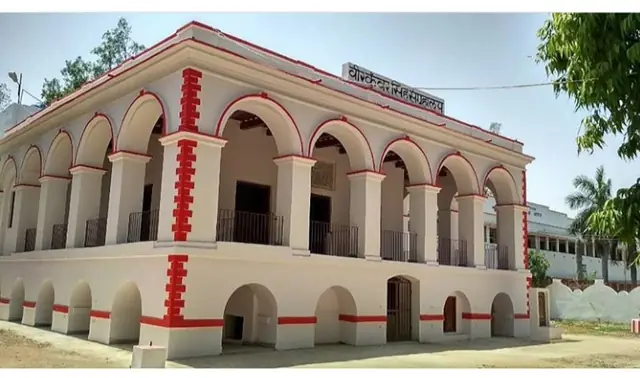
About 30 km from Arrah; the Veer Kunwar Singh fort and museum stand in the town.