01Water for a burning throat
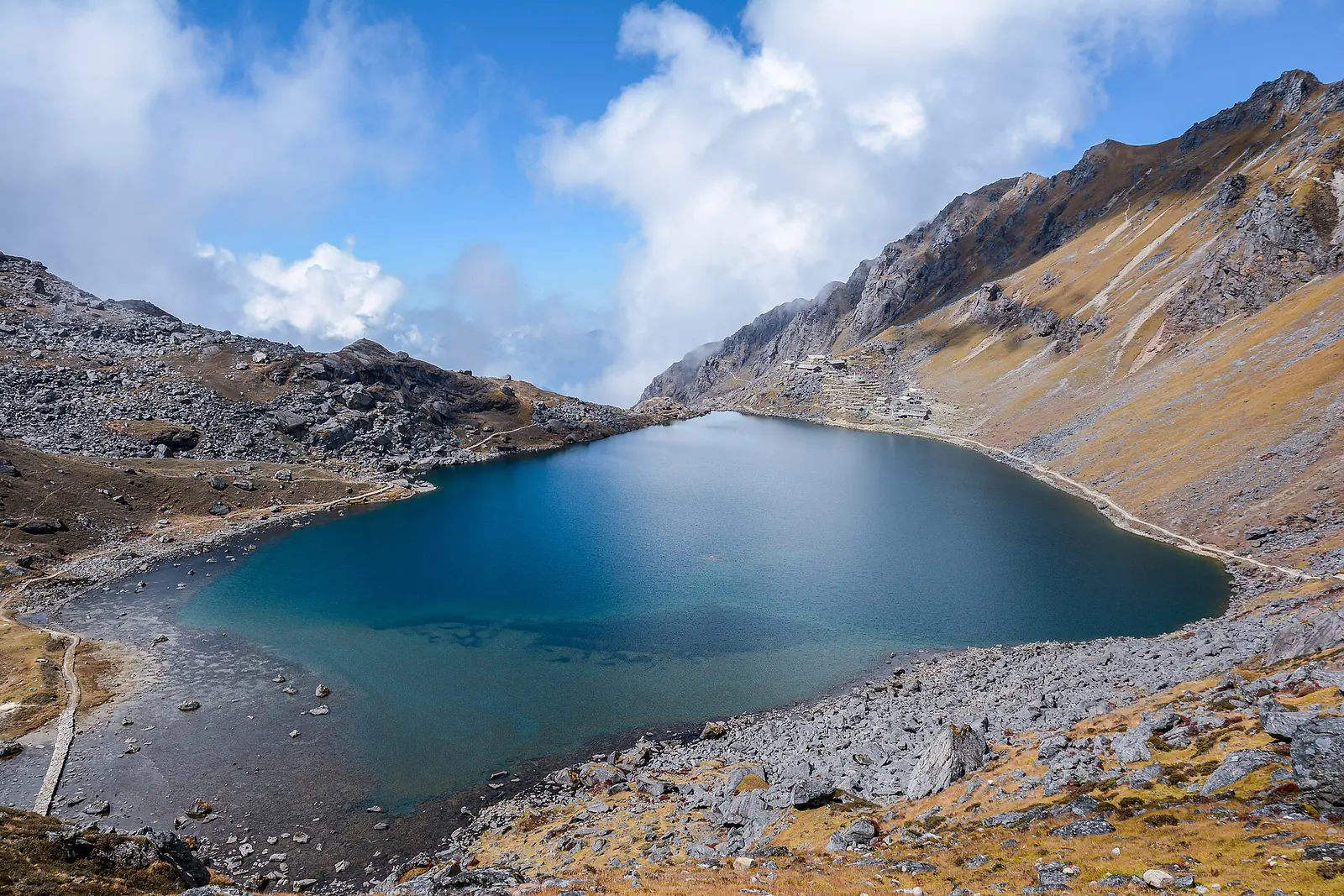
The Puranas tell how the halahala rose from the ocean of milk and Mahadev drank it to save the three worlds, holding it in his throat, which turned blue. The katha of this place goes on: the poison burned, and Shiva went north into the snows, struck the mountainside with his trishul, and three springs burst out to form the lake, where he lay down to cool his throat. Pilgrims say that on a still day a rock under the water looks like Shiva lying on his back. The same tradition holds that the lake feeds the spring at Budhanilkantha and the Kumbheshwar pond at Patan.
02Janai Purnima on the ice
The lake lies at 4,380 metres, frozen from about October to June, among some 108 smaller lakes, and its outflow is the start of the Trishuli river. On the full moon of Shravan, Janai Purnima, when Brahmins and Chhetris change the sacred thread, thousands climb from Dhunche and Sing Gompa to bathe at dawn in the icy water, and Tamang jhankris drum and dance on the shore through the night. Those who cannot make the climb bathe the same day at Kumbheshwar in Patan. The Gosaikunda lakes were listed as a Ramsar wetland in 2007.
The life of this place
- 29 September 2007The Gosaikunda lake complex is designated a Ramsar site.
A two- to three-day trek from Dhunche in Rasuwa; altitude sickness is a real danger, so go slowly. The pilgrimage season is Janai Purnima in July–August.