01Guhya, the hidden
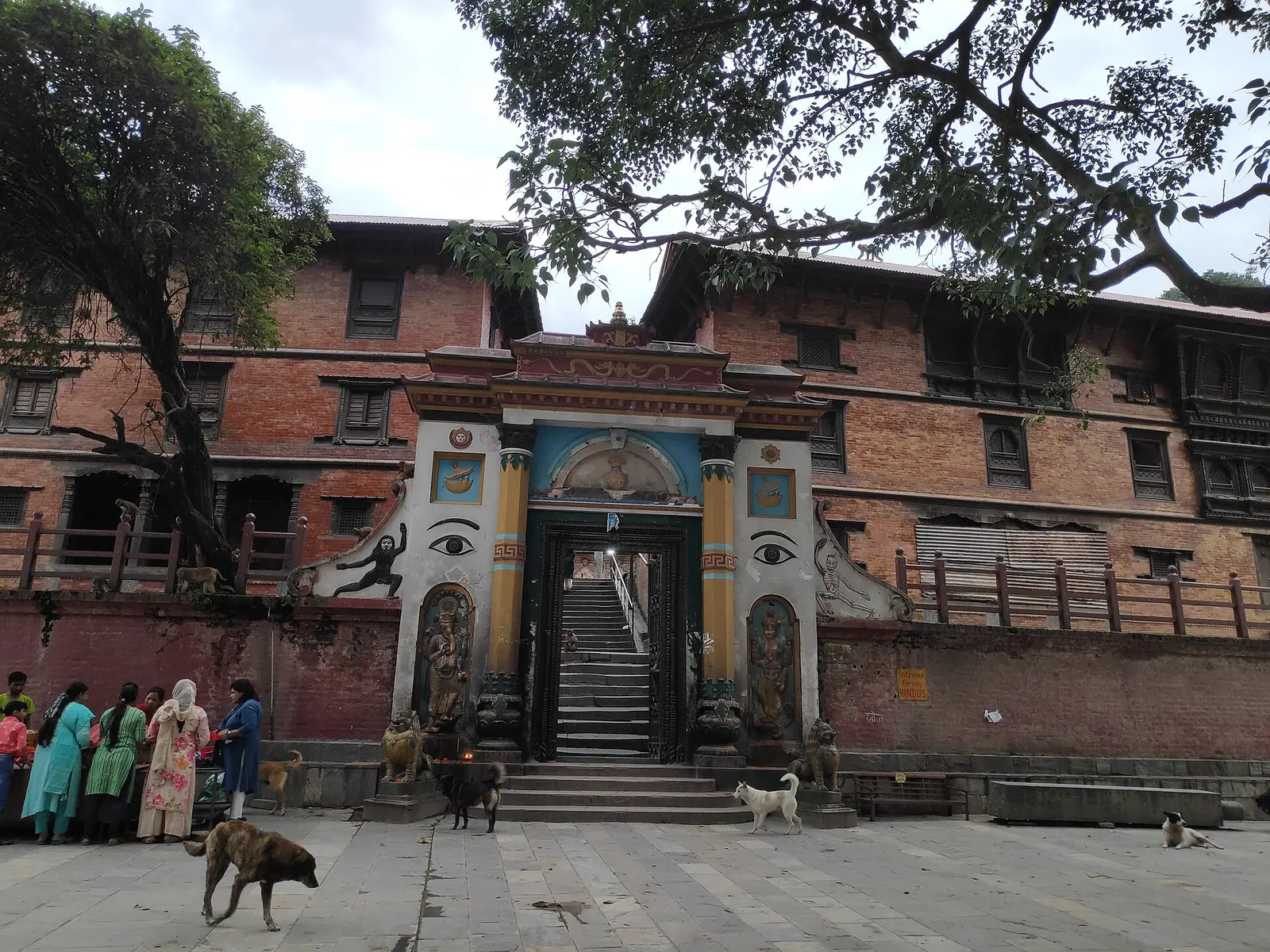
Guhya means hidden, secret. The Nepal tradition holds that a part of Sati’s body that is kept from sight fell here, and that is the name of the Devi: Guhyeshwari, Ishwari of the hidden place. The Peetha Nirnaya Tantra’s list, as Bengal prints it, says that both knees fell in Nepal, with the Devi as Mahamaya and the Bhairava as Kapali. Shakti Peetha lists differ, and Nepal’s own reckoning is the one followed at the temple. The Devi has no carved murti. She is worshipped in a kalash, a water vessel sheathed in silver and gold, set over a spring that rises in a pit at the centre of the shrine.
02Beside Pashupati
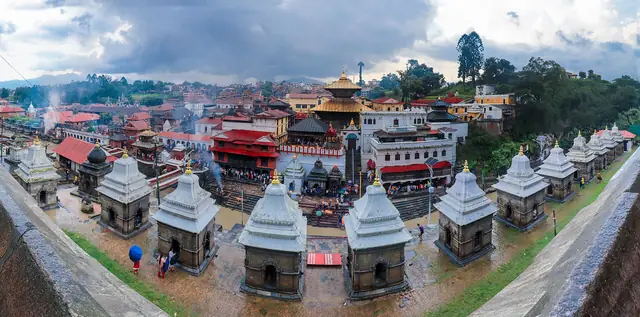
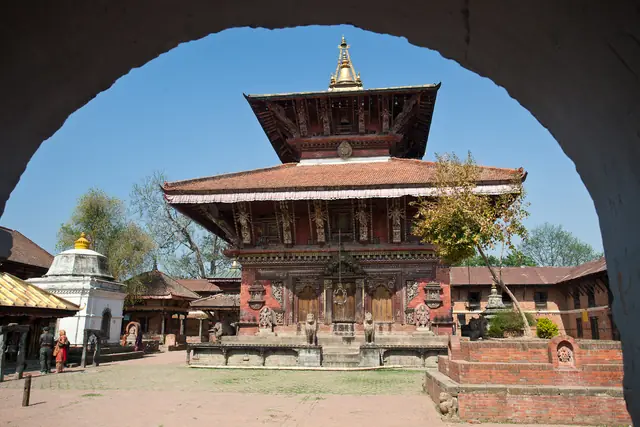
Guhyeshwari stands on the Bagmati a short walk from Pashupatinath, and the two are worshipped as one pair. King Pratap Malla of Kathmandu, a devotee and poet who ruled in the middle of the 17th century, rebuilt the temple in the Newar manner it keeps today. Four great gilded nagas rise from the roof and hold up the finial; you can see them from the path. Newar Buddhists honour the same seat as Vajrayogini’s, and both come to the spring. The courtyard fills in Navaratri and Dashain, and at the Guhyeshwari Jatra. The temple is a protected ancient monument of Nepal.
Walk from Pashupatinath along the Bagmati, past the steps of Gaurighat; the temple is about a kilometre to the east. Come early in Navaratri, when the queue reaches the river.