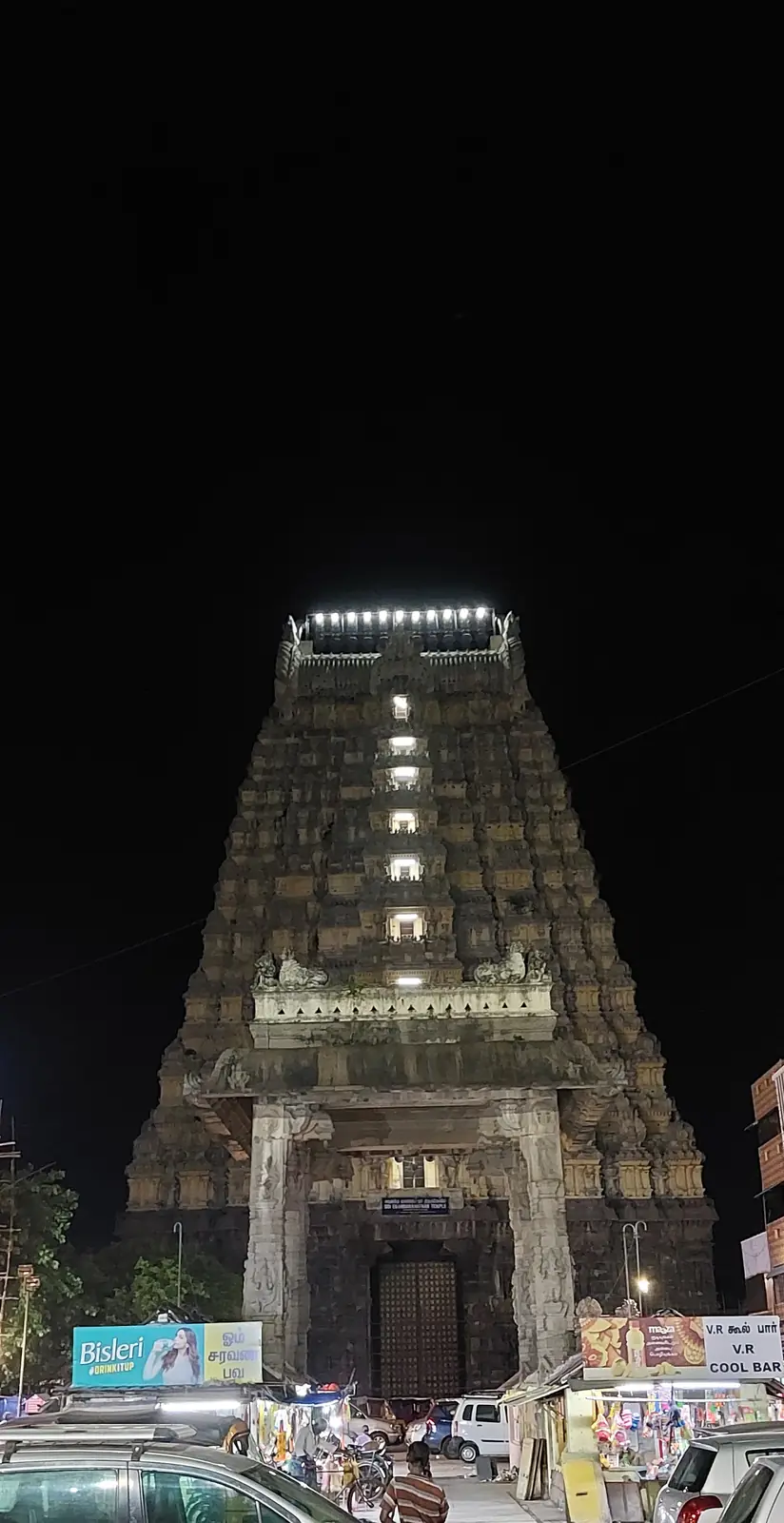
01Parvati and the mango tree
The temple’s katha tells that Parvati, in penance on the banks of the Vegavati, made a linga of earth beneath a mango tree. Shiva tested her by sending a flood; she clasped the linga to her breast and held it fast, and he appeared to her. ‘Eka-amra’, the single mango, gives the temple its name. A mango tree still grows in the inner court, and its four branches are said to bear fruit of four tastes, for the four Vedas. Because the linga is of earth, it is not bathed with water; abhishekam is done to the base, and the linga receives oil.
02The stone that kings kept adding
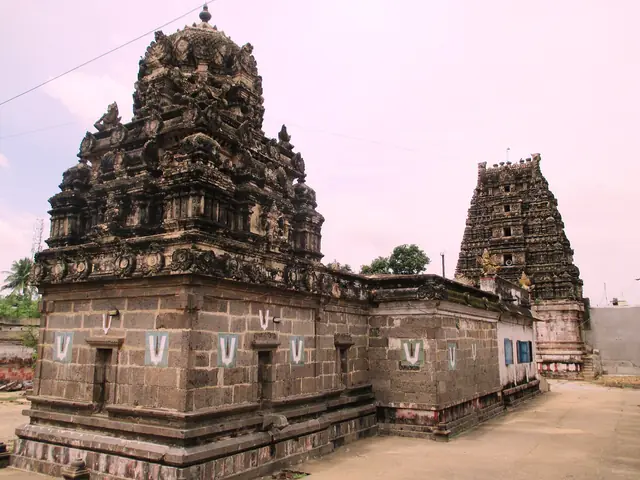
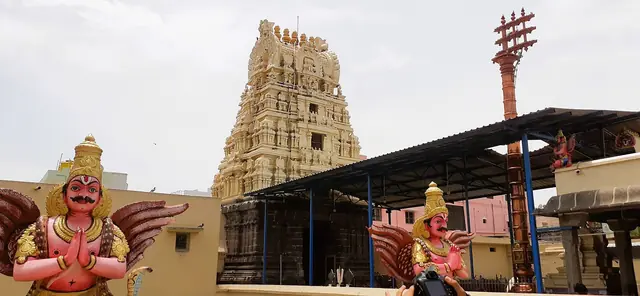
Appar and Sambandar sang of Thiru Ekambam in the Thevaram. The Pallavas and then the Cholas built here; the Vijayanagara rulers gave the temple its great southern rajagopuram, about 59 m high, in Krishnadevaraya’s reign. Inside is a long corridor of a thousand-odd pillars and a row of 1,008 small lingas. Kanchi’s seven Mokshapuri status means many pilgrims come here and to Kamakshi on the same day.
The life of this place
- 1509–1529The rajagopuram rises in the reign of Krishnadevaraya.
Phalguni Uthiram (March–April) marks the divine wedding here. Kamakshi and Kailasanathar temples are each within 2 km.