01Twenty-four days to the sea
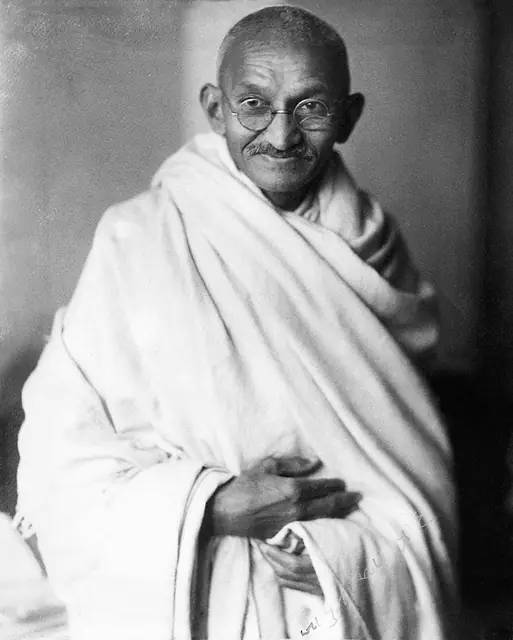
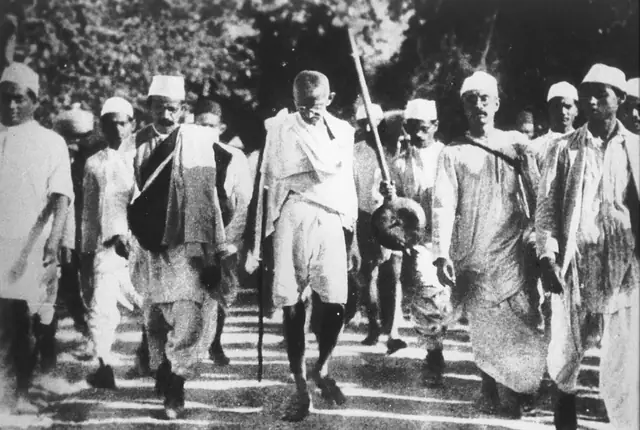
The salt tax fell on every household in India, and the law forbade anyone to make or gather salt outside the government monopoly. On 12 March 1930 Gandhiji set out from the Sabarmati Ashram with seventy-eight chosen companions and walked south through the villages of Kheda, Bharuch and Surat, speaking at every halt. Crowds grew along the road. On 5 April the marchers reached Dandi, and early the next morning, after a prayer and a bath in the sea, Gandhiji bent down on the shore and picked up a handful of salty mud. Across the country, people began to make salt.
02The memorial
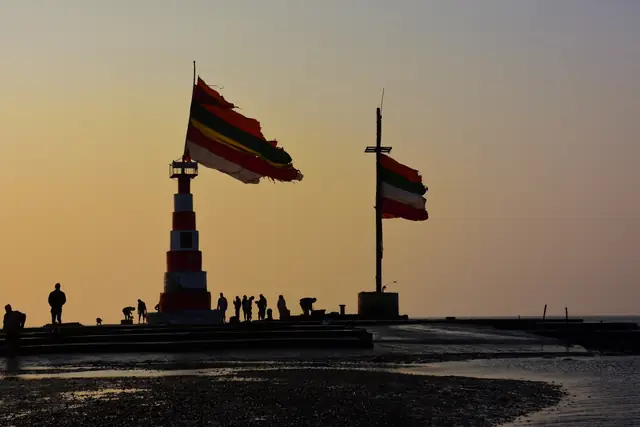
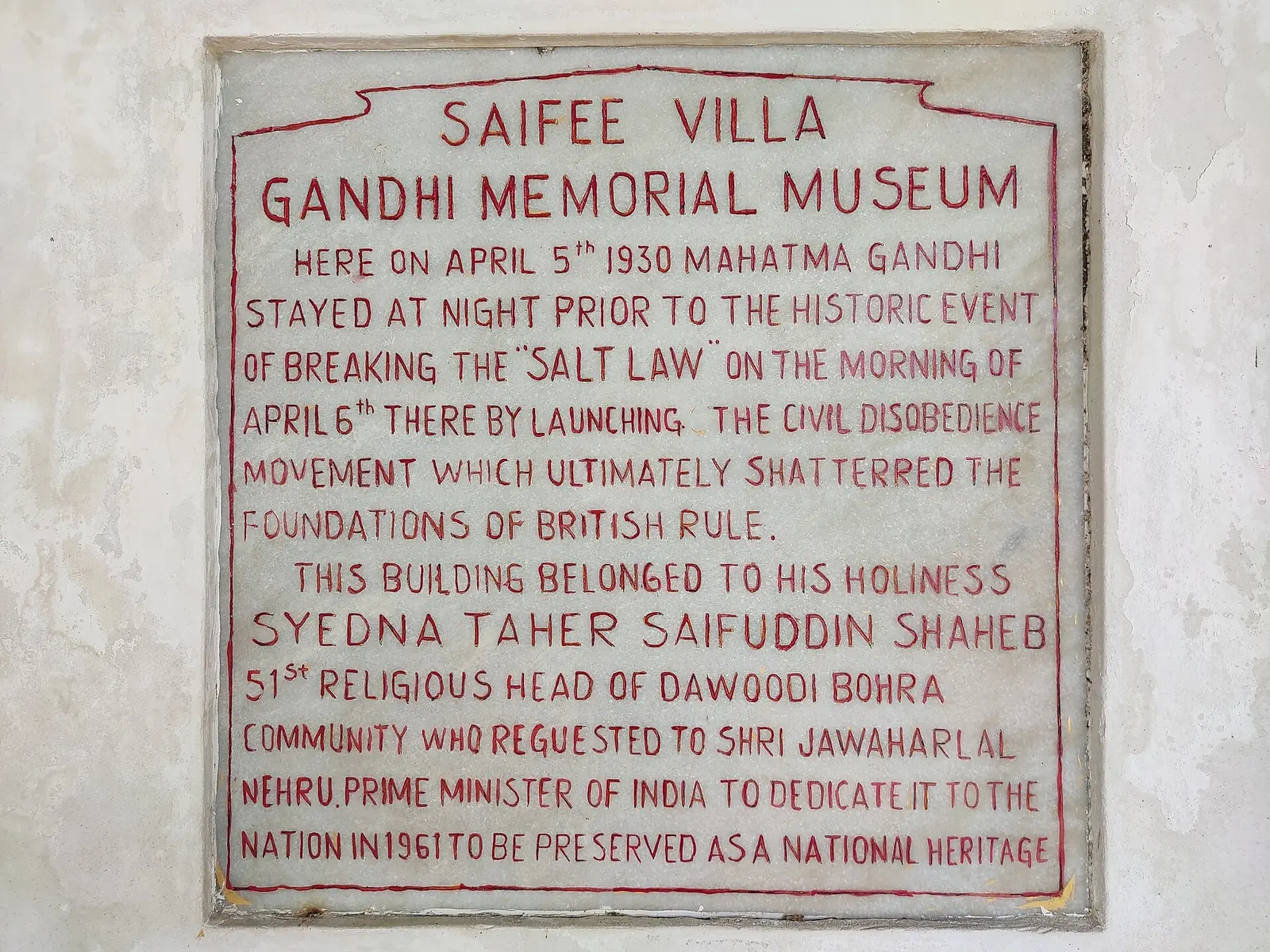
Gandhiji stayed at Saifee Villa, a house by the shore, which is kept as it was. He was arrested a month later, on the night of 4–5 May 1930, at his camp at Karadi nearby, and over sixty thousand people went to jail in the salt satyagraha that year. The National Salt Satyagraha Memorial at Dandi, opened on 30 January 2019, has statues of Gandhiji and the eighty marchers, murals of the twenty-four days, and solar salt pans where visitors can make a pinch of salt themselves.
The life of this place
- 12 March 1930Gandhiji sets out from Sabarmati with 78 companions.
- 6 April 1930Gandhiji breaks the salt law on the shore at Dandi.
- 5 May 1930Gandhiji is arrested at Karadi near Dandi.
- 30 January 2019The National Salt Satyagraha Memorial is opened.
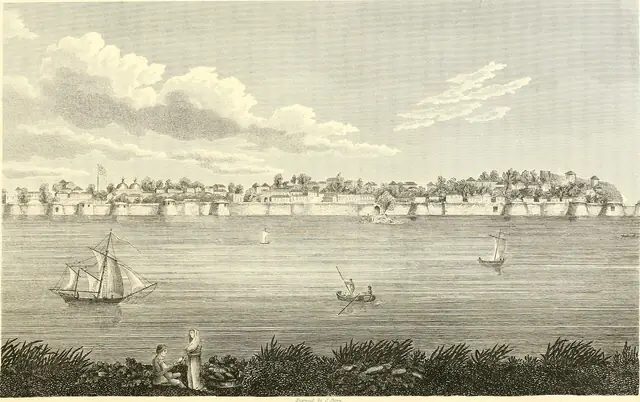
Dandi is about 15 km from Navsari. Walk out on the shore at low tide, where the salt crust still forms.