
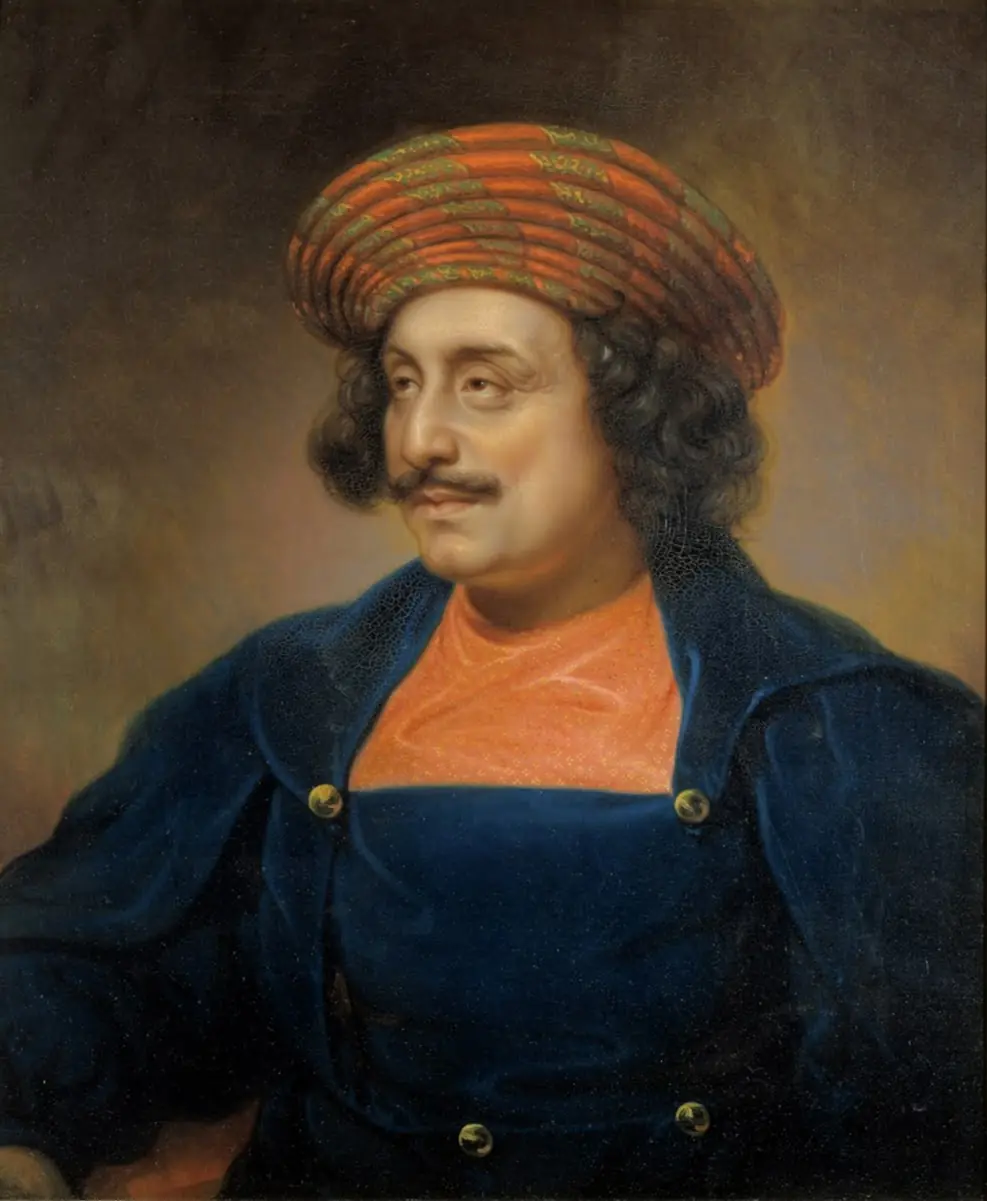
01Upanishads in Bengali
Born at Radhanagar in Hooghly district on 22 May 1772 to a Brahmin family, he studied Persian and Arabic at Patna and Sanskrit at Kashi. He worked for the East India Company’s revenue service at Rangpur until 1814, then settled in Kolkata. There he founded the Atmiya Sabha in 1815 and published the Vedanta in Bengali that year, followed by the Isha, Kena, Katha and other Upanishads in Bengali and English. His argument was that the Upanishads teach one formless Brahman, and that this was the Hindu inheritance worth recovering.
02Sati and the Brahmo Sabha
From 1818 he wrote tract after tract against sati, the burning of widows on their husbands’ pyres, citing the Smritis to show it was no duty, and he went to the cremation grounds of Kolkata to dissuade families. Governor-General William Bentinck banned the practice by Bengal Regulation XVII of 4 December 1829. On 20 August 1828 he opened the Brahmo Sabha for worship of the one Brahman, later the Brahmo Samaj. In 1830 he sailed to England as envoy of the Mughal emperor Akbar II, who gave him the title Raja. He died at Stapleton near Bristol on 27 September 1833 and is buried at Arnos Vale cemetery there.