01π as an endless sum
Madhava lived at Sangamagrama, identified with Irinjalakuda near Thrissur. Few of his own works survive, the Venvaroha and Sphutachandrapti among them, but his pupils’ pupils kept his results with his name on them. Nilakantha Somayaji’s Tantrasangraha (c. 1500) and Jyeshthadeva’s Yuktibhasha (c. 1530, in Malayalam, with full proofs) quote him. Take the diameter, multiply by four, then subtract and add in turn the diameter times four divided by 3, 5, 7 and so on: the result is the circumference. In modern notation, π/4 = 1 − 1/3 + 1/5 − 1/7 + … . Europe calls it the Leibniz series; Leibniz reached it in 1673–74.
02Correction terms and sine series
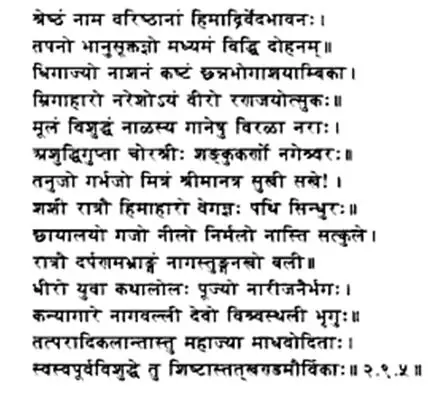
The series creeps towards π very slowly, and Madhava knew it. He added a correction term after stopping the sum, which makes a few dozen terms give many correct digits, and he recast the series into faster forms. His value of π, 3.14159265359, is right to eleven decimal places. He also gave the series for sine and cosine that Europe credits to Newton (1660s), and a table of sines correct to about seven or eight decimals, which survives encoded in the katapayadi syllable code. The line ran from Madhava to Parameshvara, Damodara, Nilakantha and Jyeshthadeva, a teaching chain of nearly two centuries in a few villages of Kerala.