
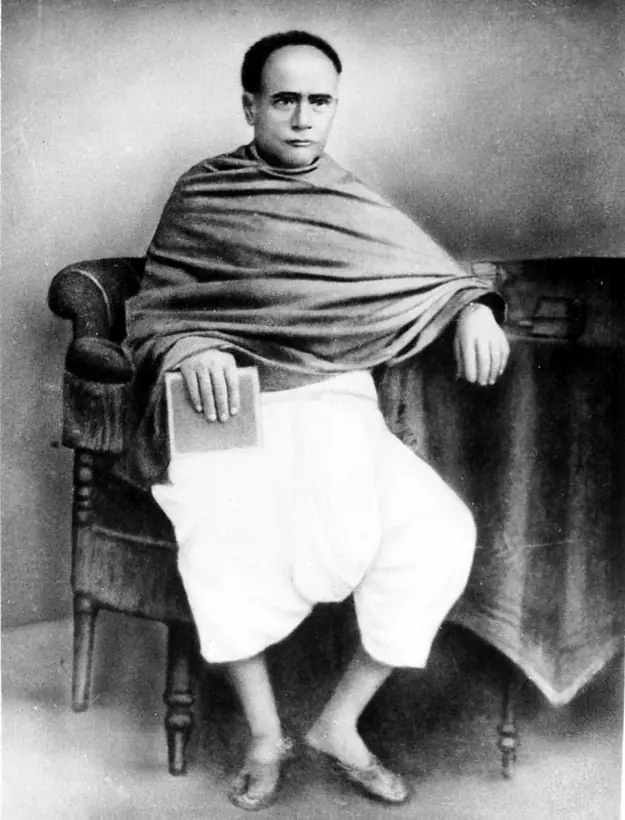
01Learning by the street lamp
Born at Birsingha in Midnapore district on 26 September 1820, he walked to Kolkata with his father at eight, the story goes learning the English numerals from the milestones on the way, and studied at the Sanskrit College, reading under street lamps because the family could not afford oil. In 1839 the college’s pandits gave him the title Vidyasagar, ocean of learning. He became its principal in 1851 and opened its doors to students who were not Brahmins. His Bengali primer Barnaparichay of 1855 fixed the alphabet that Bengal still learns.
02The Parashara verse
Child marriage left many Bengali girls widowed before they had lived with a husband. Vidyasagar went to the Smritis and found his answer in the Parashara Smriti, the code the tradition assigns to the Kali Yuga, whose verse allows a woman to remarry if her husband is lost, dead, has become a renunciate, is impotent or has fallen from caste. He published his case in 1855, gathered nearly a thousand signatures, and the Hindu Widows’ Remarriage Act was passed on 26 July 1856. The first such marriage under it took place in Kolkata that December, and in 1870 his own son married a widow.