
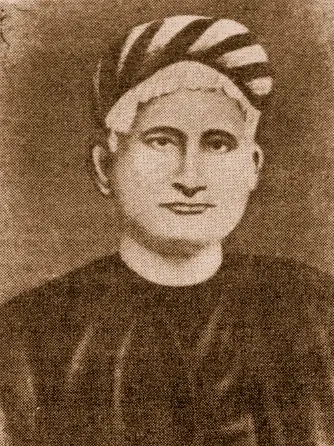
01Magistrate and novelist
Born at Kanthalpara near Naihati, he was one of the first two graduates of the new University of Calcutta in 1858 and entered government service as a deputy magistrate the same year, retiring only in 1891. His first Bengali novel, Durgeshnandini, came out in 1865, followed by Kapalkundala, Bishabriksha and many more. In 1872 he started the monthly Bangadarshan, which made Bengali prose fit for history, science and argument. In Krishnacharitra (1886) he set out to show Shri Krishna of the Mahabharata as the ideal man.
02Vande Mataram
He wrote the hymn Vande Mataram, in Sanskrit and Bengali, in the 1870s, and set it in Anandamath, serialised in Bangadarshan and published as a book in 1882. The novel is set in the Bengal famine of 1770, among sannyasis who rise against the rulers of the land and worship the Motherland as the Devi. Rabindranath Tagore sang the hymn at the Calcutta session of the Congress in 1896, and after the partition of Bengal in 1905 it became the slogan of the Swadeshi movement. On 24 January 1950 the Constituent Assembly gave it equal honour with Jana Gana Mana as the national song.
“I bow to thee, Mother, richly watered, richly fruited, cool with the winds of the south.”
Bankim Chandra Chattopadhyay, Vande Mataram, in Anandamath (1882)