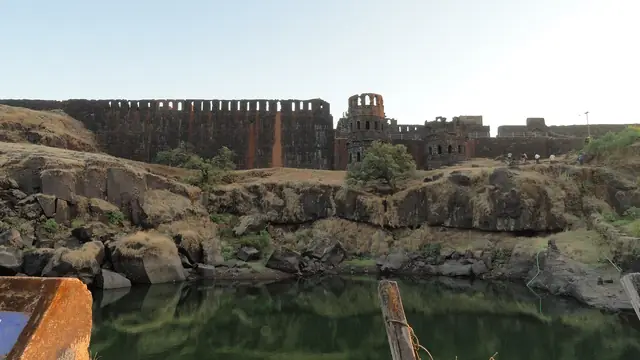
Shivaji treated people of every faith with fairness, but his Swaraj was built on dharma: he was crowned with Vedic rites in 1674, restored temples, and replaced Persian court terms with Sanskrit ones.
The proof
- He was crowned at Raigad on 6 June 1674 by Gaga Bhatt of Kashi with Vedic rites, taking the title Chhatrapati.
- He had the Rajavyavahara Kosha compiled, a lexicon giving Sanskrit terms for Persian ones in administration.
- In 1668 he restored the Saptakoteshwar temple at Narve, Goa, whose linga had been carried off Divar island during Portuguese rule.
01Swaraj with a name
A letter of 1645 attributed to the young Shivaji speaks of founding Hindavi Swarajya, and his court used that idea openly. The coronation, the Sanskrit lexicon, the restored temples and the protection of cows and Brahmins are all in the record. To call him secular in the modern party sense is to read the twentieth century back into the seventeenth. He was a Hindu king who kept faith with dharma and also kept his word to Muslims who served him. The next entry shows that second half.
Read on
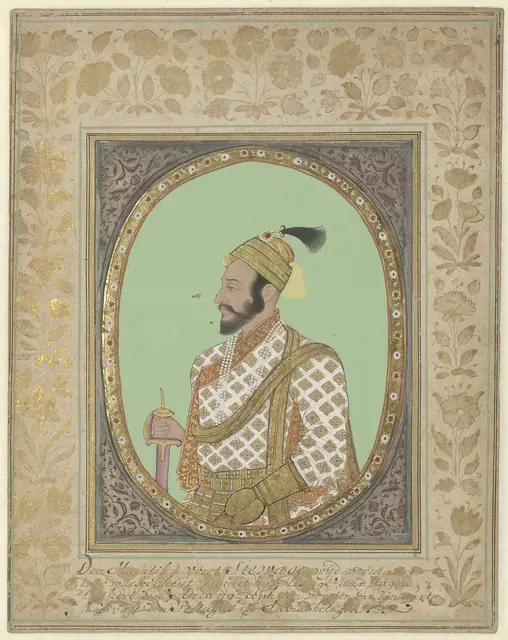
Chhatrapati Shivaji Maharaj
Born at Shivneri on 19 February 1630, Shivaji built a free Maratha state from a handful of hill forts around Pune, outfought Bijapur and the Mughals, escaped from Aurangzeb’s court, and was crowned Chhatrapati at Raigad on 6 June 1674.
Sabhasad Bakhar
The earliest surviving life of Chhatrapati Shivaji, written by a man who had served him.
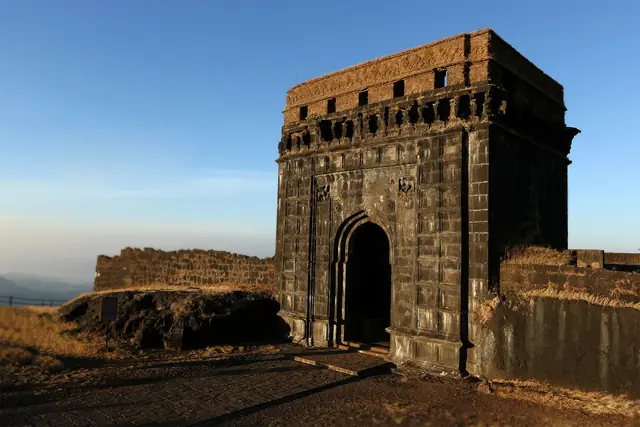
Maratha Chhatrapatis (Bhonsle)
Shivaji Bhonsle built a Hindu kingdom out of hill forts in the Sahyadri and was crowned Chhatrapati at Raigad in 1674. His sons and his daughter-in-law Tarabai held it through twenty-seven years of war with Aurangzeb, and the state they saved became the Maratha power that ruled much of India in the eighteenth century.