
Vesara (Deccan)
Karnataka, Telangana and the northern Deccan · 6th–13th century
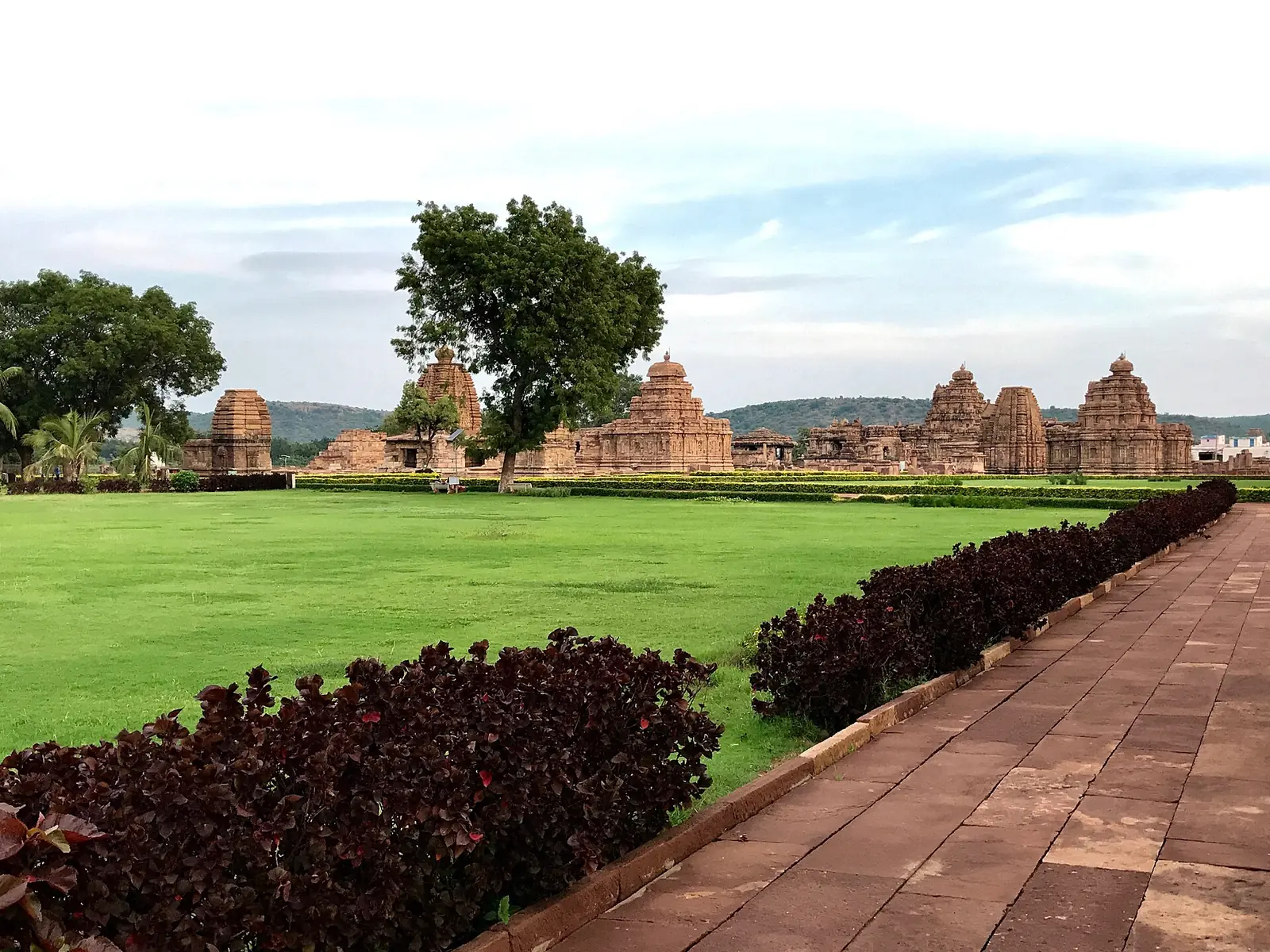
The Shilpa texts name a third type besides Nagara and Dravida: Vesara, the mixed or hybrid. It belongs to the Deccan, where north and south met. At Aihole, Badami and Pattadakal, under the Chalukyas of Vatapi in the 6th to 8th centuries, temples of both kinds were built side by side: at Pattadakal the Virupaksha of about 745, raised by Queen Lokamahadevi to mark her husband’s victory over Kanchi, is Dravida, and the Papanatha beside it is Nagara.
The Kalyani Chalukyas of the 11th and 12th centuries fused the two. Their temples at Lakkundi and Itagi keep the storeyed southern tower but soften and multiply its tiers so that it reads almost as a curve, and they turn the plan into a star by rotating squares. They worked in fine-grained soapstone and gave the pillars a lathe-turned polish. The Kakatiyas of Warangal carried the line into the 13th century at Ramappa, completed in 1213. The Hoysala temples of Belur and Halebidu grew out of the same tradition and are given their own entry here.
How to recognise it
- Southern storeyed tower softened toward a curve
- Stellate (star-shaped) plans from rotated squares
- Soapstone and lathe-turned pillars
- Nagara and Dravida side by side at Pattadakal
Great examples
 Standing
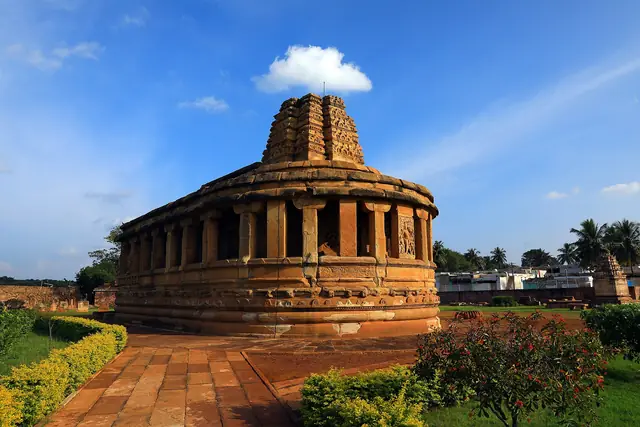
Aihole
A village on the Malaprabha with over a hundred temples from the 6th century on, where Chalukya builders tried out the forms of the Hindu temple. On its hill, the Meguti inscription of 634 CE records Pulakeshin II’s victory over Harsha.
 Standing
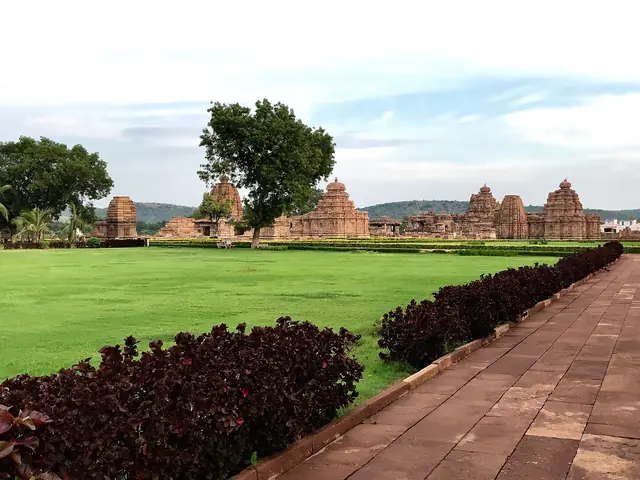
Pattadakal
The coronation town of the Badami Chalukyas on the north-flowing Malaprabha, where northern and southern temple styles stand side by side. Its Virupaksha temple, raised by a queen to mark her husband’s victory over the Pallavas, is still in worship.
 Standing
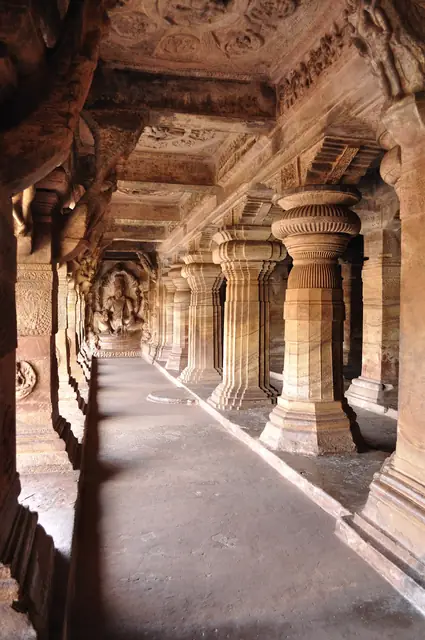
Badami (Vatapi)
Vatapi, capital of the Chalukyas, set in red sandstone cliffs around the Agastya lake. Its four cave temples hold some of the earliest dated Hindu sculpture in the Deccan.
 Standing
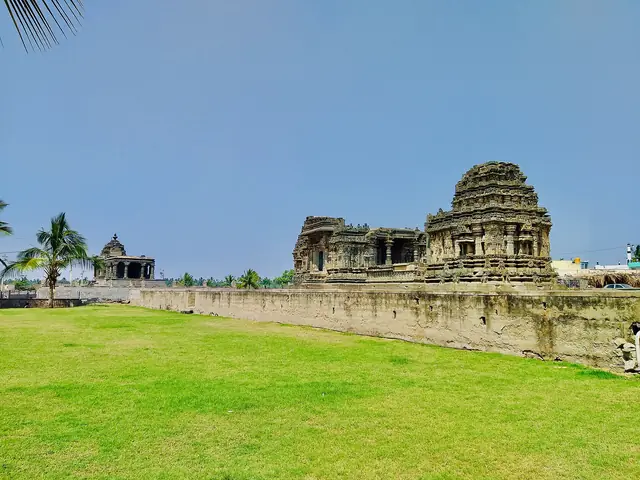
Lakkundi
A village of temples and stepwells near Gadag, once a mint town of the Kalyani Chalukyas. Its Kashivishveshvara temple has some of the most intricate doorways in the Deccan.
 Standing
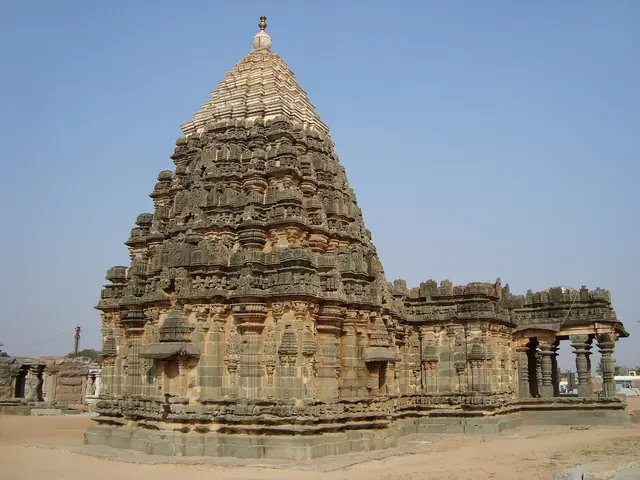
Mahadeva Temple, Itagi
The temple its own inscription calls Devalaya Chakravarti, emperor among temples. A general of the Chalukya king Vikramaditya VI built it in 1112.
 Standing
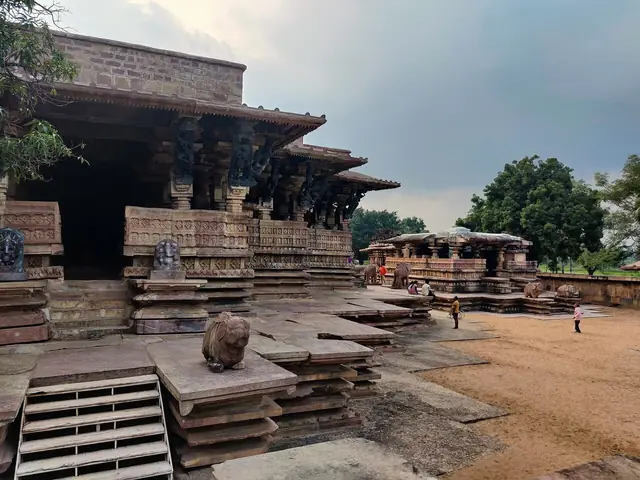
Ramappa Temple (Rudreshwara), Palampet
A Kakatiya Shiva temple of 1213 that carries the name of its sculptor, Ramappa, rather than its king. A World Heritage Site since 2021.
 Standing
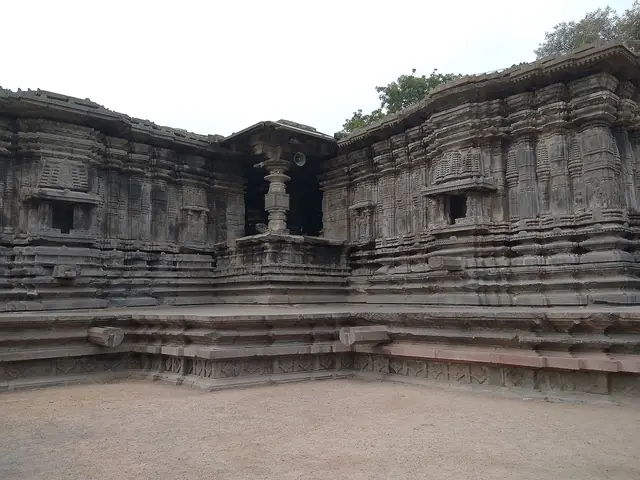
Thousand Pillar Temple, Hanamkonda
Rudradeva’s triple shrine of 1163 at the old Kakatiya seat of Hanamkonda, built the year the dynasty declared its independence. Its pillared hall is famous for the number of its columns.
 Rebuilt
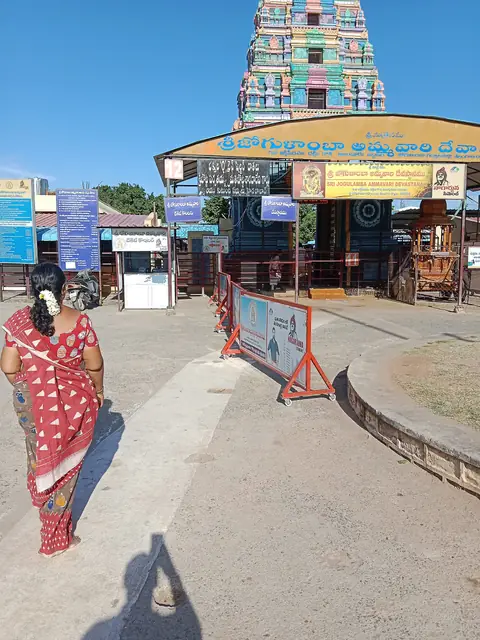
Jogulamba and the Nava Brahma Temples, Alampur
On the Tungabhadra near its meeting with the Krishna, nine Chalukya Shiva temples and the Shakti Peetha of Jogulamba, whose temple was destroyed in 1390 and raised again on its old site 615 years later.