
Pancha Kedar
After the war of Kurukshetra the Pandavas sought Mahadev in the Himalaya to be freed of the sin of killing their kin.
He hid from them as a bull, and when Bhima caught hold of it, it sank into the earth. The hump stayed at Kedarnath, the arms appeared at Tungnath, the face at Rudranath, the navel at Madhyamaheshwar and the matted hair at Kalpeshwar; in Nepal the head is worshipped as Doleshwar. All five lie in the Garhwal Himalaya between the Mandakini and the Alaknanda. Four close in winter, when their utsava murtis go down to Ukhimath and Gopeshwar; Kalpeshwar, in the Urgam valley, stays open all year.
Temples in this circuit
 Standing
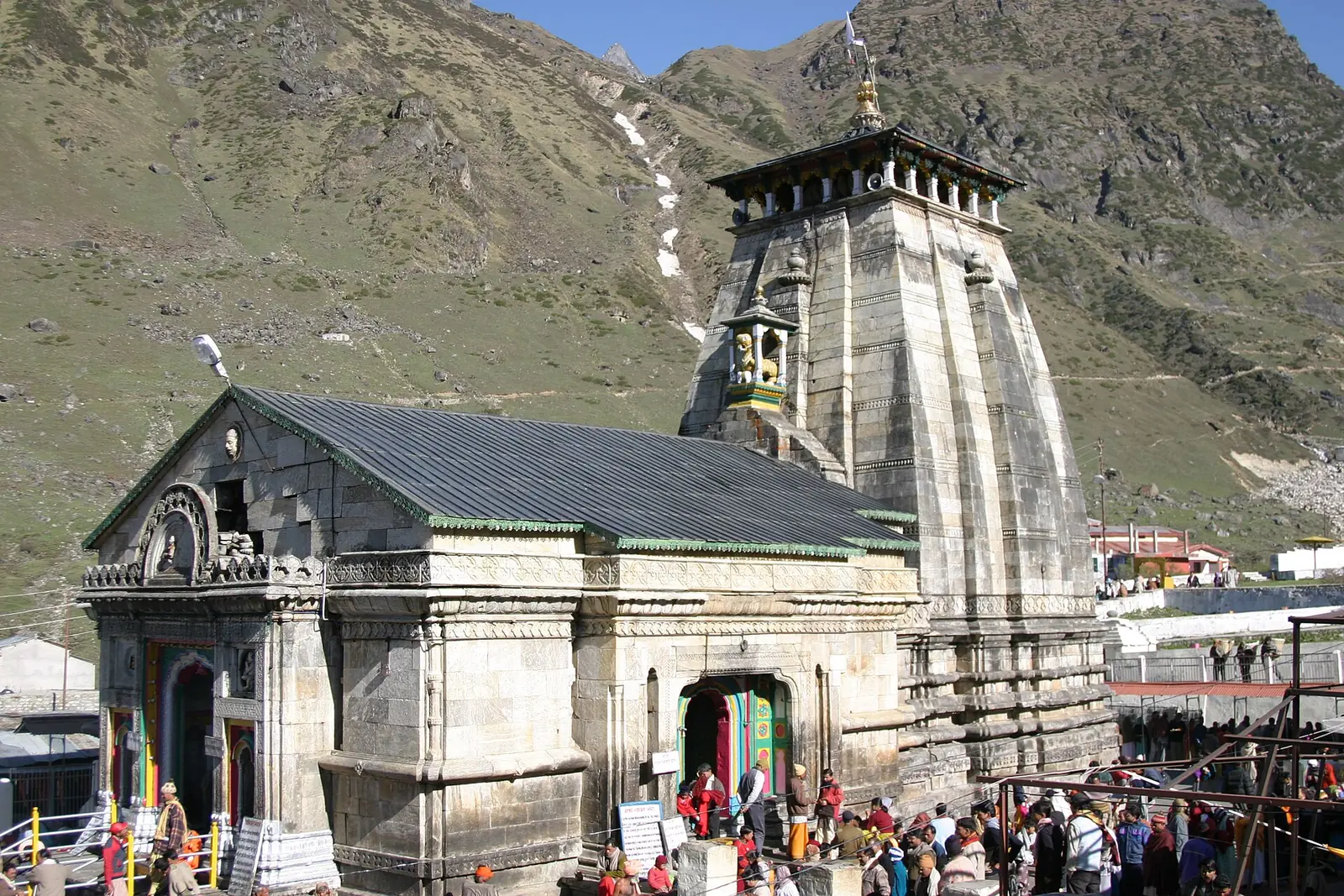
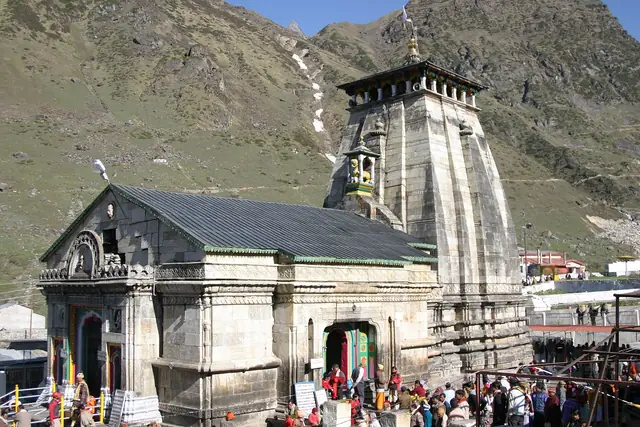
Kedarnath
The Himalayan Jyotirlinga at the head of the Mandakini, first of the Panch Kedar and one of Uttarakhand’s Char Dham. The linga is a rough triangular rock, the hump of Shiva in the form of a bull.
 Standing
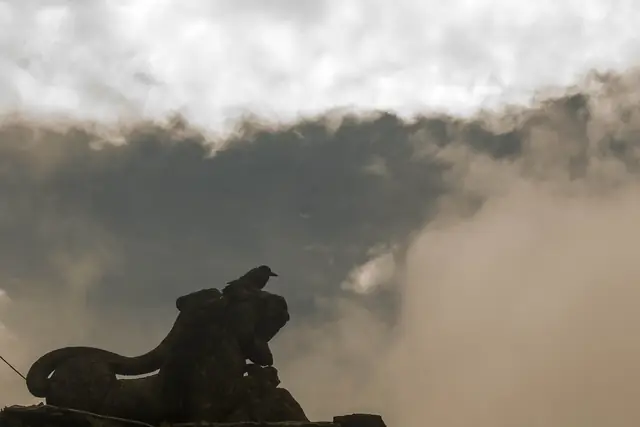
Tungnath
The third of the Pancha Kedar and the highest Shiva temple of the five, at 3,680 m on the ridge between the Mandakini and Alaknanda. The arms of Mahadev are worshipped here.
 Standing
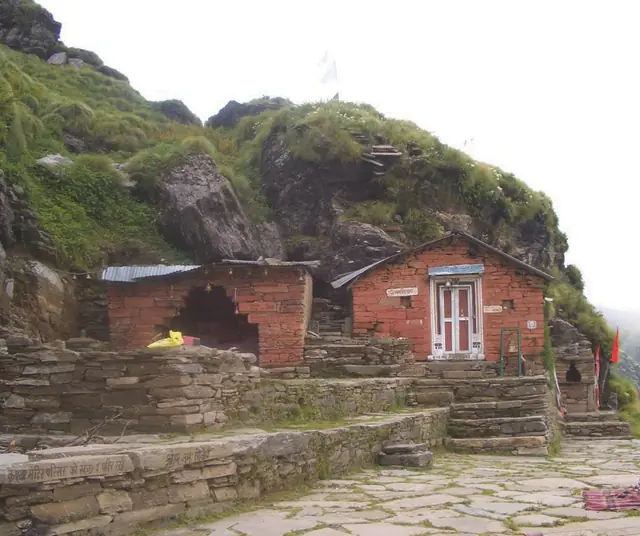
Rudranath
The fourth of the Pancha Kedar, a rock shrine among alpine meadows at about 3,600 m, where the face of Mahadev is worshipped as Neelkanth. It is the hardest of the five to reach.
 Standing
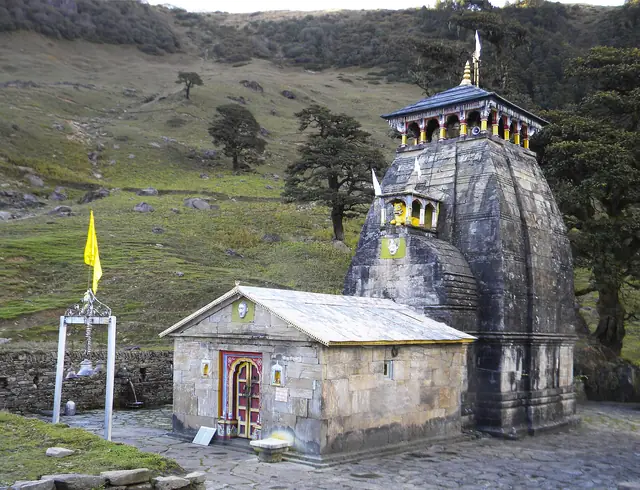
Madhyamaheshwar (Madmaheshwar)
The second of the Pancha Kedar in the order of worship, where the middle, the navel, of Mahadev is worshipped. It sits in a high meadow at 3,497 m, looking up at the four summits of Chaukhamba.
 Standing
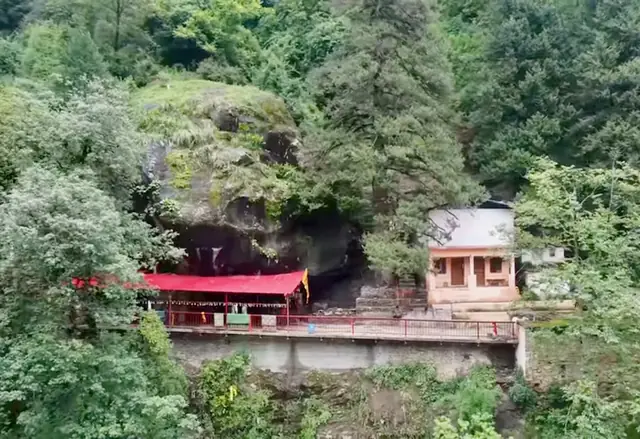
Kalpeshwar
The fifth of the Pancha Kedar, where the jata of Mahadev is worshipped. At 2,200 m in the Urgam valley, it is the only one of the five open all year.