01From the Pratiharas to Rao Jodha
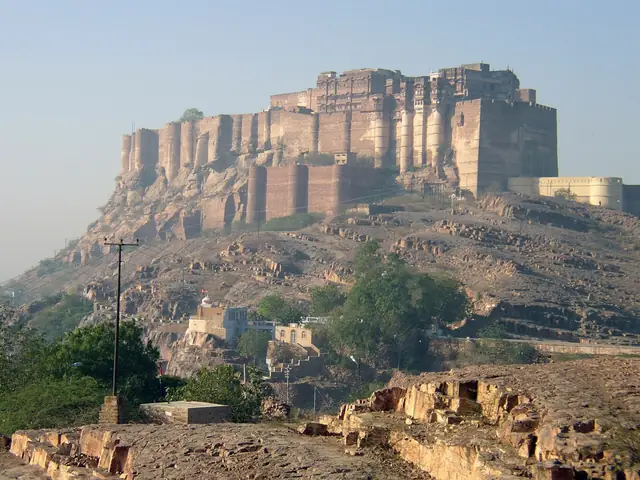
Mandavyapura was named, by its own tradition, after the rishi Mandavya. A branch of the Pratiharas ruled from here from about the sixth century; the inscriptions of Bauka of 837 and of his brother Kakkuka at Ghatiyala of 861 set out their descent. Around 1394 the Rathore chief Rao Chunda won Mandore, by the Marwar chronicles as a dowry from the Inda Pratiharas who wanted his help against the Turks. It stayed the Rathore seat until 1459, when Rao Jodha, judging its low walls too open, built Mehrangarh on the rock to the south and founded Jodhpur.
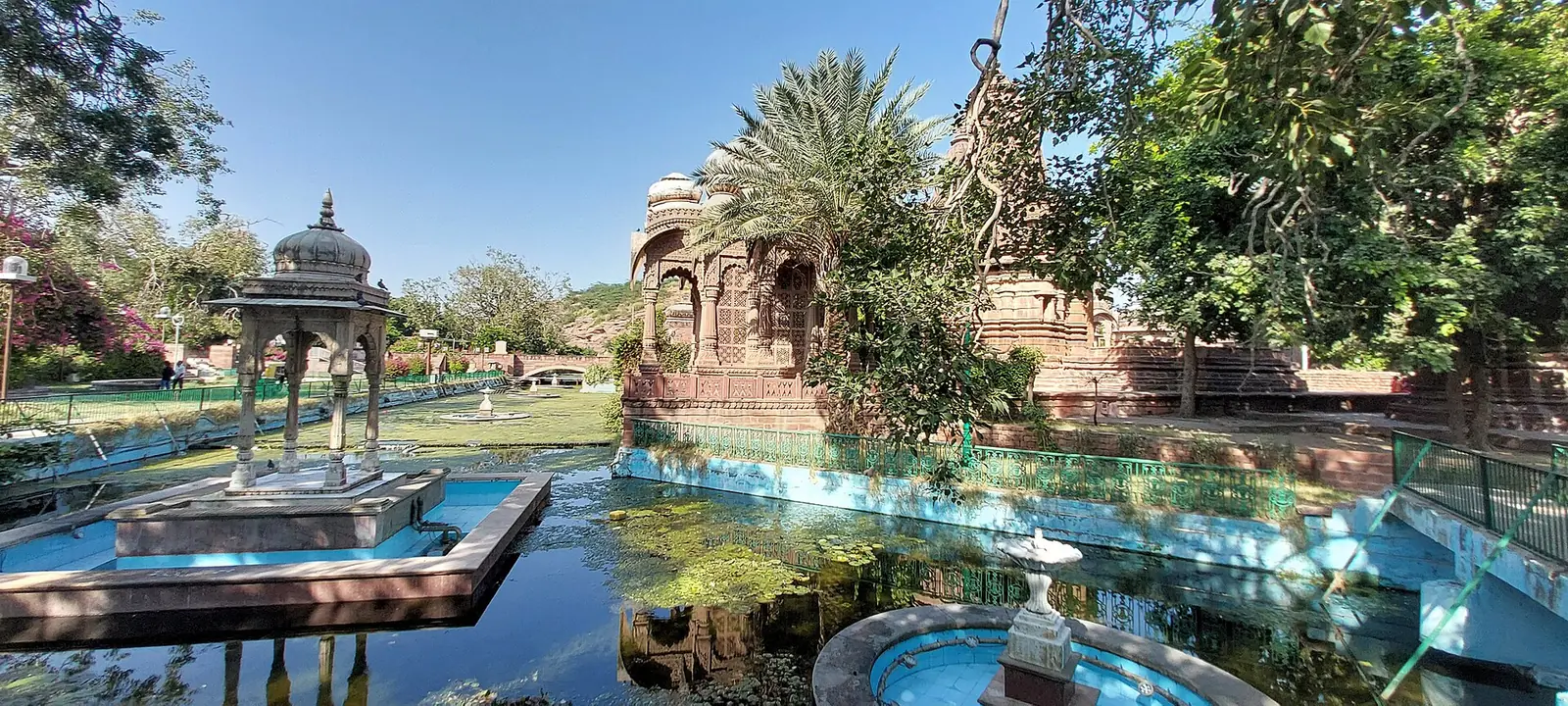
02The gardens of the devals
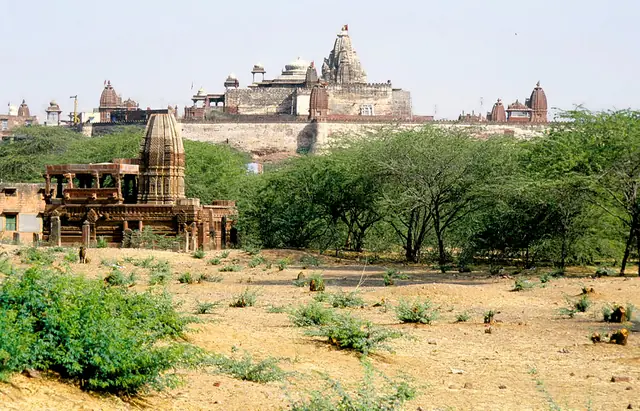
The Rathore kings went on being cremated at Mandore, and their cenotaphs, called devals, are built like temples in red sandstone with tall shikharas; the largest is Maharaja Ajit Singh’s, of the early 18th century. A hall in the gardens holds huge painted figures of folk heroes and deities cut from the rock, and the ruins of the old fort and a Pratihara-period temple lie on the hill above. Local tradition holds Mandore to be the home of Mandodari, Ravana’s queen.
The life of this place
- 837Inscription of the Mandore Pratihara Bauka.
- c. 1394Rao Chunda takes Mandore for the Rathores.
- 1459Rao Jodha moves the capital to Jodhpur.